Today is primary day and 3.5 million Flori

Showing posts with label education reform. Show all posts

Wednesday, May 01, 2013

Philsophical Question: The War on Poverty or the War on the Poor? Where's the Development? Where are we in 2013?


What's happening on the cutting edge in education?  Not So Much -- or not so much in the establishment edu world?! But let's carry on... See this article on the San Fransisco Chronicle...

Lenora Fulani announces the publication of a special report by co-founder and developmental psychologist Lenora B. Fulani, Ph.D. entitled, The Development Line: Helping the Poor to Grow.

Nearly 50 years since the launch of the War on Poverty, the poverty rate in America is 15 percent, with 22.3 percent of children officially living below the poverty line. Nearly a third of all African-Americans—10.7 million—live in poverty.

Dr. Lenora Fulani argues that new conceptual, methodological and organizational tools, approaches that have been developed since the 1960s outside of traditional social service and educational institutions and funding streams, are essential for the successful development and education of inner-city youth in America. She traces these developments from 1968 and the genesis of Dr. King’s Poor People’s Movement, to present day programs like her own, which have successfully utilized performance-based methodologies to promote developmental learning among young people and their families.

Read more.

Monday, March 11, 2013

Election Reform: fraudulent voting practices were developed by and are fomented by our partisan system

Election reform has never been more important at a time when less than half of people vote in major elections (and somewhere around 10-15% in important local elections) and yet the establishment (partisan) voices drone on about voter fraud and campaign finance. At a time when 40% of the American people identify as independent... Re-imagine the whole of American politics! [See vid below]

Democracy demands a much higher bar -- full participation by the American people -- which will of necessity come from outside the current party system.

Let's face it, the most fraudulent voting practices were developed by and are fomented by our partisan system that requires complete allegiance to a slate of partisan scalawags who vow to betray the democratic values of our nation! To wit:

ELECTION REFORM
  • Editorial: Voting laws need big change (EDITORIAL Poughkeepsie Journal) These deflating numbers are clearly unacceptable. A slew of solutions has to be pursued aggressively. They range from scheduling early voting dates, to greatly bolstering the ability of residents to register online. They must involve clearer, cleaner ballots and lengthening registration deadlines. They have to include campaign finance reform to give challengers a fighting chance to compete against entrenched incumbents. They ought to feature an independent process to draw fair, impartial political boundaries rather than leaving it up to the politicians to carve up those lines at will.
  • Ark. AG outlines election reform proposals (THE ASSOCIATED PRESS, The Republic - Columbus IN) Attorney General Dustin McDaniel on Thursday said he is pushing a package of legislative proposals that would toughen the penalties for fraudulently gathering signatures for a ballot measure and require more disclosures from those working on ballot question campaigns.
  • FEC Complaint Could Limit Corporate Donations In Elections (By Alex Gauthier, IVN) Responding to inquiries from the press, Dan Conston, CLF’s communications director told the Hill, “[It’s] an obvious coordinated intimidation tactic from the left masquerading as just one more utterly baseless complaint.”

EDUCATION REFORM
Reform candidates see mixed results in Los Angeles school board race (Brandon Lowrey - Reuters, Chicago Tribune)  Reformers, backed by Los Angeles Mayor Antonio Villaraigosa's Coalition for School Reform, want to expand charter schools and change the way the district hires, evaluates and fires teachers. They faced opposition from the local teacher's union, United Teachers Los Angeles, which has funded its own slate of candidates. Voters handed Villaraigosa and his allies one victory outright, one defeat and one draw that will be decided in a runoff election in May.


Thursday, May 17, 2012

Hankster News of the Day for Independent Voters May 17


CA TOP TWO
  • Previous CA Election Rules Stacked Against Independent Voters (By Chad Peace, IVN) In California, the Democratic Party initially resisted but eventually chose to allow independents to participate in its primaries. The Republican Party refused to allow independent voters to participate in its primaries. Interestingly, in that time, the Republican Party shrunk precipitously, the Democrats held steady, and the percentage of voters choosing to join no party increased by approximately 30%.
  • San Diego group pushes independent politics statewide - Architects of “top-two” primary system seek to organize unaffiliated voters (By Christopher Cadelago, UT San Diego) Co-chaired by former state lawmakers Steve Peace, a Democrat, and Jeff Marston, a Republican, the group has launched a $1.5 million campaign to increase turnout among voters declaring no party preference — about 3.6 million people accounting for a record 21.3 percent of the statewide electorate.

AMERICANS ELECT
Americans Elect Failure to Find Candidate Threatens Third-Party Dreams (by John Avlon, Daily Beast) Perhaps the biggest obstacle was the basic fact of this particular election cycle—when a president is running for reelection, it tends to be a referendum. Third-party candidacies do best when there is not an incumbent on the ballot or after an extended period of one-party rule with weak opposition.

NYC 2013 MAYORAL
  • Kelly 2013 goes cold, but Catsimatidis isn't warming up (By Dana Rubinstein, Capital New York)
  • Ray Kelly won't run for mayor, ex-Staten Island BP Guy Molinari says (Judy L. Randall, SI Advance) If Kelly's decision to absent himself from the run proves true, it will be good news for the Democrats poised to make the race, including City Council Speaker Christine Quinn, former mayoral candidate William Thompson, Public Advocate Bill de Blasio and Manhattan Borough President Scott Stringer.
  • So Many X Factors in Next Year's Race for NYC Mayor (Dominic Carter, Huffington Post) DeBlasio is someone who should not be underestimated. It is commendable how DeBlasio went from Hillary Clinton 2000 Senate campaign manager, to the City Council a year later, and now a citywide position from a crowded field of candidates, literally first in line to succeed the mayor should it be necessary.
  • Ray Kelly’s Mayoral Dance Steps Back Toward ‘No’ (NY Mag/Daily Intel) Staten Island Borough President Ray Molinari, one of the biggest proponents of a Kelly run, came out of a lunch with the commissioner less than glowing yesterday.
  • Quinn Confronts Banks in Bid to Become NYC’s First Gay Mayor (By Henry Goldman, Bloomberg) “She’s a throwback to the Irish-American political bosses in the history books,” said Maurice Carroll, director of the Quinnipiac Polling Institute in Hamden, Connecticut. Its May 10 survey found that she led a five-candidate Democratic field with 26 percent approval, twice as much as her nearest rival. “She’s always thinking, ‘What do we need to win?’”

PEDRO ESPADA
Espada Guilty of Stealing Clinic's Funds (By TAMER EL-GHOBASHY, Wall Street Journal) It marked an ignominious turn for the elder Mr. Espada, who in 2009 became the state Senate president when he and three other senators defected from the majority Democrats and helped Republicans take over the chamber. The chaotic period helped solidify Albany's reputation for dysfunction.

EDUCATION REFORM
Suit seeks to overturn 'outdated' teacher job protections (LA Times) The founder of Students Matter is Silicon Valley entrepreneur David F. Welch, a research scientist who went on to co-found Infinera, a manufacturer of optical telecommunications systems based in Sunnyvale. “We are challenging a system that was fashioned by special interests and has burdened our schools with an inflexible environment for hiring and retaining the best teachers," said Welch.

Thursday, May 10, 2012

Hankster News of the Day May 10


INDEPENDENT VOTERS
  • Millions of Voters Leaving Political Parties, the Silent Revolution (by Chad Peace, IVN) I am not suggesting that political parties should not and do not serve an important roll in organizing, promoting, unifying political sentiment.  Rather, my position is that control over the electoral process should derive from the wills of individual voters, not party central committees.  In other words, I am suggesting that parties should be able to influence outcomes through advocacy rather than manipulation…. But, as the American voters become increasingly dissatisfied with their partisan representatives, non-partisan electoral reforms passed in states like California have the potential to revolutionize the way we elect our representatives and broadened the voters to whom they are accountable.
  • President Obama’s independent problem is nothing new. (Posted by Chris Cillizza, Washington Post/The Fix)
  • Battleground Poll: Dead heat (By: James Hohmann, Politico) The former Massachusetts governor has opened up a 10-point lead, 48 percent to 38 percent, among independents in a poll conducted Sunday, April 29 through Thursday, May 3 and a 6-point lead among those who describe themselves as “extremely likely” to vote in November. Obama led Romney by 9 points overall in POLITICO’s February’s poll.
  • Beltway Blog — Study: Colorado grows independent voters, Democrats, GOP struggle to keep up (By Allison Sherry, The Denver Post/The Spot) Since 2008, Colorado has added voters in all groups becauses the state’s population is growing. But Democrats have added the fewest voters at 13,497, according to the study. Republicans have added 36,896 voters since 2008. There are more than 130,000 more independent voters now in Colorado compared to 2008, according to the study.
AZ TOP TWO
  • Push is on for open primary in Arizona (by Dan Nowicki, Arizona Republic/TUCSON CITIZEN) The pros and cons of the “top two” primary idea, which is in use in Louisiana and Washington and will go into effect in California this year, will be debated today during a panel discussion organized by the O’Connor House. The organization, named after retired U.S. Supreme Court Justice Sandra Day O’Connor’s former home, advocates for centrist and nonpartisan policy solutions and civil discourse.
  • Open primaries worth a look (OPINION Arizona Republic) The discussion includes film producer and California politician Steve Peace, the architect of that state's top-two primary system. Also on the panel will be Richard Winger of the Coalition on Free and Open Elections, Grady Gammage, Jr., one of the authors of the Arizona initiative, and Alan Maguire of the Maguire political consulting firm. A new paper, "The Nonpartisan Primary: Is it a Game Changer?" by Morrison Institute Senior Fellow David R. Berman, will be distributed.

CA TOP TWO
  • Commentary: ‘Top-two’ system makes primary a whole new ballgame (By Casey Gudel, AgAlert - Weekly Newspaper for Calif Agriculture) A number of candidates, who would have been receptive to issues important to family farmers and ranchers, lost by just a few votes in the last primary election. Had the top-two primary system been in place, Farm Bureau and allied organizations could have worked on behalf of those business-friendly candidates in the general election. When you combine the new top-two primary system with changes to legislative districts as drawn by the Citizen's Redistricting Commission, you find no shortage of candidates this year. Redistricting caused a number of retirements in Congress, which opened up a game of musical chairs that also involves seats in the state Assembly and Senate.
  • Everybody in the Pool! (By Loretta Redd, PhD, Santa Barbara View) Anyone who doesn’t think we’ve legalized dope in this State has only to read the helpful voter guide from Secretary of State, Debra Bowen: “California law requires that the term ‘party preference’ now be used in place of the term ‘party affiliation.’  On the voter registration form, a voter may choose whether or not to indicate a preference for a political party.  A voter with no party preference (NPP) is anyone who chose to not indicate a political party preference when he or she registered to vote.  Voters who were previously known as decline-to-state voters (because they did not have a party affiliation) are now known as having no party preference.”
2012
Obama leads Romney, helped by independents (Deborah Charles - Reuters, Chicago Tribune) Independents swung behind Obama. Forty eight percent approved and 40 percent disapproved of his performance in May compared to 37 percent who approved and 57 percent who disapproved in April…. The poll, conducted from May 3-7, showed voters from the two parties are falling in behind their candidates, which makes the independent vote more important, Clark said.

INDIANA CONGRESSIONAL RACE
  • Tea party set to topple Sen. Richard Lugar. Could he try third-party run? (By Mark Trumbull, Christian Science Monitor) "I don't think that Lugar would want to split the party," says Brian Vargus, a political scientist at Indiana University in Indianapolis. "The coalition between social and economic Lugar makes last-ditch Election Day plea for votes, rules out third-party run (By Justin Sink, WITH VIDEO, The Hill) Indiana has an open primary, meaning anyone registered to vote can cast a ballot in Tuesday's Republican contest. And while Lugar remains popular statewide, the 80-year-old senator acknowledged that the money and enthusiasm had tended to favor his opponent… But Lugar deferred when asked if centrists no longer had a home in the Republican Party.
  • Lugar unloads on 'unrelenting' partisanship (By MIKE ZAPLER, Politico) Too often bipartisanship is equated with centrism or deal cutting. Bipartisanship is not the opposite of principle. One can be very conservative or very liberal and still have a bipartisan mindset. Such a mindset acknowledges that the other party is also patriotic and may have some good ideas. It acknowledges that national unity is important, and that aggressive partisanship deepens cynicism, sharpens political vendettas, and depletes the national reserve of good will that is critical to our survival in hard times.

THIRD PARTY POLITICS
  • Out of the Margins, Into the Fray: Vermont Progressive Party Wields Outsized Influence on State Politics (by Steve Early‚ Beyond Chron) In many other states, most labor activists like David-Friedman have shied away from "pure" third party activity because they don't want to back political "spoilers" or, short of that, just mount losing campaigns with no impact on major party behavior or election results. Elsewhere in the northeast, labor-financed Working Families Parties (WFP) were launched instead so "fusion voting" could be used, where permitted under state law, to reward the friends of union causes by giving cross-endorsed candidates an additional ballot line. Banned in most of the nation a century ago (as part of the corporate counter-attack against Populism), fusion allows major party candidates, in states like New York, to garner additional votes on each endorsing minor party's separate ballot line.
  • ROSE NOLEN: Electoral process, political parties have left voters confused (BY Rose Nolen, Columbia Missourian) The efforts by some political parties to pass voter registration laws, which will require some people to provide various forms of personal identification in order to vote, is troublesome and will undoubtedly cause some to avoid going to the polls. It has occurred to many that the political parties no longer want individual citizens to vote, unless they are willing to vote their way. Until we have an independent authority to interpret law, we are without recourse. The political parties are completely out of hand. It seems to be impossible to establish a third party, although Ron Paul seems to be on a good road toward accomplishing that goal.

NYC MAYORAL 2013

EDUCATION REFORM
Education reform bill heads to Malloy (Linda Conner Lambeck, CTPost) The reform bill went through several rewrites over the past three months and set the Democratic governor at odds with teachers across the state because of its efforts to reform teacher tenure. In the end, however, teachers say they got a lot of what they want in the compromise package and Commissioner of Education Stefan Pryor said he got a reform package that will improve education for children and strengthen the state's bid to win a federal waiver of the No Child Left Behind law.

LAST WORD
Americans Elect Sputters in Effort to Field Nominee (By Alexis Simendinger, RealClearPolitics) The struggles of Americans Elect have not come as a huge surprise to the media or the political cognoscenti, even among those rooting for anything that might detox traditional party politics. In March, New York Times columnist Gail Collins described the group’s concept as “delusional, in a deeply flattering way: We the people are good and pure, and if only we were allowed to just pick the best person, everything else would fall into place. And, of course, the best person cannot be the choice of one of the parties, since the parties are … the problem.”


Monday, November 21, 2011

Sean Reardon: Education Income Achievement Gap


2010 Census: 1 in 7 Americans live in poverty
EDUCATION REFORM
“Income achievement gap” almost double black-white achievement gap (By Louis Freedberg ~ EdSource Extra-Engaging Californians on Key Education Challenges) The report by Sean Reardon, a Stanford professor of education and sociology, shows that the income achievement gap—the difference in the average standardized scores between children from families at the 10th percentile of income distribution and children at the 90th percentile—is now “nearly twice as large as the black-white achievement gap.” A half century ago, the situation was just the reverse. The black-white gap was one and a half times as large as the income achievement gap as defined in the report, Reardon found.

Wednesday, October 26, 2011

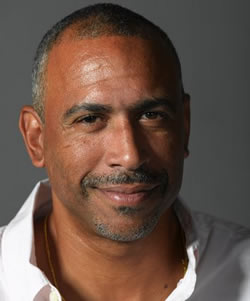
Dr. Fulani Interviews Pedro Noguera in Harlem on Friday


EDUCATION REFORM
The Global Search for Education: Change Leader (C. M. Rubin, Author, The Real Alice in Wonderland book. Blogger at http://cmrubinworld.tumblr.com, Huffington Post) Michael Fullan: The greater urgency the U.S. places on competing internationally, the more that becomes an obsession in the wrong direction. The U.S. school systems have been losing ground since 1980 with growing gaps between high and low performers, and poor rankings internationally. The U.S. needs to take PISA benchmarks seriously, they need to get behind the numbers and realize that the top performers got there by building the collective capacity of teachers in the country -- all the teachers…. We have too many tests, so one way to reduce stress is to have fewer tests. I agree we have to reduce the stress on kids. Enabling them to have more success would be a great stress reducer. So, I would rather ask first what goals we are striving for. Let's build those goals into the learning experience. And those goals have to include the well-being of our kids…


Next Friday, October 28th, 6pm

Dr. Fulani Interviews  
Pedro Noguera, Ph.D  
Professor of teaching and learning at New York University, and a national leader in Urban Education.   

Pedro Noguera 

Dr. Noguera is an Urban Sociologist and a distinguished professor at NYU. He has looked at the achievement gap, youth violence and the failure of our education system. He is widely published and has written 5 books, over 150 articles and is a regular commentator on educational reform issues.

Dr. Noguera and Dr. Fulani are colleagues who have  both stepped outside the boundaries of traditional scholarship and education reform to create unusual and innovative partnerships with poor, urban communities. Dr. Noguera's focus is on creating stronger bonds between social service organizations and poor families. Dr. Fulani has created the All Stars Project which employs a performatory approach to development and learning.  


 For more information call 212.962.1699

Friday October 28th, 6pm
Adam Clayton Powell Jr. State Office Building 
163 W. 125th Street, second floor

Thursday, September 08, 2011

Education Reform: Failing Schools and How Pretending Can Help


EDUCATION REFORM
  • School ‘Reform’: A Failing Grade (Diane Ravitch, NY Review of Books) Because of its utopian goals, coupled with harsh sanctions, NCLB has turned out to be the worst federal education legislation ever passed. Recently, Secretary of Education Arne Duncan predicted that more than 80 percent of the nation’s public schools would be labeled “failing” this year by federal standards, including some excellent schools in which students (usually those with disabilities) were not on track to meet the target. By 2014, if the law is unchanged, very few public schools will not be labeled “failures.” No nation has ever achieved 100 percent proficiency for all its students, and no state in this nation is anywhere close to achieving it. No nation has ever passed a law that would result in stigmatizing almost every one of its schools. The Bush-era law is a public policy disaster of epic proportions, yet Congress has been unable to reach consensus about changing it.
  • "Here is an idea for solving the education crisis in America. What if all the kids currently failing in school pretended to be good learners? What if all the adults - teachers, principals, administrators, parents - played along and pretended that the kids were school achievers, heading for college? What if this national "ensemble" pretended this was the case day after day, classroom after classroom, school district after school district?" The All Stars Project has released a special report in which co-founders Fred Newman, Ph.D. and Lenora B. Fulani, Ph.D. put forth their solution to America's education crisis in a new white paper entitled "Let's Pretend".

Saturday, August 06, 2011

Will 'Transformation Schools' Transform New Jersey Schools?

EDUCATION REFORM
Could ‘Transformation Schools’ Take Hold in Jersey City? (By Chris Neidenberg, Jersey City Independent) To try shaking up the state’s public education system, particularly in troubled urban districts like Jersey City, Gov. Chris Christie is pitching a proposal to eventually let for-profit firms run schools under state law.

Sunday, July 24, 2011

Bill Gates' Illusive Quest for Better Schools

Below is a WSJ article about the decade-long $5-billion investment by Bill Gates in the current education system and its failures. A quicker and easier route to better schools is outlined in the special report on solving the education crisis in America, "Let's Pretend!" by Fred Newman and Lenora Fulani -- a must read for anyone involved in education reform.

EDUCATION REFORM
Was the $5 Billion Worth It? - A decade into his record-breaking education philanthropy, Bill Gates talks teachers, charters—and regrets. (By JASON L. RILEY, Wall Street Journal) One of the foundation's main initial interests was schools with fewer students. In 2004 it announced that it would spend $100 million to open 20 small high schools in San Diego, Denver, New York City and elsewhere. Such schools, says Mr. Gates, were designed to—and did—promote less acting up in the classroom, better attendance and closer interaction with adults. "But the overall impact of the intervention, particularly the measure we care most about—whether you go to college—it didn't move the needle much," he says.

Tuesday, June 21, 2011

E.J. Dionne: Attack on Right to Vote is Underway Across the Country

2012
How states are rigging the 2012 election (By E.J. Dionne Jr., Washington Post/Opinions) An attack on the right to vote is underway across the country through laws designed to make it more difficult to cast a ballot. If this were happening in an emerging democracy, we’d condemn it as election-rigging. But it’s happening here, so there’s barely a whimper… In part because of a surge of voters who had not cast ballots before, the United States elected its first African American president in 2008. Are we now going to witness a subtle return of Jim Crow voting laws?

KENTUCKY
Kentucky gubernatorial campaigns say religion isn't an issue (By Jack Brammer, Lexington Herald Leader/Kentucky.com) Their stances come as former Louisville Mayor Jerry Abramson apparently is the first person of the Jewish faith in Kentucky to run for the office of lieutenant governor. He is running with Democratic Gov. Steve Beshear, who is seeking re-election… Lexington attorney Gatewood Galbraith, who is trying to get enough signatures to run this fall as an independent candidate for governor, said he does not expect religious affiliation of any of the candidates to be an issue in the race.

EDUCATION REFORM
Why American students lag in test scores - Unlike the U.S., high-performing nations have clear, shared standards and pay their teachers well (By Marc Tucker and Jerry Weast, Baltimore Sun) The top-performing countries differentiate their educational spending to give the hardest-to-educate students more resources and support than other students. The U.S. is alone among industrialized countries in providing the most money for the students who have the most advantages.

Monday, June 20, 2011

Death of Duopoly: Independent Voters on the Rise

INDEPENDENT VOTERS

  • Death of the Duopoly -Being binary is bad for business, so when will politics cure its bipolar disorder? Nick Gillespie and Matt Welch on the lessons Washington should learn from the real world. (By NICK GILLESPIE and MATT WELCH, Wall Street Journal) As the number of independents rises, voters who are free from party affiliations are more inclined to view political claims with due skepticism. By refusing to confer legitimacy on the two accepted forms of political organization and discourse, they hint strongly that another form is gathering to take their place.
  • More SD voters say ‘independent’ (By: Bob Mercer, The Daily Republic) There were 88,450 independents registered as of June 15, according to the latest numbers from the state elections office. That is a record number.
  • INDEPENDENT VOTERS MUST TAKE TO FACEBOOK TO GROW THEIR MOVEMENT (by Christopher A. Guzman, CAIVN) As the 'mainstream' media airwaves are often charged with heated and polarizing rhetoric, many citizens are looking for an alternative. In light of Pew's findings, the time is ripe for Independent voters to effectively spread their message to their disillusioned peers regarding which candidates and issues they believe deserve a chance to be heard.


CALIFORNIA TOP TWO
REGION: Prop. 14 will bring as much change as legislative redistricting (By MARK WALKER, North County Times) Minor-party candidates have little chance of appearing in general elections because members of the Green or Libertarian parties, for example, rarely command enough votes to finish first or second in votes cast in the primary.

PRESIDENTIAL CAMPAIGNS
University of Michigan Press is About to Re-Publish Error-Plagued Election Data Book (Ballot Access News) It does not include any Libertarian presidential candidates, not even Ed Clark in 1980 who got 921,299 votes. But it does include Lenora Fulani’s vote in both 1988 and 1992, even though in 1992 she placed fifth (with 73,714 votes), behind not only Ross Perot (who is included) but also behind Andre Marrou (the Libertarian, who received 291,627 votes, but who is not included) and Bo Gritz (the Populist Party nominee, with 107,014 votes, also not included).

EDUCATION REFORM
Arizona schools look at Florida as reform model (by Pat Kossan, The Arizona Republic) But the question is, will such reforms produce the same positive effects in this state as they did in the other? Florida enacted reforms before the 2007-09 recession, which gutted state coffers nationwide. Arizona lacks the money to fully implement Florida's reforms, such as training for teachers, bonuses for schools that improve or free preschool.

Friday, June 17, 2011

American Voters Need Open Primary to Overcome Partisan Destructiveness

OPEN PRIMARY
Randy's Ramblings: Recent shenanigans aren’t a reason to abandon the open primary - Some conservative bloggers are gloating over the Republican Party’s use of Wisconsin’s open primary system to play shenanigans with the upcoming state Senate recall elections. (By: Randy Hanson, Hudson Star-Observer)

PENNSYLVANIA
Third Parties Face Stiff Hurdles in PA (By Judith Ayers, Politics PA) Libertarian Lou Jasikoff stated that they were approached by the Republicans lawyers and told that their signatures to get on the ballot were “no good.” “You have an hour to drop out voluntary or we will sue you for the cost to look up the challenges,” he says he was told... The Green Party has had its own ballot access problems. In 2006 Carl Romanelli ran for the U.S. Senate against Rick Santorum and Bob Casey. Fearing he could siphon votes from Casey, Democrats filed a challenge to his petitions with Commonwealth Court. Romanelli is still facing more than $80,000 in court costs over the matter.

EDUCATION REFORM

  • Joel Klein vs. those status quo apologists (By Valerie Strauss, Washington Post/The Answer Sheet) The rhetoric here is, to my ear, quite remarkable. It doesn’t place children and their development in the foreground; rather, the emphasis is on what schools can extract from kids. It’s a dangerous rhetorical twist, because it points to accountability systems that can decouple school-performance measures from student learning. There’s little persuasive evidence that such systems can promote lasting achievement.
  • Theater on W. 42nd Street Holds Free Day of Classes - Students can take improv, hip-hop, or even meet with "development coaches" during the All Stars Project's Opening Day Saturday. (By Meredith Hoffman, DNAinfo.com Manhattan Local News)
  • ESEA Reauthorization: A Crucial Step to Improve Schools - CAP Event Looks at How to Strengthen American Education Through ESEA (Center for American Progress Action Fund) Two expert panel discussions followed, the first featuring Rep. George Miller; U.S. Secretary of Education Arne Duncan; former U.S. Secretary of Education and current president and CEO of her eponymous company Margaret Spellings; as well as moderator John Podesta. The second expert panel featured Rep. George Miller; American Federation of Teachers President Randi Weingarten; Vice President for Government Affairs and Communications of the Education Trust Amy Wilkins; and moderator Cynthia Brown, the Vice President for Education Policy at the Center for American Progress Action Fund.

Monday, April 25, 2011

Education Reform: we have to get better faster than we ever have in education

EDUCATION REFORM
  • Solving the Education Crisis in America: Let's Pretend (Fred Newman PhD and Lenora Fulani PhD, East Side Institute) As referenced earlier, the more privileged of America’s youth, even by a very early age, have had a host of developmental cultural experiences, which leave them to varying degrees and in varying ways, open to learning. Our lower performing children have not, and moreover, have grown up within cultures which often relate negatively or conflictedly to learning. These children must be helped to grow (develop) if they are ever to begin the learning process and to function in the same classroom environment as the more developed children. The remedy cannot be “education” pure and simple. A system which presumes that classroom learning can substitute for, or override, a lack of development has failed to deliver. Does this have racial connotations? Of course. There is nothing in American life and culture that doesn’t. And a significant proportion of kids failing in the classroom are in inner-city areas and are Black and Latino. But that does not mean it cannot be remedied. However, the remedy cannot be remediation. It must be development.
  • Illinois Bill Exemplifies Groundbreaking Education Reform - State Shows How Collaboration Can Lead to Change (By Cynthia G. Brown, Theodora Chang, Center for American Progress) The bill, S.B. 7, ties tenure and dismissal to performance in the classroom, rather than experience, and makes it more difficult for teachers to strike.
  • Education Secretary Duncan: U.S. schools need to get 'better faster' (Princeton University) "If you look at (education) as a civil rights issue, as an economic imperative, as an issue of national security -- I look at it through all three of those lenses -- we have to get better faster than we ever have in education," Duncan said during a speech Wednesday, April 20, in Richardson Auditorium of Alexander Hall. "Somehow, we have a 19th-century model for a 21st-century economy."
  • Gov. Deval Patrick Opens Up About Educating Kids of Color for The Root (by Jamilah King, ColorLines News for Action) Patrick: "Yet for all the five years we’ve had these extraordinary achievement results, we have had at the same time a persistent achievement gap. Stuck in that gap are poor kids and kids who have special needs or speak English as a second language. A disproportionate number are kids of color. It’s an economic and educational issue to have an achievement gap at all, but to let it go for the years and years, decades or more that we had here [in Massachusetts], that’s a moral question. Now we have some tools to reach that part of our family as well."
  • Newark's Underperforming Schools Almost Have A New Leader (Joy Resmovits, Huffington Post) "With that investment, if things don't work out in Newark, ... it would have a chilling impact on other philanthropists and on those rising-star politicians who may want to latch onto the education issue," said Kevin Chavous, a former Washington, DC city councilman and current national chairman of the Black Alliance for Educational Options. Zuckerberg's donation, however, represents only one tenth of the budget of a system that White Bradley says has a "base level of distress." And working with that high-profile money will put Newark's new superintendent under closer scrutiny.

Wednesday, April 13, 2011

Community Education Series: Ending the Education Crisis in America

The Community Education Series
hosted by Dr. Rafael Mendez, Ph.D. 
welcomes Carrie Lobman, Ed.D., and Bonny Gildin, Ph.D.

If we all pretended that kids who are failing in school were school achievers heading for college, would the education crisis in America be over? 

WE THINK SO!

The most creative and innovative education leaders in the country know that developmental experiences put kids on the road to becoming good learners. Classroom learning can't substitute for development, and kids who come to school without these rich experiences don't learn what schools are teaching. Here's where pretending comes in. Thirty years ago, Drs. Lenora Fulani and Fred Newman founded supplemental after-school development programs to give poor inner-city kids opportunities to pretend their way to growth, and become who and what they're pretending to be. The continued success of this approach prompted them to write "Let's Pretend: Solving the Education Crisis in America." Their two colleagues, Carrie Lobman and Bonny Gildin will share with you what Fulani and Newman have to say, why it's so controversial, and how it can help transform our children's lives.

Bonny L Gildin, Ph.D. is vice president for education initiatives and senior development officer of the All Stars Project, Inc. Dr. Gildin is currently working to extend the reach of the All Stars' innovative developmental after-school model by training the next generation of youth workers and non-profit leaders through university partnerships and the establishment of an Institute for the Study of Play in Newark, NJ.

Carrie Lobman, Ed.D. is associate professor at the Rutgers University Graduate School of Education and director of pedagogy at the East Side Institute for Group and Short Term Psychotherapy. As a leading researcher on play, performance and learning, Dr. Lobman works with educators in the US and internationally in schools and with professional associations including the American Educational Research Association, The Association for the Study of Play and the International Society for Cultural and Activity Research. She is co-author of Unscripted Learning: Using Improvisation Across the K-8 Curriculum.


Friday, May 6, 2011, 6:30 - 8:30 pm
at
106 South Oxford Street, Brooklyn 11217
(C train to Lafayette Ave or any train to Atlantic Ave)
Suggested Donation: $10
Seating is on a first come/first served basis. RSVP to Rafael Mendez

Dennis Walcott Takes Reigns of New York City School System

NEW YORK
NYC to add $1.75 billion to school capital plan (Associated Press, Wall Street Journal) Mayor Michael Bloomberg, an independent, chose Walcott to succeed publishing company executive Cathie Black, who resigned last week after a rocky three months as schools chancellor. Walcott was in Albany on Tuesday thanking state legislators for restoring the funds.


EDUCATION POLICY
The Urgent Need to Reframe National Education Policy (By Elizabeth Demarest, Education Week SUBSCRIPTION) Test scores in the United States have not significantly improved in recent years, the achievement gap has not closed, and other developed nations have continued to build their educational capacity and surpass U.S. performance on international assessments. Political rhetoric exhorts Americans to catch up, but the national policies that are driving education reform do not provide the means.

EDUCATION REFORM
Solving the Education Crisis in America: A Special Report, LET’S PRETEND (by Fred Newman, Ph.D. and Lenora Fulani, Ph.D.) While there is much to say about good teaching, highly motivated administrators, strong discipline and auxiliary support (mentors, tutors, longer school days, parent engagement, etc.), we believe that projects like the Harlem Children’s Zone, the KIPP schools and many other charter schools succeed where much else fails because the teams running those projects are collectively pretending that the kids can become learners. In the process of that jointly performed “pretending” activity, the kids develop. And their development is a critical step on the road to becoming learners.

Saturday, April 09, 2011

Power Struggle in Washington; Idaho Legislature Insults Independent Voters

INDEPENDENT VOTERS AND THE PARTISAN FACE-DOWN


IDAHO LEGISLATURE

  • Idaho Legislature finishes ‘difficult’ session (Betsy Z. Russell, The Spokesman-Review) Rep. George Eskridge, R-Dover, called the session as a whole “tough” and “disappointing,” and said he didn’t like the way the debate over school reforms implied “that teachers are the problem.” He also objected to the Republican Party’s move to close its primary elections, saying, “I think we’ve disenfranchised independent voters.”
  • Public to pay for GOP suit - Lawmakers vote $100,000 to pay attorney fees (Betsy Z. Russell, The Spokesman-Review) “I have to point out, we’re paying $100,000 for the Republican Party to sue the Republican Legislature, defended by the Republican secretary of state, in order to close primaries in Idaho – I just think this is so bad it’s comical,” said Sen. Elliot Werk, D-Boise… Keough said, “I remain disturbed that even while in essence shutting out the public, they asked the public to pay for it.”
  • What Idahoans got from the Legislature (By Ben Botkin - Magic Valley Times-News) Loser: Independent voters, who will have to declare a party affiliation to vote in primary elections, or be classified as unaffiliated voters. Political parties can decide if they will accept ballots from unaffiliated voters.

EDUCATION REFORM
Can a New Schools Chancellor Fix Education Reform's Image Problem? (By Anna Sale, WNYC/It's A Free Country) Walcott called himself "just a guy from Queens" who went to public school and started his career teaching kindergarten. He said he's visited hundreds of schools, "held the hands of students and talked with the moms and dads." His call-and-response with students at City Hall felt warm and natural, where Black had come off as stilted and uncomfortable.

Friday, March 25, 2011

Education Reform: What Works and What Doesn't Work

EDUCATION REFORM
The Record: Can't cut it (THE RECORD North Jersey.com) IN GOVERNOR Christie's first State of the State address, he named education reform as one of New Jersey's most pressing priorities. And as part of that reform, he pledged to "end the myth that more money equals better achievement."

Who has a a solution to the failure of our schools? See Fred Newman and Lenora Fulani's special report Solving the Education Crisis in America 

Thursday, March 17, 2011

Education Reform Needs to Take Place Now

Paul Pastorek, Eric Smith, Tony Bennett, Deborah Gist and Gerard Robinson touch on the numerous reasons why the education of the nations children is seriously lacking and the ways we can fix it.

EDUCATION REFORM
  • Reform should create a student-centered education (By Paul Pastorek, Eric Smith, Tony Bennett, Deborah Gist and Gerard Robinson, The Hill/Congress Blog) Finally, the goal of all reforms should be to create a student-centered education. Today, America can offer an unprecedented array of choices to customize education to ensure each and every child achieves their full potential for learning. Choices can come in many forms, including charter and magnet schools, inter- and intra-district enrollment, dual or early college enrollment, vouchers and tax credit scholarships for private schools and virtual schools. In an age where choices dominate every aspect of our lives, the time has come for greater choices in education.

Tuesday, March 15, 2011

Obama Wants "No Child Left Behind Rewritten"


EDUCATION REFORM
  • Obama to Congress: rewrite No Child Left Behind by fall (By Amanda Paulson, Christian Science Monitor) Under the current law, schools are labeled as failing when a single subgroup fails to make the targeted progress for that year, a standard that has led to a number of suburban schools – like Kenmore, where Obama spoke – where white students are doing well but the school is labeled underperforming because minorities or students with disabilities are not meeting the targets.

Saturday, March 12, 2011

Cure for No Child Left Behind: Let's Pretend!

Who has a a solution to the failure of our schools? See Fred Newman and Lenora Fulani's special report Solving the Education Crisis in America below...


EDUCATION REFORM
Most schools could face 'failing' label under No Child Left Behind, Duncan says (By Nick Anderson, Washington Post)
Obama's plan calls for schools to be rated on how much academic growth their students achieve. Those that excel would be rewarded, the vast majority in the middle would be given more flexibility to choose strategies to improve, and the lowest performers would face a stricter federal mandate to adopt a stringent school turnaround program.
The No Child Left Behind brand has deteriorated since Bush left office in 2009, but many educators agree that the law's focus on standardized testing and minority achievement gaps shined a critical spotlight on problems that public schools have long sought to avoid.
There is also widespread agreement that the typical school will never attain the ideal enshrined in the legislation - that all students should become proficient in math and reading.
In a special report for the performance-based after school program All Stars Project, Fred Newman PhD and Lenora Fulani PhD say pretending can solve the education crisis in America.  Children, who have developed the "capacity to pretend to be who they are not", which in this case is a good learner, will also develop the "capacity to become the thing they are pretending to be."
Is this idea as ridiculous as it might seem at first glance? At the risk of seeming ridiculous, our answer is an emphatic “no.” Because the most innovative researchers and practitioners have come to discover that pretending, or “creatively imitating,” or performing in social contexts, is how human development is produced.1 Harnessing the uniquely human capacity to perform someone or something we are not, underachieving kids can pretend their way to growth. We have seen the repeated success of this approach – not only in our after-school programs at the All Stars Project, but also (perhaps unknowingly) in school settings now applauded as the most successful interventions into the “achievement gap” (so-called), like the Harlem Children’s Zone.