Today is primary day and 3.5 million Flori

Showing posts with label Democracy. Show all posts

Tuesday, April 19, 2016

Get it: 4 out of 4 New Yorkers want open primaries in NY.


The Hankster conducted an informal, small, and very unscientific exit poll this afternoon at my polling place and am pleased to report that 4 out of 4 voters think closed primaries that exclude independents in New York are bad and should be changed. Three of those voters voted for Bernie Sanders, and one voted for Donald Trump.

Here's one of them:


And here's a clip of the protest at City Hall last Thursday calling for open primaries:


Sunday, March 16, 2014

RT America with #EndPartisanship's Chad Peace on Breaking the Party Grip on Our Democracy

Hey hey Hanksteristas!

Lots of breaking news in the independent movement lately! If you have not seen this piece by RT America, check it out now:

RT America invited #EndPartisanship’s legal counsel, Chad Peace, on their ‘Breaking the Set‘ segment to discuss the hundreds of millions of taxpayer dollars that have been used to conduct closed partisan primary elections.

Host Abby Martin [Move over, Rachel Maddow, WAY over!] discussed the record low turnout rate in states like New Jersey and New York where less than 5% of eligible voters ultimately decide who can be their state’s next Governor or even Senator.


Stay tuned -- more to come from America's growing independent movement!

NH

Thursday, December 26, 2013

FELICIDADES !!!!!!

UNAS FELICES NAVIDADES Y PROSPERO 2014


Ha sido un 2013 lleno de cosas buenas. Es mi primer vez escribir un blog, y encima de eso un blog en espanol. 

Gracias a Nancy Hanks que me ha permitido participar en esta pagina. 

En el 2014 mucha salud, en especial. 

En el 2014 mas independencia, mas democracia mas inclusion para el votante. Es nueva mision y necesitamos la ayuda de todos.

Feliz Navidad Y Prospero Ano Nuevo.
It has been a 2013 full of good things. My first time writing a blog, on top of that a blog in spanish.

Thanks to Nancy Hanks who has permitted me to participate on her blog.

In 2014 lots of health, which is the most important thing.

In 2014 more independence, more democracy more inclusion for voters. This is our mission and I need everyone', chans help to reach that goal.

Merry Christmas and Happy New Years.

Happy Chanukah 


Monday, October 14, 2013

Vamos a insistir en que el Candidato independiente porción alcalde de NYC ESTA incluido en el "debate" el 15 de octubre!


Let's insist that el candidato independiente por alcalde de NYC esta included in the "debate" on Oct. 15!

Vamos a insistir en que el Candidato independiente porción alcalde de NYC ESTA incluido en el "debate" el 15 de octubre!


Friday, October 05, 2012

Hankster Livestream from Performing the World on Bambuser Today

DOUBLE UPDATE: See IndieCandidate on Facebook for the vid... https://www.facebook.com/indiecandidate

Great work everyone!


UPDATE: Trouble in Bambuser-land today! Totally my fault as the producer... live and learn, or at least live on...!

You can listen to the last 20 minutes today of The Hankster session. And keep watching for more Bambuser livestream cam this weekend!!!

See Hankster livestream on Bambuser -- Check for Independent Candidate at 12:15PM and then Developing Democracy at 2:45PM. See you there!

Monday, October 01, 2012

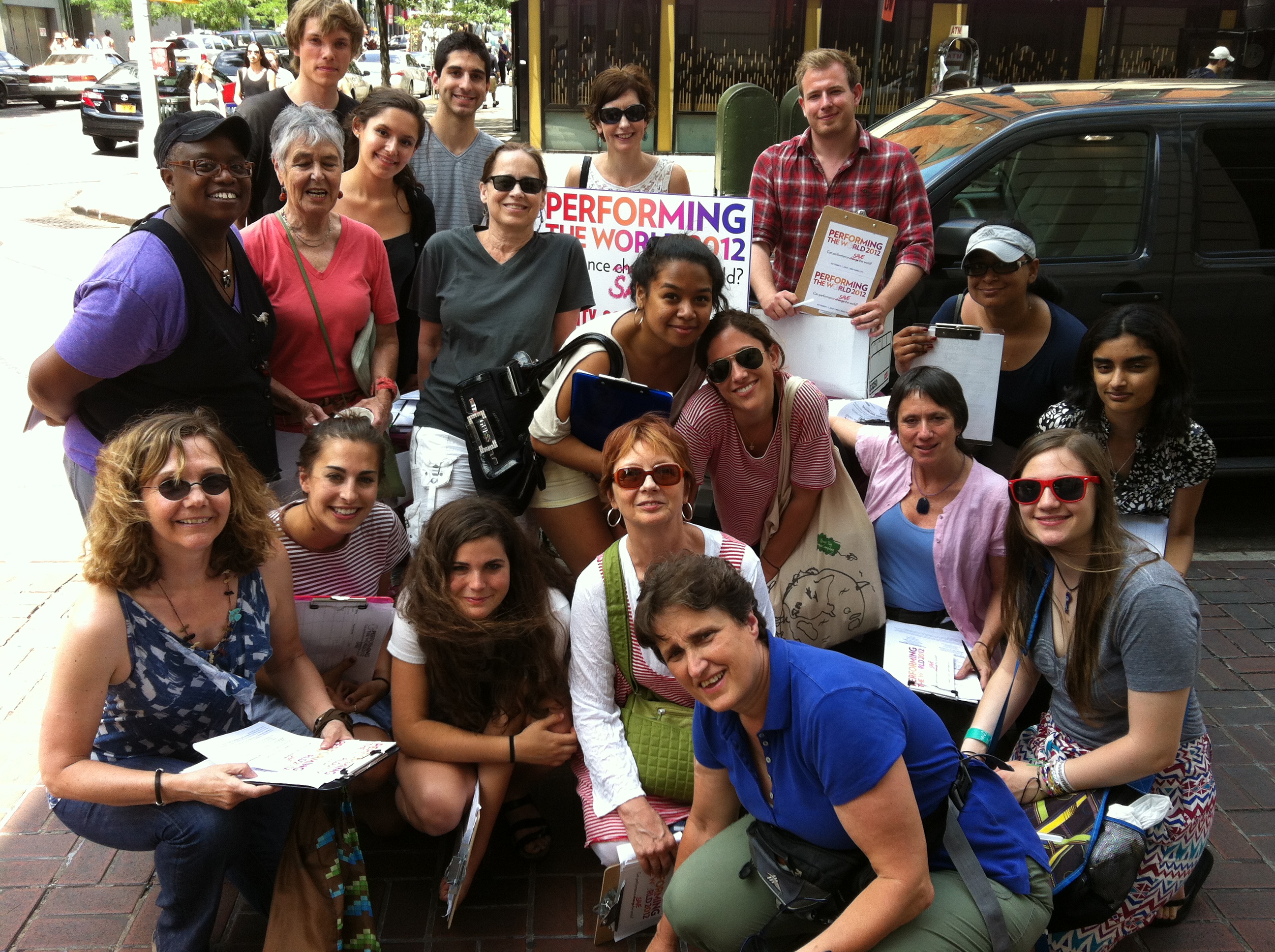
Performing the World 2012: In a World That Can't Be Saved...


Every two years I participate in a magical event held in New York City called Performing the World. This will be my 3rd year presenting as a grassroots independent political blogger based in New York City aligned with IndependentVoting.org -- and with a eye to the development of democracy internationally.

This year the conference is titled Performing the World 2012: Can Performance Change Save The World?  The conference schedule, including bios of all the presenters is now up on the website (www.performingtheworld.org) for your viewing pleasure!

My session is titled Developing Democracy Roundtable 2012

From the Arab Spring to the U.S. independent political movement, our world is in a state of motion. Attendees will join The Hankster in a discussion of the state of democracy internationally and what is needed to develop a participatory political culture. The first 20 participants will receive a copy of Developing Democracy, a documentary created from interviews with Performing the World 2010 attendees.

This year there are a number of democracy-focused sessions:

Can Kids Run a Town?
Dr. Porfirio Grazioli, Nadio La Gamba, Carrie Sackett
Young people learn democracy by performing democracy. Founded in the years after World
War II for Italy’s many orphaned children, today Boys’ & Girls’ Town of Italy is home
to young refugees from Africa, the Middle East and Eastern Europe.


Performance, Dialogue and Building Democratic Solidarity between Zimbabwe, Swaziland and South African Youth Activists
Betsi Pendry
Southern Africa has been torn apart by political conflict, violence and for many, by
the loss of its revolutionary history and potential. There is increasing conflict between
political youth groups in Swaziland, Zimbabwe and South Africa as Zimbabwe and
Swaziland slide into political chaos and South African Youth Congress linked to the ANC supports the "hands off" position of the ANC. The session will explore the activity of the Living Together Project, hoping to develop solidarity through developing the creative and performace skills of a group of political activists in the region.

Creating Democratic Space and Envisioning Peace: Theatre Confronting Violence and Fostering
Community Development in Zimbabwe
Daniel Maposa
This session gives a third degree examination on the use of applied theatre in nurturing social cohesion in the aftermath of politically motivated violence in Zimbabwe in 2008.


Saturday, May 05, 2012

C-Span Coverage of Cathy Stewart's Politics for the People Now Online

C-Span has a video up in their library that you need to check out! From Sarah Lyons:
  • The CSPAN broadcast was pushed an hour back last night because of an emergency Congressional hearing.Here's the link to coverage of Politics for the People in case you missed it.  http://www.c-spanvideo.org/program/305705-1
Chief organizer of New York City Organizations of the New York Independence Party, Cathy L. Stewart, conducts her Politics for the People session with guests Jackie Salit, long-time grassroots independent organizer and consummate outsider, President of independentvoting.org and Mickey Edwards, a 16 year veteran of the US Congress from Oklahoma City, and a chairman of the House Republican leadership's policy committee.

This Independence Party of New York New York City Organizations event took place at the Baruch College Newman Center on Apr 27, 2012

Participants spoke about independent political movements, the challenges of being an unaffiliated candidate, and the two-party system of American politics. Among the topics they addressed were independent voter demographics, the history of independent movements, and recent levels of partisanship in Washington. They responded to questions from the audience.

To promote the series, C-Span issued this particular on April 30.

Panel Looks at Role of Independents in U.S. Politics


Washington, DC
Monday, April 30, 2012

The U.S. political system was the focus of the “Politics for the People” series in New York Friday.  Former U.S. Congressman Mickey Edwards and Jackie Salit, President of IndependentVoting.org, were the featured panelists.

He says in elections, like in any normal decision making process, people want choices but in this case voters are only offered choice A or B.

Edwards advocates changing this given the growing population of independents.
Jackie Salit agreed with Edwards. She added on election day it’s the American people who are speaking.

The “Politics for the People” series was created in 2002 by the New York County Independence Party. The Series aims to give the public an inside look at public policy from an independent’s point of view.


For the Hankster Series up close and personal, please see HanksterTube.


Monday, April 30, 2012

Hankster Choice of the Week: Cathy Stewart's Politics for the People with Jackie Salit and Mickey Edwards

This week The Hankster will feature Politics for the People, a monthly briefing and forum where independent political activists in New York City dialogue with each other and engage city, state and national elected and non-elected leaders on events of the day concerning independent politics.

Cathy L. Stewart, chief organizer of the NYC Organizations of the New York Independence Party, the founder and creator of the P4P Series, has been a mover and shaker in independent politics since the 1980s. One of the most popular programs offered by the NYCIP, Politics for the People is designed to give an inside look at politics and history from an independent’s point of view.  The class uses a variety of formats and explores a wide range of topics.  Whether featuring a guest speaker or a panel discussion, every class includes an in-depth Q & A session with audience members.

The Hankster is pleased to bring you the latest P4P session in several segments throughout the week.

Please tune in as Stewart brings to the stage Mickey Edwards, former Congressman from Oklahoma City and author of the upcoming book based on his provocative Atlantic article How to Turn Republicans and Democrats in to Americans, and Jackie Salit, the outspoken independent strategist and long-time organizer of the independent movement, author of a soon-to-be-published book Independents Rising.

Jackie and Mickey speak with New York City Independence Party members, activists, and others --  indeed a national audience of concerned Americans, as covered by C-Span, in an important dialogue  about our democracy and our democratic -- but highly partisan-centric -- process.

To begin the series, I will start at the end, with a question by my colleague and friend Dr. Jessie Fields, a medical doctor doctor with a long-time practice in Harlem and in the under-served communities of New York, and a brilliant community organizer. She speaks now about a country in crisis: our country, a nation, a culture, not being able to talk about real issues because of the partisanship of our politics. 


Monday, April 23, 2012

Live Blogging Jackie Salit's National Confrerence Call for Independent Voters

Tuned in early tonight for Jackie Salit's conference call, featuring Mickey Edwards --

One of my favorite parts of these every six-week calls is the roll call. So many activists, so many states!!!

Intro by Nancy Ross,

Mickey Edwards, author of The Parties vs The People, How to Turn Democrats and Republicans into Americans, guest.

JS -- magnetic title, represented Oklahoma in Congress, speaks out about partisanship. Met at 225 Broadway at the CUIP offices, kindred.

So welcome to Mickey Edwards!

ME -- thanks

JS -- Provocative question: you have said that Americans have tried to take back their government but have not succeeded in using elections to do that.

ME -- We elect some group over another, doesn't work... I believe in the market system, not about the candidates, not about the voters, however -- closed primary primaries, when the candidates run for office, they are not thinking of the larger picture; focused on the narrow subset of primary voters.

We need broader choices. Only in our elections do we see private clubs proscribing our choices. Open market. Completely anti-democratic. Parties: take it or leave it! I just couldn't stand it anymore!

JS -- tell us about your experience in Congress. Share why you decided to run for Cong and what happened when you got there?

ME -- I had a vision when I ran. Belonged to a political party, but when I got elected, I crossed a magic line, supposed to represent the people. However everything was straight part line in voting within the Congress. Not sitting as Americans deciding theses issues. Was involved in committee negotiations. Members commit to party line before the vote. Party leaders run the process. That bothered me. Another example, redistricting -- Jackie, I'm a Republican -- won in a Democratic district. They redistricted me. Oklahoma City district was cut way up to Kansas and over to Arkansas. Looked at the Constitution. Constituents need to know the representative.... I'm from the City, don't know much about farmers and ranchers, their representation was not there, however it somehow benefited the party in power.

And by the way, nobody said in our governmental structure that reps should be divided according to "aisles" according to party.

JS -- The rigidity of the political system that hurts us -- winner take all. What do you say to people who say that that kind of rigidity is necessary for our kind of political system?

ME -- Yes, that works for prior systems, however, our Founding Fathers decided we wanted a citizen-directed form of government. Parliamentary systems are very easy to measure. But we rejected that form. We wanted a system of representation that speaks for the actual people in the districts.

JS -- Mickey, was it hard (emotionally) to write this, to take this position?

ME -- (chuckles) Frankly I was angry. How could it happen that people have all these experiences and yet we are locked into a party that tells us we have to do this or that on behalf of the party.

JS -- Many people on the call probably believe that open primaries would make a difference, Open Primaries Top Two won in California...

ME -- The primary system was progressive, democratic in the beginning, but the people in California and Washington State proved that we can change this. However, the Speaker of the House doesn't have to be a party leader. Look at Canada. You could have Colin Powell be the Speaker of the House. Or you could have the Speaker get 60 percent of the House.

Why do you have Speaker staff Dems and Repubs issuing policy papers?

JS -- 40% of Americans consider themselves independent, what do you think about the influence of independents?

ME -- The revolution is already underway! When Scott Brown got elected, people said, how did that happen in a Dem state? Well, because of the independents.

It's a matter of confrontation! Get people together to demand whatever you need and. This is about private clubs. That's what the parties are.

When I was in office, I had a lot of town meetings where I was confronted with voters who refused to accept a partisan excuse.

JS -- What do you think about Barack Obama and his independent coalition that won the White House, gets there and is faced with the partisan trap? What does he say?

ME -- He wanted to govern as a non-partisan, but misunderstood the partisan system. He proposed things that you might be able to forge a compromise around. But Nancy Pelosi said no -- WE won the election, here's the agenda.... [talks about talking with students about separation of powers - executive, legislative, judicial...] His heart was in the right place, but he misread the partisan politics of the job.

JS -- Yes, that provides insight to what's happening, and to the American people, and to The President: I love that you used "Parties vs. The People" -- your message really speaks to the sentiment of independents and the independent movement.


Tuesday, December 27, 2011

Sameh Abdelaziz: After Spring, any thing can happen!

by Sameh Abdelaziz

After Spring, any thing can happen!

Even optimists are starting to have second thoughts about the Arab Spring, which is quickly turning into blood showers. The numbers of dead and injured are astounding and the prize so far is confined to three bad possibilities. An extension of a dictatorial corrupt regime such as the case in Egypt, the election of an Islamist party that the West don’t understand nor trust, as the case is in Tunisia, or an endless insane killing as the case seem to be in Syria, Libya, and Yemen. This bleak picture is unfortunately true.

Consecutive American administrations based its policy in the Arab World, on the need for stable regimes that can maintain the critical oil supply, while ensuring the safety of Israel. The American partners in this policy have been corrupted and autocratic regimes that control their countries with iron fists.

The premise of stability was shattered on September 11. However, instead of reassessing our policies and trying to understand the cause and effect we started an endless debate about an imaginary clash of civilization. None of our think tanks stopped to argue that in the age of the internet there is only one civilization with different levels of restrictions imposed on its inhabitants.

This year, our politicians were shocked, as usual, to discover that the people of the Arab World, wearing headscarfs or jeans and sometimes both, demanded freedom and were willing to die for democracy. The so-called Arab Spring surprised the world and especially America.

In the case of Egypt, after a few days of confusion, the American government supported at least publicly handing Mubarak’s power to the second in command, a junta of Egyptian generals. In Libya, our government participated in the physical removal of Gaddafi. In Bahrain, Yemen, and Syria Obama’s administration shut in different degrees their eyes on the ongoing brutality.

Ten months after the initial spark, demonstrations are igniting once again in Cairo's Tahrir Square. The Syrian revolution that started peaceful is sliding slowly into an armed conflict, and Yemen is disintegrating. The Arab revolutions are moving to a next phase that is impossible to defined, but will clearly reshape the region and impact American interests for years to come.

The first step to deal with this challenging environment is to understand that stability built on autocracy is over, because the genie is already out of the bottle. The options left for America in the Middle East are either to stand idle, which will definitely elongate people’s struggles, or to support the revolutionary movements to the dismay of some old allies.

In such turning points, history can provide NO guarantees. But, logically an elongated struggle will most likely bring extreme religious factions. These extremists are already presenting themselves as the alternative to the secular institutional corruption supported by America and the West. On the other hand, a shorter struggle can enable the real actors of the revolution, mostly liberals and moderate Islamists, to provide a reliable alternative.

It is in America’s interest to support a peaceful and speedy power transfer.

America has developed the Egyptian military apparatus over the last forty years and even handpicked their leadership. This influence is the result of 1.3 billion dollars in military aid that goes mainly to buy loyalty through fancy long training engagements and huge commissions permissible by Egyptian laws. This is the time to use this capital.

I’m quite confident that the American administration is able, if not so willing, to advise/ pressure the Egyptian generals in private to share power with a civilian leadership representing all the major political factions. Such a move will bring immediate calm to the explosive situation in Egypt and should be a first step towards a complete and real power transfer to elected civilians. The new Egyptian administration might be less loyal to America than Mubarak and his cronies, but the people of Egypt and the rest of the Arab world can and will support America if the American administration is smart enough to support freedom and democracy.

A resolution to the Egyptian crisis will serve as a model to bring back stability to other countries within the region. America should support the Arab revolution because of principles, but it is also good for business.


Sameh Abdelaziz is an Egyptian American born in Alexandria. He immigrated to the US in the late eighties, and works as an IT manager. He blogs on OpEd News.

Wednesday, November 09, 2011

William J. Kelleher: Voting - An Essential, But Not Sufficient, Requirement for Democracy

Congrats to my colleague and co-blogger from the West Coast William J. Kelleher, PhD on the publication of his new Internet Voting Now! Here's How. Here's Why -- So You Can Kiss Citizens United Goodbye!

Internet Voting Now! is a thoughtful and compelling defense of moving beyond partisan machine politics in America into the current age of technology, bringing our original revolutionary founding principals and intentions with us.

Dedicated "to the men and women of our Founding Generation, who were willing to sacrifice everything for the Original American Dream -- Liberty through Self-Government," Internet Voting Now! begins:
Like the horseless carriage 100 years ago, Internet voting is coming to the USA.
And to get you started on his blog, here's a snipit from his latest post on Internet Voting For All, which rang a serious bell for me:
Voting, of course, is a very serious matter. It is an essential, albeit not sufficient, requirement for democracy. Voting is one of the principle ways by which the people of a nation are empowered to have a voice in their own destinies. The process of voting, that is, the means by which a vote is conducted, must be one that commands the trust of the voters, or the results will not be legitimate. Illegitimate governments can only cause political unhappiness, and possibly political unrest and turmoil. Hence, the right to cast a vote is meaningless unless the means by which the vote is counted is trustworthy.
- NH


Saturday, August 20, 2011

Hot Summer, Volatile Political Scene in New York State


NEW YORK
  • Protesters surprise Meeks over debt vote; Pol calms fears of demonstrators (by AnnMarie Costella, Queens Chronicle) On a picturesque afternoon, the group — a combination of individuals from UnitedNY.org, New York Communities for Change and the Working Families Party — marched in front of Meeks’ office chanting slogans like “Help the poor and the needy, not the rich and the greedy,” and “This is what democracy looks like.” They also waved signs, some of which read “Protect Queens” and “Whose side are you on?”
  • Protestors in Harlem Rail Against Zimbabwe Sanctions and Libya Bombing (Bulawayo 24 News) Some of the organizing groups were the Nation of Islam, the December 12 Movement, the Freedom Party and many local organizations, most reflecting the Pan-African activist movement. Anti-imperialist organizations like the International Action Center also supported the event. Workers World Party members distributed thousands of newspapers and leaflets throughout the city to build for the action.
  • MATTER OF NEW YORK STATE COMM. OF INDEPENDENCE PARTY v. NEW YORK STATE BD. OF ELECTIONS ( Leagle.com) Re: Erie County Wilson Pakula authorization
  • MATTER OF McGRATH v. ABELOVE (Leagle.com) Re: Rensselaer County Wilson Pakula authorization
  • Bosworth loses Independence ballot line (JESSICA ABLAMSKY, The Island Now) Nassau County Legislator Judi Bosworth (D-Great Neck) was thrown off the Independence Party line for the Sept. 13 primary election after a successful lawsuit by her District 10 opponent, Republican Elizabeth Berney, a Great Neck resident who twice ran unsuccessful challenges against Congressman Gary Ackerman (D-Roslyn Heights).

Thursday, August 11, 2011

Harry Kresky: America's Democracy Deficit


S&P DOWNGRADE
  • America's Other Deficit (Harry Kresky, Huffington Post) Partisanship is not a psychological illness. It is imbedded in the very structure of our political system. When times are good and the economy is growing, short term compromise (if not long term planning) can be achieved. When they are not, the ability of the political system to navigate tricky waters becomes less and less stable, more and more partisan.
  • Mayor Michael Bloomberg: 'We Have to Get Behind the President' (George Stephanopoulos, ABC News/George's Bottom Line) “And there can always be a third party candidate. But in the end if you take a look at what happened in the last election, and when people talk about third party candidates and say ‘Well they don’t have a chance so I got to go and pick the lesser of two evils of the major parties.’”
  • Johnston: Michael Bloomberg is a real cure for what ails us (By James Johnston, Milford Daily News - MA) In the 1960s, I was young and idealistic as was most of the rest of my generation. We knew what was going on and changed most of the things we didn't like in our society. Maybe we could not do the whole job of saving our world, but at least we made ourselves heard and did a substantial job of real reform. We ended a war, removed a corrupt president from office and secured civil rights for all of the citizens of this nation against awful opposition from the entrenched forces of the conservative right... Are there no idealistic and practical leaders around today? Yes there is at least one, and as mayor of New York, he is in plain sight...


Thursday, July 21, 2011

Ordinary Independent Citizens Should Not Be Asked to Stand Aside for Rabid Partisan Choices

INDEPENDENT VOTERS
Phil Power: Partisanship threatens public confidence (Livingston Daily - MI) So he seems to be saying that ordinary citizens (otherwise known as independent voters) should simply stand aside while the rabid partisans choose two candidates at either extremes. Then, maybe, the rest of us might be allowed to pick between the two. That's not my idea of democracy. What worked so well for years was the acceptance of the necessity of compromise.

Saturday, July 16, 2011

Wisconsin: Politics of Cynicism Inconsistent with Healthy Democracy

WISCONSIN RECALL
Commentary: This isn’t what democracy looks like (By: John Franco, Morris Sun Tribune) These cynical partisan strategies are ploys for winning political advantage at all costs. They may cause a backlash. The public can and will vote the Republican Party out of office if it goes too far. The politics of cynicism will not stand. It's inconsistent with a healthy democracy.

Wednesday, June 29, 2011

Contradictions of Our Flawed Democracy: What Can Be Done?

Libertarians Matt Welch and Nick Gillespie have written a new book "Declaration of Independents: How Libertarian Politics Can Fix What's Wrong With America." (See the article in the conservative TownHall.com below) 
"(W)hen you get independent from politics, things are going great because people can experiment, they can innovate. ... We should squeeze down the (number of) places where we need a consensus to the smallest area possible, because all the interesting stuff happens outside of that."

While I completely agree with people experimenting and being innovative and "squeezing down where we need consensus," frankly, I don't believe that libertarian politics can fix anything, never mind "what's wrong with America."

For one thing, I don't think there is a "fix" for what ails us:  it's a historical problem. And for another thing, I don't think there's anything "wrong" with America.  The contradictions in our flawed democracy are quite real and very active. That's the stuff of revolution and it's up to the people to move us forward. Yes, the history of our country that has produced the current entrenched partisan structures needs to be changed. There won't be any real change unless there is development, unless we the people move beyond a narrow partisan agenda. And that is happening!

Fortunately, there is a new developmental movement growing throughout the country that is organizing independents and addressing core American values of democracy and fairness.  IndependentVoting.org, for example, has launched a national campaign to lobby Congress to hold hearings on the structural discrimination in our electoral system against independent voters. See also Jackie Salit's keynote at the national conference of independents last February, now available as a documentary on DVD "Can Independents Reform America?")

I recommend reading Death of the Duopoly in the WSJ last week, penned by our libertarians Matt and Nick:
 -- "Fortunately, a more efficient system is finally on the doorstep of America's most stubborn, foot-dragging, reactionary sector—government at the local, state and especially federal levels—and its officially authorized, customer-hating agents, the Democrats and Republicans. As the number of independents rises, voters who are free from party affiliations are more inclined to view political claims with due skepticism. By refusing to confer legitimacy on the two accepted forms of political organization and discourse, they hint strongly that another form is gathering to take their place."


More on this:
INDEPENDENT VOTERS


  • A New Day in Politics (John Stossel, Town Hall) Most Americans used to call themselves Republican or Democrat. These days, more call themselves independent. What does that mean for American politics? A lot. "Independents are everywhere, and they're becoming the largest single voting bloc in the country," Reason magazine Editor Matt Welch says. " (T)hey can determine every national election and every ... election for state office. So independent voters -- people who refuse to say, 'I'm a Republican or I'm a Democrat' -- that's where all the action is."
  • Iowans offered conflicting assessments of Obama’s record on the economy (BY STEVE TRAINOR & LYNN CAMPBELL, Missouri News Horizon) Strawn said Democrats once had a 113,000 voter registration advantage over Republicans, but that has shrunk by nearly two-thirds. As of June 1, Iowa Democrats had a 36,342-person advantage over Republicans. The state had 609,500 active Republicans at 29.1 percent, 645,842 active Democrats at 30.9 percent and 698,516 active independents at 33.4 percent among Iowa’s 2.1 million registered voters, according to the Iowa secretary of state’s office.
  • Americans Broadly Favor Obama's Afghanistan Pullout Plan (by Lydia Saad, Gallup) The vast majority of Democrats and independents, as well as half of Republicans, favor the outlines of Obama's plan, according to the June 25-26 Gallup poll.
INDEPENDENT REDISTRICTING
California’s new independent redistricting process could endanger 5 Republican House seats (Washington Post) Republicans account for roughly 31 percent of California’s voters and 36 percent of its congressional delegation — at 53 members, the nation’s largest. Democrats comprise 44 percent of the state’s voters and 62 percent of its congressional delegation. About 1 out of every 5 California voters declines to declare a party preference.

CAMPAIGN FINANCING LAW

Tuesday, March 29, 2011

TOP TWO, PROP 14, and DEMOCRACY

Recently, Examiner.com held a debate on the question as to how democratic Top Two election systems are, such as California’s Proposition 14. Here is the winning statement of the case that Top Two systems can be highly democratic, given the appropriate supporting conditions.

TOP TWO and DEMOCRACY
It’s a law of nature that every “top” has a “bottom.” So I’ll start my discussion at the top, and then drop down to the other part.

Political legitimacy
For a democratic system to work well, the government must have a substantial degree of legitimacy in the opinion of the general public. As our Declaration of Independence says, we instituted our government “deriving [its] just powers from the consent of the governed.” If the government itself becomes destructive of these rights, “it is the right of the people to alter or abolish it.”

So, legitimacy with the public is the very foundation which our government, even today, stands upon. If this legitimacy is lost, or even diminished significantly, then there will be political trouble, like we have seen recently in the Middle East.

While every society has its share of unhappy and anti-social individuals, these can be kept to a minimum by following the principle of “majority rule.” Of course, our Constitution requires the government to respect the rights of minorities. But generally speaking, legitimacy will be preserved if the majority of the people feel that their will is being honored by the government.

That is why I say there is considerable political wisdom inherent in an election process that puts the final vote in a top two system. When the final vote is for either “A” or “B,” the winner will always be by a majority. If the final vote had three or four or five different candidates, the risk would be that none of them would receive a majority of votes. Then problems with legitimacy would be invited. Suppose “A” got 34% of the vote, and “B” and “C” each got 33%. “A” would be the winner, but not by a majority. In fact, 66%, a super majority, of the voters expressly preferred someone other than “A.” They would all be disappointed with the election’s results. This is foolishly asking for trouble.

Top Two’s Bottom
Candidates don’t simply appear, as if by magic, into a top two final contest. They arrive there as the result of an earlier, or “primary” process.

There are all sorts of ways to pick the last two candidates for the final vote. In theory, they could be appointed by a dictator, king, governor, or a legislative decree. But these methods get us back to the legitimacy issue. In a democracy, the people should be involved in choosing the entire field of candidates, both for the primary vote and for the general election (in which one of the top two is finally chosen).

Party Domination at the Bottom
One way to involve at least some of the people in selecting candidates is to have political parties nominate who they want to run. Each party would put its own candidates on the primary ballot, and the voters would decide from among these which two will go to the general election.

A downside to this is that people who are independent of any of the political parties have a much more difficult time becoming a candidate. They might have to conduct a write-in campaign, and these are almost never successful. Also, the party method of choosing candidates often produces partisan extremists, who don’t represent the will of the majority of all the people. California had these very problems, so in June of 2010 the voters passed Proposition 14.

Prop 14 takes away the special privileges that the political parties used to have. One of those privileges was to allow the parties to pick their own candidates, and then limit voting for its candidates in the primary to only party members. This resulted in around 3.4 million independents being excluded from voting for candidates in the primary.

But under Prop 14, every individual who wants to be on the primary ballot has an equal opportunity to do so. Each person can “self-select.” And the primary vote is also open to all. Clearly, the Prop 14 system of Top Two has both a democratic top and a democratic bottom.


William J. Kelleher, Ph.D.
Internetvoting@gmail.com

Monday, March 14, 2011

South by Southwest

SXSW 2011

“There’s going to be a moment, and it could be in 2012 – you know for my party’s sake, I hope it’s in 2016 – but some independent candidate is gonna just come out of nowhere and raise a billion dollars on the Internet, saying ‘screw both these parties, it’s you and me baby, let’s go change this thing.’ It will be the end of the two parties.” – Joe Trippi, a panelist at a South by Southwest Interactive conference in Austin; the topic of the panel:

“The people-powered revolution, fueled by the Internet and technology, will change the worlds of activism, media and politics.”

SXSW 2011 was also attended by Hankster buddy Rai-mon Nemar of LEGENDmag, the independent lifestyle magazine.

Friday, March 11, 2011

Idaho Judge De-Democratizes Primary Election System

IDAHO COURT CLOSES OPEN PRIMARY

Dan Popkey: Idaho GOP eyes primary election solution - The conservative wing’s court victory brings factions to the table to maintain the party’s dominance. (Idaho Statesman) Senate State Affairs Committee Chairman Curt McKenzie, R-Nampa, and Sen. Mitch Toryanski, R-Boise, are briefing a closed-door Senate GOP caucus Thursday. McKenzie says the issue of how to treat independents is central. “That ‘fine detail’ is a significant one when more Idahoans identify themselves as ‘independent’ than ‘Republican,’” said McKenzie.

Also see Harry Kresky's oped Democracy and the Institutions of Democracy:
The primaries in both parties have been captured by a small number of hard core party activists and ideologically driven elements. In the Democratic Party, the public service unions dominate; in the Republican Party it is social conservatives. Turnout in some states is as low as 10 percent of party members. Given the growing number of independents, the percentage, measured against the total electorate is significantly lower. In California some 3.5 million voters are not members of a political party. In New York, the number is 2.4 million. In response to this situation, the voters of California recently passed, by referendum, a law that abolished party primaries, replacing them with a first round in which all candidates are on an equal footing and all voters can participate. The top two go on to the general election. In New York and other closed primary states, nonaffiliated voters are barred from the primary where the candidates on the general ballot are chosen. And, like in the pre-civil rights movement south, in areas were one party dominates, the outcome of the primary determines who is elected.

Our elected officials are, therefore, often the most partisan elements in each party and they bring their partisanship into the halls of Congress and state legislatures. There is a growing democracy movement in America that is addressing this political and policy impasse. In doing so, they are challenging some of the institutions of democracy, in particular the parties, and the primary system that 100 years ago was a democratic reform, but now is a barrier to the exercise of democracy.