Have a Happy Hanksta Holiday!
Randy
WHERE THE INDEPENDENTS ARE.....A daily news feed of, by and for Independents across America.
Today is primary day and 3.5 million Flori
Showing posts with label Republicans. Show all posts
Tuesday, December 24, 2013
Monday, April 23, 2012
Live Blogging Jackie Salit's National Confrerence Call for Independent Voters
Tuned in early tonight for Jackie Salit's conference call, featuring Mickey Edwards --
One of my favorite parts of these every six-week calls is the roll call. So many activists, so many states!!!
Intro by Nancy Ross,
Mickey Edwards, author of The Parties vs The People, How to Turn Democrats and Republicans into Americans, guest.
JS -- magnetic title, represented Oklahoma in Congress, speaks out about partisanship. Met at 225 Broadway at the CUIP offices, kindred.
So welcome to Mickey Edwards!
ME -- thanks
JS -- Provocative question: you have said that Americans have tried to take back their government but have not succeeded in using elections to do that.
ME -- We elect some group over another, doesn't work... I believe in the market system, not about the candidates, not about the voters, however -- closed primary primaries, when the candidates run for office, they are not thinking of the larger picture; focused on the narrow subset of primary voters.
We need broader choices. Only in our elections do we see private clubs proscribing our choices. Open market. Completely anti-democratic. Parties: take it or leave it! I just couldn't stand it anymore!
JS -- tell us about your experience in Congress. Share why you decided to run for Cong and what happened when you got there?
ME -- I had a vision when I ran. Belonged to a political party, but when I got elected, I crossed a magic line, supposed to represent the people. However everything was straight part line in voting within the Congress. Not sitting as Americans deciding theses issues. Was involved in committee negotiations. Members commit to party line before the vote. Party leaders run the process. That bothered me. Another example, redistricting -- Jackie, I'm a Republican -- won in a Democratic district. They redistricted me. Oklahoma City district was cut way up to Kansas and over to Arkansas. Looked at the Constitution. Constituents need to know the representative.... I'm from the City, don't know much about farmers and ranchers, their representation was not there, however it somehow benefited the party in power.
And by the way, nobody said in our governmental structure that reps should be divided according to "aisles" according to party.
JS -- The rigidity of the political system that hurts us -- winner take all. What do you say to people who say that that kind of rigidity is necessary for our kind of political system?
ME -- Yes, that works for prior systems, however, our Founding Fathers decided we wanted a citizen-directed form of government. Parliamentary systems are very easy to measure. But we rejected that form. We wanted a system of representation that speaks for the actual people in the districts.
JS -- Mickey, was it hard (emotionally) to write this, to take this position?
ME -- (chuckles) Frankly I was angry. How could it happen that people have all these experiences and yet we are locked into a party that tells us we have to do this or that on behalf of the party.
JS -- Many people on the call probably believe that open primaries would make a difference, Open Primaries Top Two won in California...
ME -- The primary system was progressive, democratic in the beginning, but the people in California and Washington State proved that we can change this. However, the Speaker of the House doesn't have to be a party leader. Look at Canada. You could have Colin Powell be the Speaker of the House. Or you could have the Speaker get 60 percent of the House.
Why do you have Speaker staff Dems and Repubs issuing policy papers?
JS -- 40% of Americans consider themselves independent, what do you think about the influence of independents?
ME -- The revolution is already underway! When Scott Brown got elected, people said, how did that happen in a Dem state? Well, because of the independents.
It's a matter of confrontation! Get people together to demand whatever you need and. This is about private clubs. That's what the parties are.
When I was in office, I had a lot of town meetings where I was confronted with voters who refused to accept a partisan excuse.
JS -- What do you think about Barack Obama and his independent coalition that won the White House, gets there and is faced with the partisan trap? What does he say?
ME -- He wanted to govern as a non-partisan, but misunderstood the partisan system. He proposed things that you might be able to forge a compromise around. But Nancy Pelosi said no -- WE won the election, here's the agenda.... [talks about talking with students about separation of powers - executive, legislative, judicial...] His heart was in the right place, but he misread the partisan politics of the job.
JS -- Yes, that provides insight to what's happening, and to the American people, and to The President: I love that you used "Parties vs. The People" -- your message really speaks to the sentiment of independents and the independent movement.
One of my favorite parts of these every six-week calls is the roll call. So many activists, so many states!!!
Intro by Nancy Ross,
Mickey Edwards, author of The Parties vs The People, How to Turn Democrats and Republicans into Americans, guest.
JS -- magnetic title, represented Oklahoma in Congress, speaks out about partisanship. Met at 225 Broadway at the CUIP offices, kindred.
So welcome to Mickey Edwards!
ME -- thanks
JS -- Provocative question: you have said that Americans have tried to take back their government but have not succeeded in using elections to do that.
ME -- We elect some group over another, doesn't work... I believe in the market system, not about the candidates, not about the voters, however -- closed primary primaries, when the candidates run for office, they are not thinking of the larger picture; focused on the narrow subset of primary voters.
We need broader choices. Only in our elections do we see private clubs proscribing our choices. Open market. Completely anti-democratic. Parties: take it or leave it! I just couldn't stand it anymore!
JS -- tell us about your experience in Congress. Share why you decided to run for Cong and what happened when you got there?
ME -- I had a vision when I ran. Belonged to a political party, but when I got elected, I crossed a magic line, supposed to represent the people. However everything was straight part line in voting within the Congress. Not sitting as Americans deciding theses issues. Was involved in committee negotiations. Members commit to party line before the vote. Party leaders run the process. That bothered me. Another example, redistricting -- Jackie, I'm a Republican -- won in a Democratic district. They redistricted me. Oklahoma City district was cut way up to Kansas and over to Arkansas. Looked at the Constitution. Constituents need to know the representative.... I'm from the City, don't know much about farmers and ranchers, their representation was not there, however it somehow benefited the party in power.
And by the way, nobody said in our governmental structure that reps should be divided according to "aisles" according to party.
JS -- The rigidity of the political system that hurts us -- winner take all. What do you say to people who say that that kind of rigidity is necessary for our kind of political system?
ME -- Yes, that works for prior systems, however, our Founding Fathers decided we wanted a citizen-directed form of government. Parliamentary systems are very easy to measure. But we rejected that form. We wanted a system of representation that speaks for the actual people in the districts.
JS -- Mickey, was it hard (emotionally) to write this, to take this position?
ME -- (chuckles) Frankly I was angry. How could it happen that people have all these experiences and yet we are locked into a party that tells us we have to do this or that on behalf of the party.
JS -- Many people on the call probably believe that open primaries would make a difference, Open Primaries Top Two won in California...
ME -- The primary system was progressive, democratic in the beginning, but the people in California and Washington State proved that we can change this. However, the Speaker of the House doesn't have to be a party leader. Look at Canada. You could have Colin Powell be the Speaker of the House. Or you could have the Speaker get 60 percent of the House.
Why do you have Speaker staff Dems and Repubs issuing policy papers?
JS -- 40% of Americans consider themselves independent, what do you think about the influence of independents?
ME -- The revolution is already underway! When Scott Brown got elected, people said, how did that happen in a Dem state? Well, because of the independents.
It's a matter of confrontation! Get people together to demand whatever you need and. This is about private clubs. That's what the parties are.
When I was in office, I had a lot of town meetings where I was confronted with voters who refused to accept a partisan excuse.
JS -- What do you think about Barack Obama and his independent coalition that won the White House, gets there and is faced with the partisan trap? What does he say?
ME -- He wanted to govern as a non-partisan, but misunderstood the partisan system. He proposed things that you might be able to forge a compromise around. But Nancy Pelosi said no -- WE won the election, here's the agenda.... [talks about talking with students about separation of powers - executive, legislative, judicial...] His heart was in the right place, but he misread the partisan politics of the job.
JS -- Yes, that provides insight to what's happening, and to the American people, and to The President: I love that you used "Parties vs. The People" -- your message really speaks to the sentiment of independents and the independent movement.
Thursday, December 29, 2011
Independents 2012: Don't Bet Your House
2012
- Unaligned N.H. vote a test for Mitt Romney - Independents could change the momentum in GOP (By Sarah Schweitzer, Boston Globe) Undeclared voters - who are commonly called independents, and who account for more than 40 percent of New Hampshire’s registered voters - don’t appear poised to derail Romney’s longtime lead over his rivals in New Hampshire. With 39 percent of the overall vote in the UNH Survey Center/Boston Globe poll released Sunday, he had a comfortable margin, and significant support among the independents. Among those independents who have declared their allegiance, 32 percent say they back Romney.
- Youth vote won't return for Obama in 2012, report says (By Perry Bacon Jr., the Grio) In a report on Wednesday, Curtis Gans, director of the Washington-based Center for the American Electorate, predicted voter turnout overall (as a percentage of the eligible voting population) would be lower than in 2008 or 2004. He argued those two elections fired up voters, particularly Democrats, in a way neither party will in 2012.
- New Iowa Poll May Understate Paul’s Support (By NATE SILVER, NY Times/ FiveThirtyEight) The recent Public Policy Polling survey, for instance, estimated that 24 percent of Iowa caucus participants are currently registered as independents or Democrats and will re-register as Republicans at the caucuses. This month’s Washington Post/ABC News poll put the fraction at 18 percent. There is room to debate what the right number is but it will certainly not be zero, as the CNN poll assumes.
- Democrats Lag in Voter Registration (By LAURA MECKLER, Wall Street Journal) Today, far fewer people are registering, and the enormous Democratic advantage among new voters in North Carolina has vanished, according to new data from Catalist, a group with Democratic ties that studies voter rolls. That illustrates a broader challenge for the president's party. Democrats still hold an overall registration advantage in many states, but Obama campaign officials and other Democrats say it is important to bring new Obama voters onto the rolls—both to replenish voters who drop off and offset possible losses among independent voters, who have been skeptical of Mr. Obama's job performance.
Monday, December 26, 2011
Tuesday, November 15, 2011
Opposing Crony Capitalism
2012
- Ron Paul's Real Electability: Stopping The Third Party Threat (Written by Thomas R. Eddlem, The New American) Electoral Fact #4: Ron Paul is the only Republican who can win voters who oppose "crony capitalism." While Ron Paul is not the only Republican who opposed the TARP and other bailouts (Michele Bachmann and Gary Johnson also opposed it), he's the only GOP candidate currently polling in double digits to have done so.
- Republicans Lose Way Misreading Bush History (By Ramesh Ponnuru, Bloomberg News) It seems much more likely that Republicans lost in 2006 because of the bleeding in Iraq, corruption in Washington, wage stagnation and the lack of any agenda by the party to do anything about these or other problems. Some of these issues had faded in importance by 2008, but in that year voters were also ready for a change after eight years of Republican control of the White House and, above all, dismayed by the economic crisis. In 2008, 60 percent of voters said the Republican presidential candidate, John McCain, wasn’t “in touch with people like them” -- and 79 percent of people who felt that way voted against him. That’s what defeated Republicans, not a perception that they were doctrinally impure.
- Is Smart Money Leading GOP Off Cliff Again? (By THOMAS SOWELL, Investors Business Daily) The smart money inside the Beltway says that the Republicans need to pick a moderate candidate who can appeal to independent voters, not just to the conservative voters who turn out to vote in Republican primaries. Those who think this way say that you have to "reach out" to Hispanics, the elderly and other constituencies. What is remarkable is how seldom the smart money folks look at what has actually been happening in presidential elections.
Saturday, July 16, 2011
NC: Using Voting Rights Act to Create Safe Seats
REDISTRICTING
Chris Fitzsimon: GOP's redistricting reversal (Daily Reflector - Greenville NC) The plans pack African-American voters to increase the number of safe Republican seats and diminish the influence of African-Americans across the state. Republicans cynically defend that practice by pointing to the Voting Rights Act, a law Republicans have long criticized and some have fought to repeal. No independent commission would ever draw maps that look anything like the ones the Republicans are now proposing. They are literally choosing their voters to stay in power and that is exactly what they promised not to do.
Sunday, May 22, 2011
The Good, The Bad and the Lamesauce
The Good:
It has been a positive month in Utah for the momentum of independent voters and fair open primaries.
Earlier in the month, the Salt Lake Tribune (http://www.sltrib.com/) reported that a legislator speaking on condition of anonymity indicated support for a direct primary. The same article reported that in January, 61% of Utahans polled supported a direct primary. Weekly letters to the editor in support of open primaries are showing up. Here are a few of the links:
The May 12th Tribune article:
http://www.sltrib.com/sltrib/politics/51789351-90/among-caucus-direct-litvack.html.csp?page=1
The letters:
A Republic Indeed
And this gem by Dave Glissmeyer who ran for Utah's 2nd Congressional District as an independent: Glissmeyer
Plus an op ed:
I particularly love this love for independents who are being left out of redistricting considerations: Lundgren
These gems showed up in the Sunday paper on my porch this morning:
http://www.standard.net/topics/opinion/2011/05/21/our-view-voters-should-choose-candidates
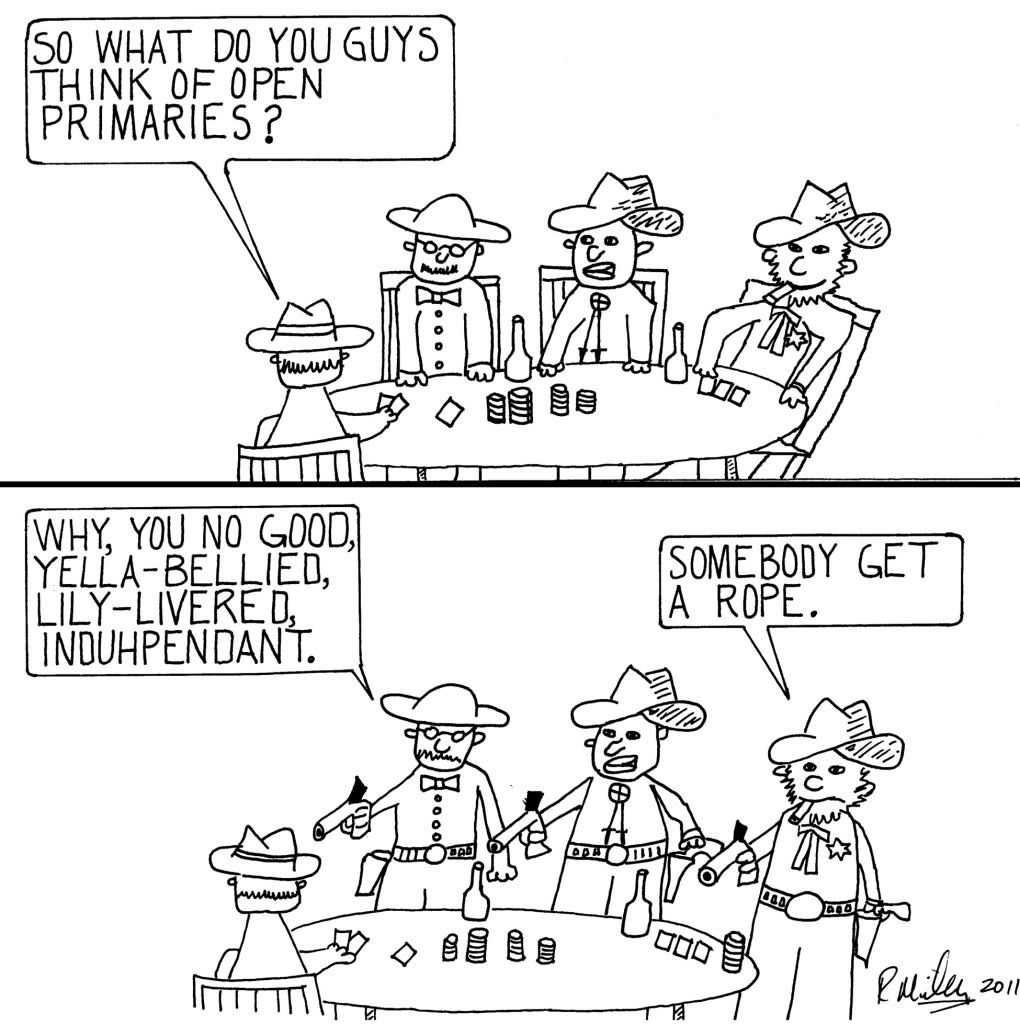
be sure not to miss the embedded editorial cartoon
http://cdn3.standard.net/sites/default/files/imagecache/max_800/2011/05/20/story-22-calnet-82769.jpg which hails close to John Avlon's book "Wingnuts" (see my review of the same http://grassrootsindependent.blogspot.com/2010/06/wingnuts-book-review.html)
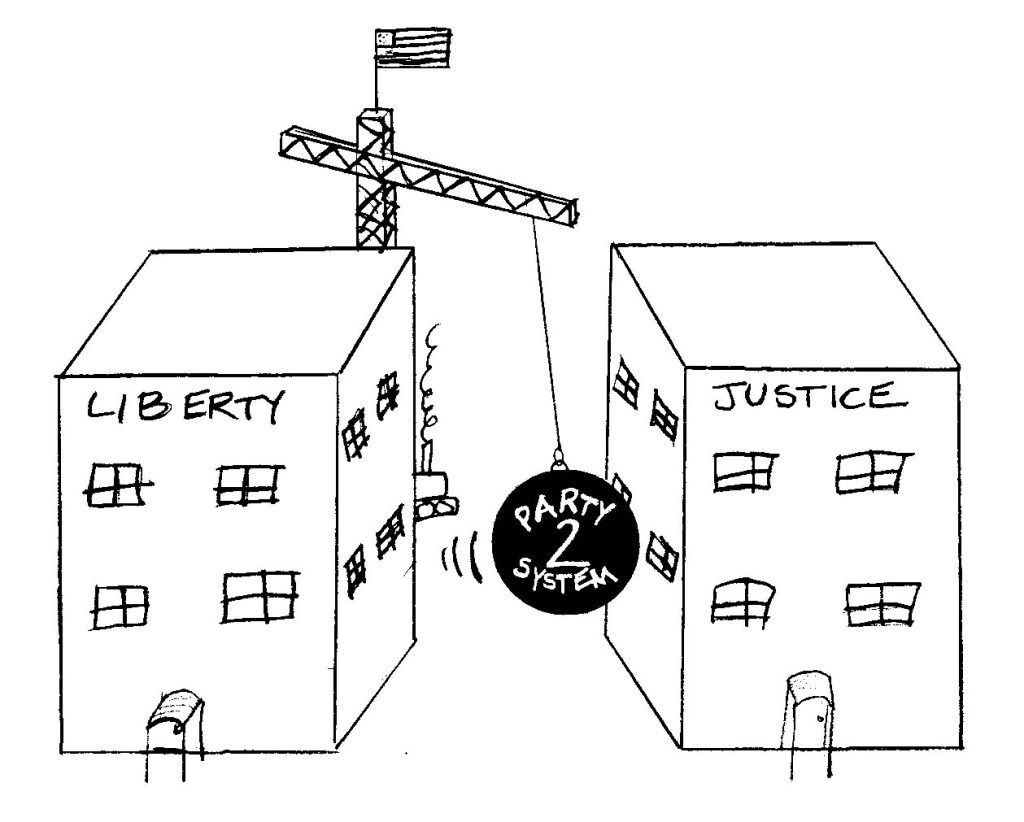
I can't put this at the end of this blog as it would show up under 'lamesauce'. Stay tuned, I have another editorial cartoon to publish in the morning.
The Bad:
An open fair election process is not a reality---yet.
The lamesauce:
http://www.sltrib.com/sltrib/opinion/51830757-82/vote-candidates-caucus-caucuses.html.csp
Democrat insider opposes direct open primaries: http://www.clippertoday.com/view/full_story/13352909/article-Party-Lines--What-should-be-done-about-the-caucus-system-?instance=lead_story_left_column
Republican insider opposes direct open primaries:
http://www.clippertoday.com/view/full_story/13352933/article-Party-Lines--What-should-be-done-about-the-caucus-system
It has been a positive month in Utah for the momentum of independent voters and fair open primaries.
Earlier in the month, the Salt Lake Tribune (http://www.sltrib.com/) reported that a legislator speaking on condition of anonymity indicated support for a direct primary. The same article reported that in January, 61% of Utahans polled supported a direct primary. Weekly letters to the editor in support of open primaries are showing up. Here are a few of the links:
The May 12th Tribune article:
http://www.sltrib.com/sltrib/politics/51789351-90/among-caucus-direct-litvack.html.csp?page=1
The letters:
A Republic Indeed
And this gem by Dave Glissmeyer who ran for Utah's 2nd Congressional District as an independent: Glissmeyer
Plus an op ed:
I particularly love this love for independents who are being left out of redistricting considerations: Lundgren
These gems showed up in the Sunday paper on my porch this morning:
http://www.standard.net/topics/opinion/2011/05/21/our-view-voters-should-choose-candidates
be sure not to miss the embedded editorial cartoon
http://cdn3.standard.net/sites/default/files/imagecache/max_800/2011/05/20/story-22-calnet-82769.jpg which hails close to John Avlon's book "Wingnuts" (see my review of the same http://grassrootsindependent.blogspot.com/2010/06/wingnuts-book-review.html)
I can't put this at the end of this blog as it would show up under 'lamesauce'. Stay tuned, I have another editorial cartoon to publish in the morning.
The Bad:
An open fair election process is not a reality---yet.
The lamesauce:
http://www.sltrib.com/sltrib/opinion/51830757-82/vote-candidates-caucus-caucuses.html.csp
Democrat insider opposes direct open primaries: http://www.clippertoday.com/view/full_story/13352909/article-Party-Lines--What-should-be-done-about-the-caucus-system-?instance=lead_story_left_column
Republican insider opposes direct open primaries:
http://www.clippertoday.com/view/full_story/13352933/article-Party-Lines--What-should-be-done-about-the-caucus-system
Sunday, May 08, 2011
Repubs: Ron Paul Heads the Pack
2012 REPUB PRESIDENTIAL PICTURE
- AP to skip GOP debate to protest FOX restrictions (The Associated Press, Sac Bee) Fox informed the AP and Reuters that it will only allow one still photographer into the debate at the start, when candidates shake hands, and that the photographer must leave when the debate begins. It also wants the single photographer to distribute the photos to all other media organizations.
- Huntsman's service in administration gets pass from some GOPers (By Michael O’Brien, The Hill/Blog Briefing Room) But in the week since resigning, Huntsman has rapidly accelerated his political activity. He established a federal political action committee, H PAC, to help build the framework of a possible campaign. And he's started to aggressively woo Republicans, particularly from New Hampshire and South Carolina, the two primary states where Huntsman is likely to focus his efforts if he runs.
- Ron Paul hauls more than $1 million (By ANDY BARR, Politico) Paul’s presidential exploratory committee alerted his supporters to the 24-hour online fundraising via email and social networks and were able to sit back and watch $1,028,436.56 roll in.
- Cain Was Able at the GOP's First Debate (By David Swerdlick, The Root) Herman Cain scored, Tim Pawlenty held, Mitt Romney was AWOL and Ron Paul was Ron Paul.
- Herman Cain shines, but he’s still a longshot (By Rachel Weiner, Washington Post/The Fix) Even before last night, Cain was popular with conservatives who remember him from the 1990s as an advocate against President Clinton’s health-care reform. He performed well against Clinton himself in a 1994 town hall meeting. He’s a business owner who turned around a failing franchise, Godfather’s Pizza, the kind of resume that appeals to Republicans now more than ever. His rhetorical style has been fine-tuned by years on the radio in Atlanta… While he’s popular with tea party voters, their impact in early states will be diluted by open primaries in New Hampshire and South Carolina.
- THE RON PAUL MOMENT (by W. E. Messamore, CAIVN) Despite the moderators' pleas for no applause, the audience vigorously applauded most of Ron Paul's answers, even including the hope he expressed that with Osama bin Laden's death, America might reevaluate its wars in Central Asia, which Paul said haven't helped us and haven't helped anyone in the Middle East. Typically known for being somewhat dry and academic when he speaks, Ron Paul even drew two big laughs from the crowd. When asked if he had been eclipsed in the Tea Party movement by Michele Bachmann, Ron Paul elicited laughs by answering, "Well, she's not here tonight..."
- NOTE: h/t to W.E. Messamore for the following links:
- Is This the Ron Paul Moment? (WRITTEN BY THOMAS R. EDDLEM , The New American (right libertarian) Representative Ron Paul established himself at the forefront of the Tea Party movement in the first Republican Presidential debate in Greenville, South Carolina. The debate has more and more establishment figures wondering if this might be the perfect political storm for the Texas congressman and obstetrician.
RON PAUL AT SC REPUBLICAN DEBATE 5/5/2011 VIDEO
- Ron Paul on legalizing drugs and gay marriage - SC Republican debate 5/5/2011
- Ron Paul says bring home the troops - SC Republican Debate 5/5/2011
- Ron Paul on torture, Gitmo, and foreign aid - SC Republican debate 5/5/2011
- CNN Poll: Still no front-runner in the battle for the GOP nomination (By: CNN Deputy Political Director Paul Steinhauser, CNN) Who does best against Obama? Paul. The congressman from Texas, who also ran as a libertarian candidate for president in 1988 and who is well liked by many in the tea party movement, trails the president by only seven points (52 to 45 percent) in a hypothetical general election showdown. Huckabee trails by eight points, with Romney down 11 points to Obama.
Monday, April 18, 2011
Polling for 2012: Obama and the Republicans + Trump?
Nobody believes that poll results have anything to do with what the people will do on election day, but polling is all the rage...
2012
2012
- Democrats can win the budget debate (By Joe Conason, The Oregonian) Ryan's angry response has opened up the possibility of a debate that the country desperately needs. Let us hope that Obama doesn't shrink from that challenge or delegate it to someone else. If his presidency is to become anything but the prelude to an era of decline, he must keep pushing forward just as aggressively as the Republicans push backward.
- Obama Job Approval at 41%, Tying His Low Independents' approval rating down to 35% (by Jeffrey M. Jones, Gallup) Obama's approval rating in April 12-14 polling is down most among independents when compared with his 2011 average to date as well as his term average among this group. Currently, 35% of independents approve of the president, nine points off his average from independents this year.
- Jonathan Alter: Republican horror movie sequel hits theaters (Capital Times - Madison) Obama was elected as a story-teller. Beginning with his famous speech to the Democratic National Convention in 2004, he weaved a personal narrative about Africa, Hawaii and community organizing in Chicago into a compelling message of “Change we can believe in.”
- What's Donald Trump really after? (By: Maggie Haberman and Ben Smith, Politico) The widespread assumption that Trump’s flirtation with the presidency is a publicity stunt is no doubt at least partly true. But that’s merely the point of departure for a man whose almost every public move over the last 30 years has been a publicity stunt.
Friday, April 15, 2011
OBAMA, THE BUDGET AND 2012
- The Right's Wrong Plan (Rep. Charles Rangel, HuffPost) Instead of promoting a plan to create jobs, Republicans marked their 100th day in control of the House with an agenda to end Medicare and cut the lifeline of millions of Americans. Introduced last week by Rep. Paul Ryan, the GOP's "Road to Ruin" budget proposal does do two things: it hurts the poor and helps the rich. Viewed as an effort to reduce the debt, the Republican budget is both irresponsible and immoral.
- Obama's Debt Reduction Plan Is a Political Step In the Right Direction (By Douglas E. Schoen, FoxNews.com) That being said, the president did make a strategic blunder by specifying that he wants to raise taxes on upper income Americans – having only four months ago agreed to the opposite in his budget deal with the Republicans. That budget deal is what got independents back to him at least temporarily following the midterm elections – an advantage that has been dissipating over time.
- GOP Losing Battle, Winning War (John Zogby, Forbes/Data Place) A 55% majority disagreed, with 32% agreeing and 13% not sure. Among the all important independent voters, 57% did not agree with Ryan’s Medicare proposal. Among Republicans, 54% liked the proposal, which in our polling is a relatively low number for GOP voters on policy proposal identified with their party. Also, 17% of Republicans were not sure, which is again a high number from GOP voters and shows they have real doubts about such a significant change to delivery of health care to senior citizens. Two-thirds of those 65 and over, people who have been voting for Republicans, disagreed with Ryan’s Medicare plan.
- House Democrats Win First-Quarter Money Battle (By MICHAEL D. SHEAR, NY Times/The Caucus) “Republicans’ radical agenda to end Medicare and play chicken with a government shutdown, while protecting taxpayer giveaways for Big Oil, is turning off independent voters and energizing our Democratic supporters,” said Steve Israel, chairman of the Democratic Congressional Campaign Committee.
- Lack of primary competition gives Obama an edge - With no serious challenges for the Democratic presidential nomination in 2012, the president can target the independent voters crucial to victory, while his Republican rivals must move right to win their party's nomination. (By Mark Z. Barabak and Christi Parsons, Los Angeles Times and Washington Bureau)
Monday, April 11, 2011
The Parties, The President and the Budget
THE PARTIES, THE PRESIDENT AND THE BUDGET
INDEPENDENT REDISTRICTING
Gerrymandering Lawsuit Brings New Scrutiny To Governor’s Use Of Budget Extenders (City Hall News - New York) This most recent case pits the Department of Corrections and the Legislative Task Force on Redistricting, also known as LATFOR, against a number of prominent Senate Republicans. The defendants have until April 24 to answer the complaint. If the case goes to court and the ability to append non-budget related bills is taken away, the Legislature could regain some power from the governor, Lane said.
- GOP presidential field sees budget wars from afar (AP) In the absence of a Republican president or clear-cut party leader, a little-known congressman from Wisconsin seized the initiative. Backed by most House Republicans, Rep. Paul Ryan, the House Budget Committee chairman, wrote a far-reaching spending plan that right away framed the debate on Capitol Hill.
- Budget deal foreshadows larger fight ahead - The last-minute resolution on 2011 was a victory for Republicans, and helped President Obama preserve his standing. But the wrangling offers little hope for an easy resolution to the next fight: lifting the U.S. debt ceiling. (By Paul West, Washington Bureau, LA Times)
INDEPENDENT REDISTRICTING
Gerrymandering Lawsuit Brings New Scrutiny To Governor’s Use Of Budget Extenders (City Hall News - New York) This most recent case pits the Department of Corrections and the Legislative Task Force on Redistricting, also known as LATFOR, against a number of prominent Senate Republicans. The defendants have until April 24 to answer the complaint. If the case goes to court and the ability to append non-budget related bills is taken away, the Legislature could regain some power from the governor, Lane said.
Thursday, January 06, 2011
Friday, December 17, 2010
Thursday, September 23, 2010
Kresky: Political Reform and Human Development
POLITICAL REFORM AND HUMAN DEVELOPMENT
By Harry Kresky
(September 23, 2010)
Going into the Congressional midterm elections, the focus is on contests between Democratic and Republican Party candidates who have come out of the partisan primary system. On the Republican side, this has produced a set of candidates in Alaska, Kentucky, Nevada, Florida and Delaware who, more or less, line up with the Tea Party wing of the GOP. The situation on the DP side is a little more complex. Incumbents, like Chet Edwards in Texas, Michael McMahon in New York and Walt Minnick in Idaho have been permitted by the Party to tack right so as to have a shot at winning in districts where polls show that voters are unhappy with the current Democratic leadership in Washington. Nonetheless, all of the DP candidates are, like it or not, aligned with an administration and a Congress that has used its majority to enact or attempt to enact traditional liberal Democratic Party legislation in the areas of health care, energy, taxation, environmental regulation, financial regulation, etc.
What we are facing is a crisis of development. Human beings do not appear to have the capacity to address and organize themselves to do what needs to be done.
So we have an election in which the American people are being asked to choose between an aggressively promoted right wing agenda – less regulation, smaller government, tax cuts, hawkish foreign policy – and a soft social democratic agenda that is unsure of its popular support. Obama and the Democrats are using the success of the Tea Party elements in the partisan GOP primaries as an argument as to why moderates and independents should vote DP in November.
While the candidates on both sides of the ideological divide are seeking the support of independents, neither group has directly addressed the political reform issues which animate the independent movement – open or nonpartisan primaries, nonpartisan redistricting, nonpartisan administration of elections, and parity between major party and independent and minor party candidates. Despite independents having been a key part of the coalition that elected him, Obama has failed to speak directly to these concerns. Indeed, he began his administration with an appeal to bipartisanship, not nonpartisanship.
The party driven electoral framework and the choices voters have in November do not auger well for significant progress in Washington’s ability to tackle the manifest problems facing our country. What distinguishes independents is that they see the party based structure of our elections and government as a barrier to accomplishing this. It has created a zero-sum framework in which each party views a legislative accomplishment by the other as a loss to them. We have stalemate or legislative compromises that don’t approach the magnitude of the problems they purport to address. There is every reason to believe that will continue through the next Congress, particularly with the 2012 Presidential election on the horizon.
Breaking the stranglehold of the parties is a necessary condition for social progress; it does not, however insure it. A policy debate, even without the parties, would still have to address the competing interest groups with a stake in any given outcome. And it is an open question as to whether rational dialogue among even the most intelligent leaders can resolve the differences in a way that moves the country forward. After all, Obama’s appeal to rational policy dialogue and transcending self interest and the partisan divide has not worked. How do you convince a city worker to accept a reduction in his or her salary, health benefits or pension when they are having a difficult time making ends meet as it is? Most of us would agree that it is not right that some people live in poverty. But is it in your or my self-interest to do what is needed to eliminate poverty? It would seem to be in the self-interest of the poor, but many poor individuals opt for the possibility of striking it rich over improving their lot and that of others who are poor. The elimination of poverty requires a reordering of our economic and values framework.
There is no lack of awareness of the problems we face. Most Americans would agree that the country is in worse shape than it has been at any time during their lifetimes. And most could give an accounting of areas where improvement is needed – health care, education, foreign policy, intractable poverty, jobs, and the environment. Rational understanding notwithstanding, our species seems, like the dinosaurs, to be marking time (the human equivalent of munching grass) while the conditions for its continued existence are being destroyed.
What we are facing is a crisis of development. Human beings do not appear to have the capacity to address and organize themselves to do what needs to be done. The development gap must be addressed and overcome. And that is not the same thing as finding the right answer. In fact the search for the right answer takes you in the wrong direction. Can we develop so that we act to do what is best for our species, to work with others to create that collective performance? Can this be done?
For the past 35 years I have worked with others in a broad development community led by Stanford trained philosopher turned organizer Fred Newman. In the areas of politics, culture, education and psychology we have sought to reignite development by organizing people to perform ahead of themselves and, in particular, to focus on the development of the collective as the measure of success. Our flagship project is a youth development program called All Stars Project, Inc. It is an alliance of activists, leaders in the financial and professional communities, and poor inner city youth. It has developed a group based performance approach to overcoming the underdevelopment of inner city youth. All Stars recently launched a new initiative, UX. All Stars President, Gabrielle Kurlander wrote:
“UX is a unique development institution, free of cost, forward thinking and open to people of all ages and backgrounds who want to grow and develop. It incorporates the ongoing programs and activities of ASP, including visits to Broadway theaters and other cultural institutions, and numerous workshops, classes and lectures by guest artists, business professionals, community and educational leaders”
UX Dean, Dr. Lenora B. Fulani, the distinguished African American psychologist and independent leader added:
“You see, because UX is a development institution, it isn’t about teaching you what happened in the past or training you in skills to get a job. We can do that but what we’re really interested in is all of us creating something new together. UX has trained development coaches to help you customize specific programs and activities. You can even be trained to be a development coach yourself!
“The ‘X’ in UX stands for the unknown. What exactly our UX is or might become is unknown. It depends on what you – its students, teachers, researchers and donors – create together.”
At UX’s opening day, attended by a diverse group of over 600 New Yorkers, my friends Cathy Stewart, Sarah Lyons and I attended a play reading workshop and did a reading of a scene from Fred Newman’s Left of the Moon. In it Prof. Paul Heller decides to attempt to right an injustice at the request of one of his students, Holiday Hill. Heller acknowledges that the advice of his “rational” wife is probably correct – the effort will fail and it is likely to get him fired. Heller decides to go forward while acknowledging that his decision to do so is mad. Professor Heller’s decision and Cathy, Sarah and my doing the play reading was not a cognitive activity designed to find an answer. It was accepting an invitation, taking a step together to perform, in front of other people, touching, intimacy, creating and being ridiculous. Professor Heller made his decision as the 1960’s was unfolding. We have worked to continue the spirit of the 1960’s and to learn from its failures.
Can we succeed? Even if we accept that there is such a thing as development and there are ways to foster it, is there time for humans to develop before the problems we face – war, poverty, the destruction of the environment – overcome us? I don’t know.
Harry Kresky blogs at Legal Briefs
Tuesday, August 31, 2010
Monotheistic Dualism: ( It's my party and I'll cry if I want to.)
By Evan
Few things excite human emotion more than politics. There were three things I was instructed as a youth never to discuss with people I didn't know: Sex, religion, and politics. Sex is a highly personal subject for most and religion has gradually splintered into one just as subjective. Why has politics not followed this increasing diversity of expression? While it's true that politics seems to have gone far beyond the Beaver Cleaver world I grew up in, why have its forms remained relatively static in comparison with other human concerns?
Ward and June Cleaver (not related to Eldridge) were products of a T.V. world which couldn't express the subjective concerns of the individual – only its hopes and wishes; a world where, when the T.V. was off, we were collectively building bomb shelters and most Americans were frantic from the threat of Communism instilled by those idealistic values of “our” government vs. “theirs” – a tactic employed with great success by Middle-Eastern governments and one which provides an easy hook for our own projections. For, concerns anent our own affairs are easily deflected in the face of an imagined or manufactured threat.
Unfortunately, this T.V. world is the mainstay of power politicians – because that is the world in which they are able to maintain their influence. The projection of each party's opposite is safely ensconced in a contrived, sit-com world that's not controversial to them at all. It's not a matter of “democratic ideals” which separates them, or “what's best for the country” – it's “how do we convince an unwitting public that it not only wants our particular brand of manipulation, but needs it?” – and they are quite willing to share the benefits it yields.
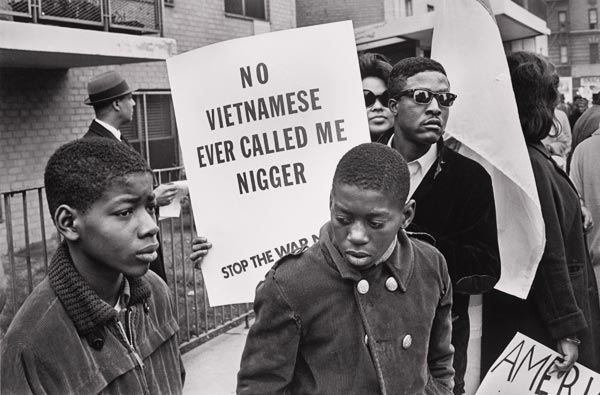
It reminds me of what Muhammed Ali said at the close of the Beaver Cleaver era when he was stripped of his heavyweight title by this conspiracy. When asked by a reporter why he had refused to fight in Vietnam, he replied, “Ain't no Vietnamese ever called me nigger!” and he pointed squarely at the reporter, “You my enemy!”... and so the slow, grueling evolution of individual awareness inches on.
The two parties have no reason to confront themselves except in the manufactured form of their own mutually profitable sitcom, and the canned laughter echoes in a make-believe world which must somehow meet the dire exigencies that loom when the T.V. is turned off.
It is as Faust remarked to the Devil upon questioning his motivations, “Now, I perceive your worthy occupation:/ You can't achieve wholesale annihilation/ And now a retail business you've begun!” and the Devil replied: “And truly thereby nothing much is done!” This is the perspective of one who has power, but whose power seems never enough to secure its position for fear of its loss. And our politicians will concede only what they are forced to concede by such recognitions. But it is also a reminder: How much can a government do for its citizens when its primary focus is the maintenance of itself?
Evan is an artist, poet, and long-time student of Carl Jung. He is the author of "A Mid-Life Perspective: Conversations with the Unconscious," an epic poem of psychic development in the second half of life inspired by Goethe's Faust. He makes a living as a contractor in the Richmond, Virginia.
Sunday, July 04, 2010
Happy Independence Day 2010!
INDEPENDENT VOTERS
- Rougher Road for Democrats Without Obama Atop Ticket (By JEFF ZELENY, NY Times) If Republicans are to win control of the House, party leaders are relying on candidates like Mr. Chabot to whittle away the 39-seat Democratic majority. Their strategy is rooted in the belief that the Republican base is significantly more energized than it was two years ago, particularly because of the influence of Tea Party activists and at least a share of independent voters who have soured on the leadership of Democrats.
- Tea partiers ascend in many states - With help from Palin and Tea Party Express, anti-government rhetoricians threaten incumbents (BY MICHAEL R. BLOOD, ASSOCIATED PRESS, Salon)
- The Unsung (And Unintended) Genius Of GOP Class Clown Michael Steele (by Frances Martel, MediaITE)
- Senator Feingold continues to oppose financial reform bill as too weak (Boston Business Commentary Examiner, Wagner Rios) Liberal and independent voters in Massachusetts disgusted with Obama's betrayal of campaign promises abstained from voting in the special election to replace Ted Kennedy and send the wrong person to Washington.
- Cook’s Polling Predictions for “Hurricane GOP” and the Dreaded Enthusiasm Gap (By Elise, Blue Wave News)
- Tea Party candidates, Joe Miller, Clint Didier, Jane Norton try to knock off Republicans across U.S. (BY ALIYAH SHAHID, DAILY NEWS STAFF WRITER) The real challenge of the Tea Party candidates is if they can garner enough support from moderate and independent voters to win in November.
- Americans say Obama's 'change' makes nation worse (By Bob Unruh, WorldNetDaily)
- The (Opposite) Tea Party Effect, Pt. 2 (By Josh Feit, PubliCola - Seattle's News Elixer)
- Surprise, surprise: Tea Partyers are Republicans (EJ Dionne, Washington Post/Post Partisan) For some months now, I have been battling against the idea that the Tea Party movement is some brand-new thing in American politics, an independent movement akin to the rebellion led by Ross Perot in the 1990s. Tea Party people, I have been arguing, are simply right-wing Republicans organized under a new banner.
- Tea Party Supporters Overlap Republican Base - Eight out of 10 Tea Party supporters are Republicans (by Frank Newport, Gallup)
- Democrats shaping battle plan against Republicans for November (By Dan Balz, Washington Post Staff Writer ) Obama's strategists have been analyzing the state of the electorate and have concluded that the path for Democrats is treacherous but that there is room for improvement before November. They must woo back some independent voters who have defected since 2008 while boosting turnout beyond historical patterns for midterm elections among the millions of new or irregular voters who were energized by Obama's campaign.
- Voting Intentions Even, Turnout Indicators Favor GOP (Pew Research) More than half of independent voters (55%) who back the Republican candidate in their district are more enthusiastic than usual about voting this year; that compares with 36% of independents who prefer the Democratic candidate. While 63% of independent voters who favor the GOP candidate are closely following news about the election, just 48% of independents who support the Democratic candidate say the same. And 77% of independent voters who support a Republican say they are absolutely certain to vote, compared with 62% of independents who back Democrat.
- Zogby finds most Indys want new president, Gallup data also points to dissatisfaction with Obama (By: Mark Tapscott, Editorial Page Editor, Washington Examiner)
- Independents move toward Republicans, away from Obama (Chris Cillizza, Washington Post/The Fix)
- Marist poll: Half of voters say Obama a disappointment (Poughkeepsie Journal) While there has been little change among Democrats and Republicans, dissatisfaction has grown among independent voters. Nearly six in ten — 58 percent — say Obama has disappointed them, and 34 percent view the president as meeting their expectations or going above them and 8 percent are unsure.
- The Grand Old Unaffiliated (News Observer NC)
- Is the Democratic Majority Still Emerging or Slipping Away? (Ari Berman, The Nation) Yet that theory was once again challenged in 2009 and early 2010, as Republicans won major gubenatorial and Senate elections in three states—Virginia, New Jersey and Massachusetts—that Obama won handily. In these elections, Obama’s “coalition of the ascendant” either failed to turn out in sufficient numbers or key blocs, like independent voters and younger professionals, defected to the GOP.
- Open primaries worth exploring (LETTER NorthJersey.com)
- Guest Post: Fix America? Fix the Politicians (Submitted by Dylan Ratigan, Investing contrarian)
- GOP loyalty oath draws some Idaho lawmakers' ire (By John Miller, Associated Press, Rochester ID Post Bulliten) BOISE, Idaho — Some Republican lawmakers won't pledge loyalty to Idaho's new state party platform, despite a candidate disclosure measure approved at the 2010 state convention last weekend asking them to do so.
- Eternal vigilance is the price of Liberty II (By JOHN EYSTER, Janesville Gazette Extre - OH)
- Oregon’s Older Voters Rule: Phil Keisling’s Take on the May Primary Turnout (Willamette Week)
- Open the primaries to unaffiliated (By Paul Choiniere, LETTER TheDay.com)
- Outreach to Democrats gives Charlie Crist a balancing act (BY ADAM SMITH, ST. PETERSBURG TIMES, Miami Herald) Crist is counting on overwhelming support from independent voters and strong support from Democrats, but also he can't afford to alienate too many Republicans. Independents are expected to make up no more than 15 percent of the electorate, after all, while Republicans consistently have the strongest turnout in nonpresidential election years.
- MD: Independent party no longer qualified for party status - Voters are given two weeks to change affiliation to a recognized political party or to specify a party (By DON AINES, The Herald Mail - MD)
- Kennedy gets Independence Party nod (By Robert J. McCarthy, Buffalo News)
- Navigating Independence From Bloomberg, Goodman And Staff Shape Charter Revision (By Chris Bragg, City Hall News)
- Watchdog Says Save Public Advocate, Beeps - The Citizen Union's recommendations to the city's charter revision commission go well beyond the good-government group's reversal on nonpartisan elections. (By Jarrett Murphy, City Hall News)
- Report Says City Elections Should Be Nonpartisan (By JAVIER C. HERNANDEZ, NY Times)
Friday, February 12, 2010
Winter Cold, Independent Voters Turn Up the Heat
Weekend reading for independent voters:
- LETTER TO THE EDITOR: Independent voters should unite, be heard (Peter Chura, Las Vegas Sun)
- What’s Next, Mr. President? (By DAVID BROOKS, NY Times)
- Iowa Poll: More Iowans cut across party lines, lean toward 'progressive' (BY THOMAS BEAUMONT, Des Moines Register) hemselves as moderate than conservative and liberal combined, and nearly half say they're part of the state's growing pool of independent voters.
- Q&A: Braley says progressives must ’speak truth to fear’ - Democrats need sense of urgency about making sure their voices are heard (By LYNDA WADDINGTON, Iowa Independent)
- The evolving general electorate (Atlanta Political Buzz Examiner, Michael Francis) What may be a more foreboding portent for Democrats, though, is the recent small shift by so-called independent voters.
- Zugzwang: Democrats’ 2010 Dilemma - Curbed enthusiasm. (BY GARY ANDRES, Weekly Standard) So should Democrats and President Obama pursue an activist agenda and please the party base, or pull back the throttle and play small ball to attract independents? They can’t do both. Welcome to Zugzwang. One reaction is paralysis – a little bit of this, a little bit of that. It feels like movement, but to the outside world, it looks like you’re stuck. [FROM Wm Saffire: ''You have used a word,'' replied the grandmaster, ''for a position in which each player would obtain a worse result if it were his turn to move than if it were not. It occurs only in endgame situations or in composed problems.'']
- GOP numbers drop in new report (By JIM MILLER, Press Enterprise/Sacramento Bureau)
- Poor little rich girl (By Richard Mays/Heber Springs AR Sun Times) In a hypothetical race between [Blanche] Lincoln and Republican U.S. Representative John Boozman, the poll shows Boozman winning (at least at this moment in time) by a margin of 56 percent to 33 percent. Among independent voters – of whom there are an increasing number in this age of discontent with both major political parties – the margin was an even larger 66 percent to 20 percent.
- Obama's bipartisan play comes as independents turn their backs (By: Heather Hunt, Special to The Examiner) President Obama's new embrace of bipartisanship may be an effort to help end the crash in support for his administration among independent voters.
- Politics A to Z: Bipartisanship, Blizzard Edition (By ADAM NAGOURNEY AND JEFF ZELENY, NY Times/The Caucus) EXCERPT
- Obama Can't Change Crazy Voters--Or Crazy Politicians (By Robert Schlesinger, US NewS & World Report)
- Republicans May Benefit From Discontent, Poll Shows (Adds Charlie Cook remarks in the fourth, eighth and ninth paragraphs.) (By Kate Andersen Brower, Business Week)
Wednesday, May 20, 2009
Democrats and Mistakes, Independents, and Republicans
Democrats and Mistakes: Earlier I posted a link to a post on Polit Bureau "Independence day for Democrats" that I credited to Newsday. Thanks to David Reich-Hale Editor Long Island Business News for the correction! (I can't speak for the correctness of Nassau Co. IP's endorsements....)
Independents: Meanwhile, the New York City organizations of the Independence Party of New York have endorsed independent Mayor Mike Bloomberg for a third term. There's a rally in Harlem on Thursday June 4 at the A.M.E. Bethel Church.
Republicans: And the Queens County Independence Party just honored long-time independents Dr. Fred Newman and Dr. Lenora Fulani, along with independent Republican NY State Senator Frank Padavan (11th CD) at its 8th annual Queens Spring Chair Reception. Sen. Padavan pointed out that there are more independents in his district than Republicans, so it is because of independents that he is in office. We might also add that Sen. Padavan is one of those rare elected officials who actually listens to his constiutents (regardless of party or non-party) and is thereby much less beholden to partisan interests than most. Cudos, Senator Padavan!
Friday, November 21, 2008
TODAY'S NEWS HEADLINES for INDEPENDENT VOTERS
INDEPENDENT VOTERS
CENTER-LEFT/SCHMENTER-LEFT
OPEN PRIMARIES/POLITICAL REFORM
LAST WORD
The end of the Sixties - In Chico as in the rest of America, voters tired of polarization and the culture wars are looking to liberals to solve problems (Chico News Review)
- The 2008 election in perspective (New Hampshire Business Review) there are now more registered Democrats than Republicans in New Hampshire, although unaffiliated (independent) voters are the largest single voting bloc.
- Voters show their independent streak (Morgan Messenger - WV) While Democrats used to account for the other 40% of the vote, the proportion of Democrats has actually dropped to 32% locally. The real boom has come in the number of people who don’t identify with either political party.
CENTER-LEFT/SCHMENTER-LEFT
- Is it OK to be liberal again, instead of progressive? Come out of the closet, liberals. Stop using the fashionable euphemism "progressive" and relaunch the old, tarnished L-word. (Salon)
- Lyons: Should Obama lean now to right? (Courier Express/Tri County - PA) Arguing over meaningless phrases like "center-right" versus "center-left" would be a foolish. Because while much of the electorate may be uneasy about what they've been taught liberals think about symbolic social issues like abortion, guns and "gay marriage," strong majorities agree with Democratic approaches on more concrete matters.
OPEN PRIMARIES/POLITICAL REFORM
- California initiatives: A fighting tradition (Oakland Tribune/Wenatchee World Online) If California voters always had their way, illegal immigrants wouldn’t get public education and health care; the state would have “open” primary elections; landlords could practice racial discrimination; and cable television would be either free or illegal. All these stances have been approved as ballot initiatives, and all were later struck down by the courts.
- EDITORIAL: Still battling term limits - Many sitting politicians aren't about to go quietly (Las Vegas Review Journal)
- EDITORIAL ; So This is `Reform'? (iStock Analyst) A hastily arranged package of reforms from politically ambitious lawmakers will do little to inspire public confidence in state government.
LAST WORD
The end of the Sixties - In Chico as in the rest of America, voters tired of polarization and the culture wars are looking to liberals to solve problems (Chico News Review)
Saturday, November 15, 2008
TODAY'S NEWS HEADLINES for INDEPENDENT VOTERS
POST-ELECTION
- Democrats weigh how hard to hit agenda (Chicago Tribune) The coalition that put Obama in office depends on support he secured from independent voters.
- What I've Been Saying for Weeks (American Spectator) if you incorrectly assume that the independent voter is a "centrist," you're going to miss the chance to make the libertarian populist argument.
- Former GOP Sen. Chafee relishes Obama’s victory (The Providence Journal) In early September, Chafee campaigned in Florida as part of “Republicans and independents for Obama.”
- The Center-Right Nation Exits Stage Left (Washington Post) And so far, center-left government is largely an abstraction for the country. People like the sound of it, especially against the backdrop of a financial crisis and recession. In these center-left times, voters are receptive -- or rather, it is their receptiveness that makes these times center-left.
- Democrats' victories portend a new political era (By David S. Broder, Seattle Times) there are signs in this year's returns of voter shifts that could herald a new political era — and which certainly define the challenge facing the Republican Party.
Subscribe to:
Posts (Atom)