Today is primary day and 3.5 million Flori

Thursday, May 17, 2012

Hankster News of the Day for Independent Voters May 17


CA TOP TWO
  • Previous CA Election Rules Stacked Against Independent Voters (By Chad Peace, IVN) In California, the Democratic Party initially resisted but eventually chose to allow independents to participate in its primaries. The Republican Party refused to allow independent voters to participate in its primaries. Interestingly, in that time, the Republican Party shrunk precipitously, the Democrats held steady, and the percentage of voters choosing to join no party increased by approximately 30%.
  • San Diego group pushes independent politics statewide - Architects of “top-two” primary system seek to organize unaffiliated voters (By Christopher Cadelago, UT San Diego) Co-chaired by former state lawmakers Steve Peace, a Democrat, and Jeff Marston, a Republican, the group has launched a $1.5 million campaign to increase turnout among voters declaring no party preference — about 3.6 million people accounting for a record 21.3 percent of the statewide electorate.

AMERICANS ELECT
Americans Elect Failure to Find Candidate Threatens Third-Party Dreams (by John Avlon, Daily Beast) Perhaps the biggest obstacle was the basic fact of this particular election cycle—when a president is running for reelection, it tends to be a referendum. Third-party candidacies do best when there is not an incumbent on the ballot or after an extended period of one-party rule with weak opposition.

NYC 2013 MAYORAL
  • Kelly 2013 goes cold, but Catsimatidis isn't warming up (By Dana Rubinstein, Capital New York)
  • Ray Kelly won't run for mayor, ex-Staten Island BP Guy Molinari says (Judy L. Randall, SI Advance) If Kelly's decision to absent himself from the run proves true, it will be good news for the Democrats poised to make the race, including City Council Speaker Christine Quinn, former mayoral candidate William Thompson, Public Advocate Bill de Blasio and Manhattan Borough President Scott Stringer.
  • So Many X Factors in Next Year's Race for NYC Mayor (Dominic Carter, Huffington Post) DeBlasio is someone who should not be underestimated. It is commendable how DeBlasio went from Hillary Clinton 2000 Senate campaign manager, to the City Council a year later, and now a citywide position from a crowded field of candidates, literally first in line to succeed the mayor should it be necessary.
  • Ray Kelly’s Mayoral Dance Steps Back Toward ‘No’ (NY Mag/Daily Intel) Staten Island Borough President Ray Molinari, one of the biggest proponents of a Kelly run, came out of a lunch with the commissioner less than glowing yesterday.
  • Quinn Confronts Banks in Bid to Become NYC’s First Gay Mayor (By Henry Goldman, Bloomberg) “She’s a throwback to the Irish-American political bosses in the history books,” said Maurice Carroll, director of the Quinnipiac Polling Institute in Hamden, Connecticut. Its May 10 survey found that she led a five-candidate Democratic field with 26 percent approval, twice as much as her nearest rival. “She’s always thinking, ‘What do we need to win?’”

PEDRO ESPADA
Espada Guilty of Stealing Clinic's Funds (By TAMER EL-GHOBASHY, Wall Street Journal) It marked an ignominious turn for the elder Mr. Espada, who in 2009 became the state Senate president when he and three other senators defected from the majority Democrats and helped Republicans take over the chamber. The chaotic period helped solidify Albany's reputation for dysfunction.

EDUCATION REFORM
Suit seeks to overturn 'outdated' teacher job protections (LA Times) The founder of Students Matter is Silicon Valley entrepreneur David F. Welch, a research scientist who went on to co-found Infinera, a manufacturer of optical telecommunications systems based in Sunnyvale. “We are challenging a system that was fashioned by special interests and has burdened our schools with an inflexible environment for hiring and retaining the best teachers," said Welch.

Tuesday, May 15, 2012

Hankster News of the Day for Independents May 15

If you're independent, you won't be voting today in Idaho... Poor poor Michael Russnow, can't find Dianne Feinstein's name in the "clutter"! ... WI Gov Walker failing with indies... Americans Elect failing... Christine Quinn plays it safe to get the 2013 NYC Mayoral...

CA TOP TWO
  • California Primary Ballot Hodgepodge: We Need a Return to Voting By Party Members Only (Michael Russnow, Screenwriter, former Member WGAW Board of Directors, former U.S. Senate aide, Huffington Post) Remembering that this was the year long-time incumbent Dianne Feinstein was running for re-election, I was hard pressed to find her in the ensuing clutter. Nor was it easier to find her opponents, none of whom I had ever heard of.
  • “No Party Preference” Voters To Sway Senate District 15 (by Jane Susskind, IVN) Almost 28% of voters in Senate District 15 have opted out of the two-party system and are registered as “No Party Preference,” placing this district on our radar of races to watch.
  • California focus - Feinstein strength exposes primary weakness (By THOMAS D. ELIAS, Ukiah Daily Journal) The top-two, or "jungle primary" system voters adopted for themselves and will use for the first time next month, will put the two leading finishers in every legislative and congressional race into November runoffs, regardless of their party affiliation. But U.S. Sen. Dianne Feinstein appears about to expose one wasteful difference between the new primary system and the way special elections have long operated: In special elections, if one candidate gets more than 50 percent of the first-round vote, there's no runoff. That candidate simply wins. Not so with the new primary setup. No one running for Congress will win outright next month.

IDAHO CLOSED PRIMARY
  • 8 Things You Need To Know To Vote In Idaho’s Primary (Samantha Wright / Boise State Public Radio) Closed Primary:  This year, Idaho made the switch to a closed primary system.  The Idaho Republican Party sued the state to make this happen, as Party Executive Director Jonathan Parker explains. “We do believe that it is our right to essentially let Republicans chose Republican candidates, Democrats choose Democrat candidates, as these are the candidates who will be our standard bearers, carrying the torch for the Republican Party in November.
  • Idaho Primary: Why The GOP Closed Its Ballot (By Samantha Wright, Boise State Public Radio) Grant says there was never a Democratic mandate to cross over and vote for someone in the GOP primary.  But he does say, in local races, a tiny fraction of Democrats have done this.  “And in many areas those races are decided in the Republican Primary.  So there are folks, I’m sure there are folks now, folks that are good Democrats that have registered as Republicans so they can vote in those local races.”… That could be a challenge for the 37 percent of Idahoans who label themselves Independent, according to a 2011 Public Policy Survey by Boise State University.

WISCONSIN RECALL
Poll: Wis. Gov. Walker leads Dem opponent by 9 points in recall (By Justin Sink, The Hill/ Blog Briefing Room) But Walker's lead shrinks among independent voters, among whom the incumbent governor holds just a three-point advantage. That's an encouraging sign for Barrett, who must make inroads among swing voters as well as rally his Democratic base.

AMERICANS ELECT
Americans Elect vote deadline hours away (Jonathan Tilove, The Times-Picayune) "Yes, the deadline is 11:59:59 tonight," Americans Elect spokesman Ileana Wachtel said in an email this morning, referring to the requirement that, in order to compete in the Americans Elect voting a candidate must first gain 1,000 clicks from supporters in each of 10 states. The leading declared candidate, by a mile, is former Louisiana Gov. Buddy Roemer, but as of today he had only 5,618 clicks, and the most from any single state is 583 from California.

NYC 2013 MAYORAL
  • Speaker Christine Quinn primary sponsor of just two of 827 bills submitted to City Council since 2010 - Exclusive: Council sources say she avoids lending name to legislation so it won't hurt mayoral run (By Reuven Blau / NEW YORK DAILY NEWS) The News’ review found that the most active Council member in terms of introducing legislation was Gale Brewer (D-Manhattan), who submitted 62 bills. They ranged from a measure requiring the city to post more statistical data online to one to force the city to purchase locally grown vegetables. Most of Brewer’s bills stalled in committee, but the mayor signed seven into law, including the measure to disclose city data. Councilman Peter Vallone Jr. (D-Queens) was second, with 49 bills, followed by Councilman Daniel Garodnick (D-Manhattan), with 44.
  • New York Voters Support Minimum Wage Increase, Poll Says (By THOMAS KAPLAN, NY Times/ City Room) Democrats and independent voters were strongly supportive of raising the minimum wage, the poll found, with 88 percent of Democrats and 75 percent of independents in support.


Monday, May 14, 2012

Independent Voters' Influence Growing


INDEPENDENT VOTERS
  • UPDATED: First of Its Kind Independent Online Preference OPEN NOW (by Matt Metzner, IVN) The online Independent Preference Survey is a follow up to Proposition 14 that passed in 2010. Proposition 14 created an Open Primary where all voters, regardless of party, elect the top-two candidates who face off in the November general election… IVP was the author of Proposition 14 and focuses their efforts on educating non-partisan voters on their rights in elections.
  • Warren Beating Brown Would Send First Woman to Senate (By Esme E. Deprez, Bloomberg) According to the Secretary of State’s office, 51 percent of the electorate isn’t registered with either party. An analysis by Tim Vercellotti, who directs the Western New England University Polling Institute in Springfield, found that self- identified independents are split almost evenly between men and women, 49 percent to 51 percent. While more recent surveys by other pollsters show a tighter race, Vercellotti’s last poll, conducted Feb. 23 to March 1, found Brown leading Warren among all voters 49 percent to 41 percent. Independent voters overall and independent women favored Brown 2 to 1.
  • Independent voters will be key in Walker recall (Eric Lindquist, Eau Claire Leader-Telegram) A recent Marquette University Law School poll found that the Walker-Barrett race is a virtual tie. Peterson said the outcome may come down to which candidate can persuade the shrinking pool of independent and undecided voters — the latest polls show Walker and Barrett both have support from just under half of eligible voters — that their approach is best.

Open Primaries: Changing the Face of American Politics


CA TOP TWO
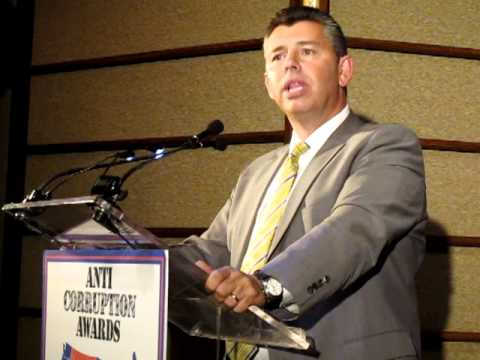
Abel Maldonado at NYCIP Anti-Corruption Awards 2010
  • June's primary is a whole new ballgame (Palo Alto Online) What's more, thanks to the California electorate's approval of Proposition 14 in 2010, voters no longer have to cast ballots along party lines in a dozen primary races -- for U.S. Congress, state Legislature and top state officials. Instead, all candidates are eligible to receive a voter's endorsement; the top two vote-getters per race will face a run-off in November's general election.
  • Should you vote in the June primary? (By Joann Marmolejo/Looking Forward, Santa Maria Times) This means no longer will a candidate from a particular party be able to sit out the June primary election if there is no opposing candidate from that party. Now all candidates will have to campaign and get enough votes in June to be one of the two top-vote getters, if they want to be one of the candidates on the November ballot.
  • The Parties Fear California’s New Open Primary (by Chad Peace, IVN) The irony in all three failed lawsuits is that the parties base their challenges to the Constitutionality of Proposition 14 on the presumption that parties have ‘the right’ to be on the general election ballot.  Even the Libertarian party, the supposed champions of individual rights, join together to argue that a party’s right to be on the general election ballot is greater than an individuals right to have meaningful participation in the political process.

IDAHO REPUB PRIMARY
Why you should not vote in Republican primary (by Larry Grant, Idaho Democratic Party chairman, Idaho Press Tribune) Readers of this column are probably aware that the Press-Tribune editorial board has suggested that Democrats and independent voters should register as Republicans now that the Republican primary is closed and only declared Republicans can vote in it. The editorial board reasoned, in part, that Democrats and independents could thwart extremists in the Republican party, who battled to close the primary, by simply registering as Republicans and voting in the Republican primary anyway. I disagree with their conclusion because it assumes that Democrats and independents have some reason to fix the Republican Party.


California Lt. Gov. Abel Maldonado received 2010 Anti-Corruption Award from NYC Independence Party. Maldonado, introduced at the event by independentvoting.org president Jackie Salit, was responsible for putting top two open primary initiative Proposition 14 on the ballot in California in 2010.

2012: Parsing Political Advantage of Gay Marriage Position


2012: PARSING GAY MARRIAGE
  • Gallup: Gay marriage stance could cost Obama among independents (By Michael A. Memoli, LA Times) The results "suggest Obama's gay marriage position is likely to cost him more independent and Democratic votes than he would gain in independent and Republican votes, clearly indicating that his new position is more of a net minus than a net plus for him."
  • Poll: Most Voters Don’t Care About Obama’s Gay-Marriage Evolution (By Dan Amira, New York Magazine) For those who say it would make a difference, it's a mixed bag for Obama: Only 11 percent of independent voters say that Obama's endorsement makes them more likely to vote for him, compared to 23 percent who say it makes them less likely to vote for him. But while he lost some independent votes, Obama may have picked up some previously less-than-enthusiastic Democratic voters who might have stayed home on election day: 23 percent of Democrats say they are now more likely to vote for Obama, compared to 10 percent who say its less likely.
  • Six in 10 Say Obama Same-Sex Marriage View Won't Sway Vote (by Jeffrey M. Jones, Gallup) However, those figures also underscore that it is a relatively limited group of voters -- about one in three independents and fewer than one in 10 Republicans or Democrats -- whose votes may change as a result of Obama's new stance on gay marriage.
  • Obama’s support for gay marriage adds new layer of complexity for swing-state voters (By Associated Press, Washington Post) Advocates on both sides of the emotional issue agree Obama’s pronouncement will stoke enthusiasm among core Democrats and Republicans, likely boosting turnout in the November election and fundraising ahead of it. The big unknown is where independent voters — and specifically those Obama struggles to win over, such as middle-class whites — land in the fewer than a dozen states expected to make a difference in the quest for the White House.

Campaign Finance Reform: Campaign Issue?

Will independents be co-opted by Dems on campaign finance reform issue? I doubt it!

CAMPAIGN FINANCE REFORM
  • Dem pollster: Independents want candidates to address money in politics (By Kevin Bogardus, The Hill/Ballot Box) Stan Greenberg, chairman and CEO of Greenberg Quinlan Rosner and co-founder of Democracy Corps, told reporters on a conference call that voters are looking for a “reformist attack on government.”  “Independents in particular are the ones who feel the most strongly about this issue,” Greenberg said. “We should emphasize that this is not a partisan issue…"
  • Yankees lobbying expenditures is a case study, for some, on why NY needs campaign finance reform (By Brandon Quinn, Legislative Gazette) Two new fronts in the war for public financing of elections opened recently, with the Center for Working Families and New York Leadership for Accountable Government launching their attacks on the campaign contribution system.

Americans Elect: "Not a burning sense that the political center lacks a voice"

Michael Crowley writes in Time that there's no "burning sense" that the political center lacks a voice. I would ask, What political center?

AMERICANS ELECT
Indie Block (By Michael Crowley, Time Magazine) Had the GOP primaries ended differently, Americans Elect might have taken off. A year ago it did not seem totally implausible that, say, Michele Bachmann would win the GOP nomination, leaving a wide gap between Tea Party absolutism and Obama's center-left pragmatism. Instead, Republicans wound up with a center-right pragmatist in Romney. There's not a burning sense that the political center lacks a voice.

NYC 2013: The Search for a Post-Bloomberg Mayor


2013 NYC MAYORAL
  • Union Contract Battle May Be On Horizon For Next Mayor (By: Courtney Gross, NY1) "It is not likely that there is going to be extra money to do that and I think most of the unions understand that," Bloomberg said. "No adminstration is going to have the money to give pay in the past."
  • Irish Americans Christine Quinn and Ray Kelly lead race for mayor of New York (By HILDA HIGGINS, Irish Central) Kelly, a registered independent, showed a lot of support from GOP voters with 82 to 84 percent support in the survey but trails with Democrats by margins of 51 to 55 points.
  • May 10, 2012 - Dems Top Kelly Big Time In New York City Mayoral Race, Quinnipiac University Poll Finds; Voters Like Kelly As Top Cop, Not As Mayor (Quinnipiac) City Council Speaker Christine Quinn tops Kelly 48 - 33 percent; Former City Comptroller and 2009 Democratic candidate William Thompson leads Kelly 46 - 34 percent; Public Advocate Bill de Blasio beats Kelly 46 - 34 percent.   
  • Republican chairs: Kelly hasn't started yet, and the Democrats aren't exactly running away with it (Briefing: Ray Kelly. Azi Paybarah, By Azi Paybarah, Capital New York) "To be polling under 50 percent," Isaacs said of the Democrats, "I think that sends red flags out and I think it firmly supports our contention that this will be a competitive race."
  • G.O.P. chairs shift, bluntly, from Ray Kelly to John Catsimatidis (By Dana Rubinstein, Capital New York) "John Catsimatidis is again very high on everyone’s radar, as he has himself has said, he’s in the bullpen," said Isaacs. "And he’s indicated that if Commissioner Kelly does not run, then he’s inclined to do so, and we will be blessed as a party and as citizens of this city to have someone like John Catsimatidis as our mayor." Ragusa said Catsimatidis is "the type of person that I think we need at City Hall." Savino described former Bronx Borough President Adolfo Carrion approvingly as "a conservative Democrat, and he, much like many other people, do not or cannot see the city of New York taking a step back to what it was pre-Rudy Giuliani,” said Savino.
  • Dems betray the NYPD (By MICHAEL GOODWIN, NY Post) To hear the mob, you’d never know the NYPD has driven crime to historic lows and kept the city safe from another terrorist attack. Instead, its accusers — all Democrats — paint it as an army of jackbooted thugs trampling civil rights. They have no facts, only prejudices. And maybe the goal of preventing Kelly from running for mayor.

Mike Bloomberg at a June 2009 Independence Party Spring Chair Reception

Bloomberg: Independence at the Heart of Innovation


BLOOMBERG
New York City Mayor Michael Bloomberg Calls For Independent Thought At Franklin And Marshall 2012 Commencement (Huffington Post) But independence lies at the heart of innovation, progress and pride. So the next time someone tells you why something can’t be done, or why something is the best idea or the worst idea, remember Ben Franklin and his spirit of independence.

Pedro Espada Trial Ends Week With No Verdict


ESPADA
Espada Jurors End Week With No Verdict (By: Grace Rauh, NY1) "We are very confident all the way through of an innocent verdict, but we want people to know that they can decide this as the judge has instructed and that they can decide to not decide," Espada said. "That really is their decision. We hope for clarity."

Queens: Businessman Tony Arcabascio runs against state Sen. Gianaris


NYC LOCAL
GOP supports 12th district independent - Businessman Tony Arcabascio runs against state Sen. Gianaris (by Josey Bartlett, Associate Editor, Queens Chronicle) Arcabascio will run — if not challenged in the primary — against state Sen. Mike Gianaris (D-Astoria). Gianaris was elected to the 12th District in 2010 with 81 percent of the vote.

Canadians becoming independent


CANADA
Voting becomes a declaration of independents (By Warren Kinsella, Toronto Sun) In the U.S., independent voters have held sway for years. The Democrats and Republicans can generally count on their own partisans to come out and vote. But to win, they need to capture the support of the millions of Americans who call themselves “independent,” and who make up the largest and fastest-growing segment of the U.S. electorate. In Canada, it hasn’t always been that way, but it’s changing. In recent days, a series of polls have been released showing many Canadian voters turning away from the traditional two-party alignment of Conservatives and Liberals, and indicating support for New Democrats.

Saturday, May 12, 2012

Michael Charney's Charming Follow Friday Blogs

From my new friend Michael Charney on his charming - Follow Friday Blogs:

And from the center [sic*] comes The Hankster, Nancy Hanks, who runs a blog that she describes as "A daily news feed of, by and for Independents across America."  She provides a nice aggregation of news relevant to independent voters, including the push for open primaries, and she peppers it with wonderful images--the one of the NYC Subway (with map) made me a bit homesick...

 [* The Hankster is independent, but not centrist, as Michael and I tweeted about -- a common mistake is to conflate independent with centrism or "moderate"...]

Thanks Michael -- I look forward to following your work!

Nancy

Thursday, May 10, 2012

quiet afternoon


Hankster News of the Day May 10


INDEPENDENT VOTERS
  • Millions of Voters Leaving Political Parties, the Silent Revolution (by Chad Peace, IVN) I am not suggesting that political parties should not and do not serve an important roll in organizing, promoting, unifying political sentiment.  Rather, my position is that control over the electoral process should derive from the wills of individual voters, not party central committees.  In other words, I am suggesting that parties should be able to influence outcomes through advocacy rather than manipulation…. But, as the American voters become increasingly dissatisfied with their partisan representatives, non-partisan electoral reforms passed in states like California have the potential to revolutionize the way we elect our representatives and broadened the voters to whom they are accountable.
  • President Obama’s independent problem is nothing new. (Posted by Chris Cillizza, Washington Post/The Fix)
  • Battleground Poll: Dead heat (By: James Hohmann, Politico) The former Massachusetts governor has opened up a 10-point lead, 48 percent to 38 percent, among independents in a poll conducted Sunday, April 29 through Thursday, May 3 and a 6-point lead among those who describe themselves as “extremely likely” to vote in November. Obama led Romney by 9 points overall in POLITICO’s February’s poll.
  • Beltway Blog — Study: Colorado grows independent voters, Democrats, GOP struggle to keep up (By Allison Sherry, The Denver Post/The Spot) Since 2008, Colorado has added voters in all groups becauses the state’s population is growing. But Democrats have added the fewest voters at 13,497, according to the study. Republicans have added 36,896 voters since 2008. There are more than 130,000 more independent voters now in Colorado compared to 2008, according to the study.
AZ TOP TWO
  • Push is on for open primary in Arizona (by Dan Nowicki, Arizona Republic/TUCSON CITIZEN) The pros and cons of the “top two” primary idea, which is in use in Louisiana and Washington and will go into effect in California this year, will be debated today during a panel discussion organized by the O’Connor House. The organization, named after retired U.S. Supreme Court Justice Sandra Day O’Connor’s former home, advocates for centrist and nonpartisan policy solutions and civil discourse.
  • Open primaries worth a look (OPINION Arizona Republic) The discussion includes film producer and California politician Steve Peace, the architect of that state's top-two primary system. Also on the panel will be Richard Winger of the Coalition on Free and Open Elections, Grady Gammage, Jr., one of the authors of the Arizona initiative, and Alan Maguire of the Maguire political consulting firm. A new paper, "The Nonpartisan Primary: Is it a Game Changer?" by Morrison Institute Senior Fellow David R. Berman, will be distributed.

CA TOP TWO
  • Commentary: ‘Top-two’ system makes primary a whole new ballgame (By Casey Gudel, AgAlert - Weekly Newspaper for Calif Agriculture) A number of candidates, who would have been receptive to issues important to family farmers and ranchers, lost by just a few votes in the last primary election. Had the top-two primary system been in place, Farm Bureau and allied organizations could have worked on behalf of those business-friendly candidates in the general election. When you combine the new top-two primary system with changes to legislative districts as drawn by the Citizen's Redistricting Commission, you find no shortage of candidates this year. Redistricting caused a number of retirements in Congress, which opened up a game of musical chairs that also involves seats in the state Assembly and Senate.
  • Everybody in the Pool! (By Loretta Redd, PhD, Santa Barbara View) Anyone who doesn’t think we’ve legalized dope in this State has only to read the helpful voter guide from Secretary of State, Debra Bowen: “California law requires that the term ‘party preference’ now be used in place of the term ‘party affiliation.’  On the voter registration form, a voter may choose whether or not to indicate a preference for a political party.  A voter with no party preference (NPP) is anyone who chose to not indicate a political party preference when he or she registered to vote.  Voters who were previously known as decline-to-state voters (because they did not have a party affiliation) are now known as having no party preference.”
2012
Obama leads Romney, helped by independents (Deborah Charles - Reuters, Chicago Tribune) Independents swung behind Obama. Forty eight percent approved and 40 percent disapproved of his performance in May compared to 37 percent who approved and 57 percent who disapproved in April…. The poll, conducted from May 3-7, showed voters from the two parties are falling in behind their candidates, which makes the independent vote more important, Clark said.

INDIANA CONGRESSIONAL RACE
  • Tea party set to topple Sen. Richard Lugar. Could he try third-party run? (By Mark Trumbull, Christian Science Monitor) "I don't think that Lugar would want to split the party," says Brian Vargus, a political scientist at Indiana University in Indianapolis. "The coalition between social and economic Lugar makes last-ditch Election Day plea for votes, rules out third-party run (By Justin Sink, WITH VIDEO, The Hill) Indiana has an open primary, meaning anyone registered to vote can cast a ballot in Tuesday's Republican contest. And while Lugar remains popular statewide, the 80-year-old senator acknowledged that the money and enthusiasm had tended to favor his opponent… But Lugar deferred when asked if centrists no longer had a home in the Republican Party.
  • Lugar unloads on 'unrelenting' partisanship (By MIKE ZAPLER, Politico) Too often bipartisanship is equated with centrism or deal cutting. Bipartisanship is not the opposite of principle. One can be very conservative or very liberal and still have a bipartisan mindset. Such a mindset acknowledges that the other party is also patriotic and may have some good ideas. It acknowledges that national unity is important, and that aggressive partisanship deepens cynicism, sharpens political vendettas, and depletes the national reserve of good will that is critical to our survival in hard times.

THIRD PARTY POLITICS
  • Out of the Margins, Into the Fray: Vermont Progressive Party Wields Outsized Influence on State Politics (by Steve Early‚ Beyond Chron) In many other states, most labor activists like David-Friedman have shied away from "pure" third party activity because they don't want to back political "spoilers" or, short of that, just mount losing campaigns with no impact on major party behavior or election results. Elsewhere in the northeast, labor-financed Working Families Parties (WFP) were launched instead so "fusion voting" could be used, where permitted under state law, to reward the friends of union causes by giving cross-endorsed candidates an additional ballot line. Banned in most of the nation a century ago (as part of the corporate counter-attack against Populism), fusion allows major party candidates, in states like New York, to garner additional votes on each endorsing minor party's separate ballot line.
  • ROSE NOLEN: Electoral process, political parties have left voters confused (BY Rose Nolen, Columbia Missourian) The efforts by some political parties to pass voter registration laws, which will require some people to provide various forms of personal identification in order to vote, is troublesome and will undoubtedly cause some to avoid going to the polls. It has occurred to many that the political parties no longer want individual citizens to vote, unless they are willing to vote their way. Until we have an independent authority to interpret law, we are without recourse. The political parties are completely out of hand. It seems to be impossible to establish a third party, although Ron Paul seems to be on a good road toward accomplishing that goal.

NYC MAYORAL 2013

EDUCATION REFORM
Education reform bill heads to Malloy (Linda Conner Lambeck, CTPost) The reform bill went through several rewrites over the past three months and set the Democratic governor at odds with teachers across the state because of its efforts to reform teacher tenure. In the end, however, teachers say they got a lot of what they want in the compromise package and Commissioner of Education Stefan Pryor said he got a reform package that will improve education for children and strengthen the state's bid to win a federal waiver of the No Child Left Behind law.

LAST WORD
Americans Elect Sputters in Effort to Field Nominee (By Alexis Simendinger, RealClearPolitics) The struggles of Americans Elect have not come as a huge surprise to the media or the political cognoscenti, even among those rooting for anything that might detox traditional party politics. In March, New York Times columnist Gail Collins described the group’s concept as “delusional, in a deeply flattering way: We the people are good and pure, and if only we were allowed to just pick the best person, everything else would fall into place. And, of course, the best person cannot be the choice of one of the parties, since the parties are … the problem.”


Saturday, May 05, 2012

C-Span Coverage of Cathy Stewart's Politics for the People Now Online

C-Span has a video up in their library that you need to check out! From Sarah Lyons:
  • The CSPAN broadcast was pushed an hour back last night because of an emergency Congressional hearing.Here's the link to coverage of Politics for the People in case you missed it.  http://www.c-spanvideo.org/program/305705-1
Chief organizer of New York City Organizations of the New York Independence Party, Cathy L. Stewart, conducts her Politics for the People session with guests Jackie Salit, long-time grassroots independent organizer and consummate outsider, President of independentvoting.org and Mickey Edwards, a 16 year veteran of the US Congress from Oklahoma City, and a chairman of the House Republican leadership's policy committee.

This Independence Party of New York New York City Organizations event took place at the Baruch College Newman Center on Apr 27, 2012

Participants spoke about independent political movements, the challenges of being an unaffiliated candidate, and the two-party system of American politics. Among the topics they addressed were independent voter demographics, the history of independent movements, and recent levels of partisanship in Washington. They responded to questions from the audience.

To promote the series, C-Span issued this particular on April 30.

Panel Looks at Role of Independents in U.S. Politics


Washington, DC
Monday, April 30, 2012

The U.S. political system was the focus of the “Politics for the People” series in New York Friday.  Former U.S. Congressman Mickey Edwards and Jackie Salit, President of IndependentVoting.org, were the featured panelists.

He says in elections, like in any normal decision making process, people want choices but in this case voters are only offered choice A or B.

Edwards advocates changing this given the growing population of independents.
Jackie Salit agreed with Edwards. She added on election day it’s the American people who are speaking.

The “Politics for the People” series was created in 2002 by the New York County Independence Party. The Series aims to give the public an inside look at public policy from an independent’s point of view.


For the Hankster Series up close and personal, please see HanksterTube.


Notes from Sarah Lyons: IndependentVoting.org Spokesperson Training Conference Call + Link to Politics for the People Event


     Spokesperson Training Call Tomorrow! 

Lyons.spokespersonSarah Lyons, Independentvoting's Communications  Director, will continue a spokesperson training course, via conference call, for everyone who's interested in publicizing our campaign for Congressional hearings on the second class status of independent voters. The next training call will take place tomorrow (Sunday)
May 6
at 7pm EDT 
 
                                        Register here for the call

Participation in the first 2 calls is not required.


CSPAN aired the Politics for People event at Baruch College featuring Jackie Salit and Mickey Edwards twice yesterday.  If you missed the coverage, here's the link to view the program.  

Thursday, May 03, 2012

C-Span to Broadcast Politics for the People Tonight at 10:30


CSPAN will broadcast coverage of Politics for the People tonight -- Thursday, May 3rd, at 10:30 pm ET.

Please take a moment to invite friends, family and colleagues to watch a cutting edge dialogue featuring host Cathy Stewart, former Congressman Mickey Edwards, IndependentVoting.org president Jackie Salit and the Politics for the People live audience, on the role of independents in U.S. politics.

The program will re-air at 11:30 pm PST (2:30 am ET).

Sarah Lyons
Press Secretary
www.IPNYC.org

Jackie Salit and Mickey Edwards Tonite on C-Span


CSPAN has indicated they plan to broadcast coverage of last Friday's Politics for the People featuring IndependentVoting.org President Jackie Salit and former Congressman Mickey Edwards tomorrow -- Thursday, May 4th -- during the prime time hours of 8 - 10 pm.

Please check your local listings, set your DVR and most importantly invite friends, family and colleagues to watch a cutting edge dialogue, with host Cathy Stewart and a live audience, on the role of independents in U.S. politics.

Politics for the People is a free educational series for independents founded by Cathy Stewart, NY County Chair of the Independence Party, in 2002. You can visit her blog and join her online book club for independents here.

The exact time of broadcast won't be determined until tomorrow afternoon. A follow up email alert will be promptly sent at that time.


Sarah Lyons
Dir. of Communications
IndependentVoting.org
slyons@cuip.org |

IndependentVoting.org | 225 Broadway, Suite 2010 | New York | NY | 10007

Wednesday, May 02, 2012

the scream

NOTE FROM THE HANKSTER:

I originally ran this story as a fan of Edvard Munch's work, as a student of art history, and as an independent political activist here in the US. I was struck by the irony of this icon of alienation, created at the end of the 19th Century, being sold at auction by a private individual to another private individual for his [presumably] private pleasure. At the same time, as the Guardian article reports: "It was sold by Norwegian businessman Petter Olsen, whose father was a friend and patron of the artist. Proceeds of the sale will fund a new museum, art centre and hotel in Hvitsten, Norway, where Olsen's father and Munch were neighbours."

Maybe that's as unalienated as it gets here in 2012! I'll take it!

Thanks for visiting The Hankster -- And since you're here, please have a look around!


Transitions
UPDATED May 13, 2012:

The Scream sells for record $120m at auction

Edvard Munch's painting bought by unnamed telephone bidder during auction at Sotheby's in New York (The Guardian - UK)


NEW YORK — One of the art world's most recognizable images — Edvard Munch's "The Scream" — could sell for $80 million or more when it is auctioned at Sotheby's on Wednesday. (WSJ)

Sotheby's gonna make a fortune!

From 1895 to the present, we continue to scream.

may day


Hankster Independent News of the Day May 2


OPEN PRIMARIES
Pennsylvania Closed Primary Shuts Out a Million Voters (by Damon Eris, IVN) It is safe to say, however, that the number of voters who would have been prevented from voting in Pennsylvania’s primary due to lack of proper identification is dwarfed by the number who were disenfranchised by the state’s closed primary system.

2012
Independent Voters don't decide elections (BY DANIEL TAIBLESON, The Daily Iowan) Even though Pew categorized 35 percent of people as being "Mostly Independent," a firm majority of those people expressed strong party preferences. In fact, 16.5 percent of "Mostly Independent" people expressed a strong preference for the Republican Party, 9.6 percent expressed a strong preference for Democrats, and only 8.9 percent expressed no party preference. In effect, what Pew found was that only 8.9 percent of independent voters are truly independent.

NYC MAYORAL 2013
  • NYC Council Approves ‘Living Wage’ Bill Bloomberg Vowed to Veto (By Henry Goldman, Bloomberg.com) The so-called living-wage bill, written after months of negotiating among council members, union leaders and developers, would affect at least 600 workers a year, said Council Speaker Christine Quinn, a Manhattan Democrat. Mayor Michael Bloomberg, an independent, has pledged to veto the measure…. Quinn, 45, who has expressed interest in a 2013 campaign for mayor, walked out of a pre-vote rally at City Hall after lecturing a bill supporter who derisively referred to the mayor as “Pharaoh Bloomberg.”… Such laws, Bloomberg said, are “a throwback to the era when government viewed the private sector as a cash cow to be milked, rather than a garden to be cultivated.” Bloomberg has said he supports efforts in the state Legislature to raise the minimum wage to $8.50 an hour from its current $7.25….
  • Neutral’ Dem Andy could back GOPer Kelly (Fred Dicker, NY Post) The often bitter city Democratic primaries historically pit “left and leftier’’ candidates against each other because the electorate tends to be dominated by liberals.
  • The Run-Ray-Run Runaround - The many winners of a merely rumored Kelly mayoral campaign. (By Chris Smith, NY Magazine) For more than an hour, Ray Kelly’s answers had been clear, emphatic, and expansive. But when I asked him about City Council speaker Christine Quinn’s statements that if she’s elected mayor in 2013 she wants Kelly to continue as police commissioner, his responses abruptly turned clipped. Had Quinn talked with Kelly directly about her proposal? “Well, she said it publicly,” he replied. Right, but wouldn’t it have been good form, at a minimum, to talk about the idea with him directly? “I don’t recall my conversations with her.” Silence. “I had some discussions with her, but I don’t recall that specifically.”
  • Christine Quinn gives back of her hand to political boor - City Council speaker walks out after insult to Mayor Bloomberg (Opinion: NEW YORK DAILY NEWS) A hearty huzzah to City Council Speaker Christine Quinn for challenging the boorishness on display outside City Hall on Monday… At that moment, the speaker struck a blow for civility in a city whose political advocacy all too often descends into shrill catcalling and shouting down opponents… Witness, for that matter, the mindless disruptions of Occupy Wall Street.

NYC LOCAL
  • Council’s pots of gold go to power pols (By DAVID SEIFMAN, NY Post) Dominic Recchia (D-Brooklyn), chairman of the powerful Finance Committee, was the biggest winner in the Citizens Union study, collecting $66.7 million to spend on capital projects and nonprofits of his choosing. Erik Dilan (D-Brooklyn), an ally of Brooklyn Democratic leader Vito Lopez, came in second with $37 million. Dead last in 51st place were Dan Halloran (R-Queens) and his predecessor Tony Avella, now a state senator. Over the four-year period, they pulled in just $9.5 million for their constituents.
  • Document Drop: Michael Grimm Loses Indy Line (BY Celeste Katz, NY Daily News/Daily Politics) Meng also failed to get the sigs: "The Independence Line will be blank on the November ballot, but I will remain their standard-bearer with the full support of Chairman Frank MacKay and Independence Party activists and organizers.”

MEDIA
The Editorial Plea: How The New York Times Decides Who Wins and Loses Local Elections (By David Freedlander, NY Observer/Politicker) The Times’ coverage of local politics has shrunk in recent years with the closing of the Metro section, but the paper’s ability to make or break candidates has grown. In conversations with nearly two dozen political operatives, office holders and candidates, the consensus was that The Times remains the biggest single factor in deciding who gets elected in this town. The paper’s imprimatur carries more weight than even the biggest unions. Pollsters estimate that a Times endorsement can boost a candidate anywhere between 5 and 20 points. Politicos say that it is worth the equivalent of out-raising your opponent by hundreds of thousands of dollars.


Cathy Stewart: Politics for the People with Jackie Salit and Mickey Edwards


This week, The Hankster features Cathy Stewart's Politics for the People (#P4P on twitter), a monthly forum where independent political activists and ordinary people in New York City dialogue with each other and engage city, state and national elected and non-elected leaders on events of the day concerning independent politics. 

Please join P4P on The Hankster this week as Cathy Stewart brings to the stage Mickey Edwards, former Congressman from Oklahoma City and author of the upcoming book based on his provocative Atlantic article How to Turn Republicans and Democrats in to Americans, and Jackie Salit, President independentvoting.org, and author of a soon-to-be-published book Independents Rising 


And do PLEASE CHECK OUT 's
National Common Ground Examiner very insightful advance review!

Salit and Edwards speak with New York City Independence Party Organization members, independent activists, and a national audience of concerned Americans, as covered by C-Span (yes, do CHECK BACK for C-Span coverage of this event) in an important dialogue  about our highly partisan-centric democratic process.


Here The Hankster continues this week's series with some opening thoughts by P4P guests, Jackie Salit and Mickey Edwards. 


Jackie Salit, a consummate outsider, talks about the historic moment we live in where the incapacity of the old institutions (the parties) to respond to the new conditions (40% of Americans consider themselves independent and an all time low of 82% of Americans disapprove of the job Congress is doing, according to Gallup) -- these historic conditions present opportunity for change and growth among the American body politic.


Mickey Edwards, the very charming Oklahoma Representative from Oklahoma City charged with representing the 5th Congressional District, and having spent 16 years serving his district in Congress and teaching at Harvard and Princeton, is now a director of The Constitution Projects, talks about his experience in Washington and asks the question: What can you do about it? "The revolution has already begun!" he says.


Join Cathy Stewart as she conducts an important chorus within in the political current political dialogue -- Jackie Salit and Mickey Edwards, as they begin their dialogue with the independent community in New York City at Baruch College's William & Anita Newman Conference Centerin NYC.


Monday, April 30, 2012

Hankster Choice of the Week: Cathy Stewart's Politics for the People with Jackie Salit and Mickey Edwards

This week The Hankster will feature Politics for the People, a monthly briefing and forum where independent political activists in New York City dialogue with each other and engage city, state and national elected and non-elected leaders on events of the day concerning independent politics.

Cathy L. Stewart, chief organizer of the NYC Organizations of the New York Independence Party, the founder and creator of the P4P Series, has been a mover and shaker in independent politics since the 1980s. One of the most popular programs offered by the NYCIP, Politics for the People is designed to give an inside look at politics and history from an independent’s point of view.  The class uses a variety of formats and explores a wide range of topics.  Whether featuring a guest speaker or a panel discussion, every class includes an in-depth Q & A session with audience members.

The Hankster is pleased to bring you the latest P4P session in several segments throughout the week.

Please tune in as Stewart brings to the stage Mickey Edwards, former Congressman from Oklahoma City and author of the upcoming book based on his provocative Atlantic article How to Turn Republicans and Democrats in to Americans, and Jackie Salit, the outspoken independent strategist and long-time organizer of the independent movement, author of a soon-to-be-published book Independents Rising.

Jackie and Mickey speak with New York City Independence Party members, activists, and others --  indeed a national audience of concerned Americans, as covered by C-Span, in an important dialogue  about our democracy and our democratic -- but highly partisan-centric -- process.

To begin the series, I will start at the end, with a question by my colleague and friend Dr. Jessie Fields, a medical doctor doctor with a long-time practice in Harlem and in the under-served communities of New York, and a brilliant community organizer. She speaks now about a country in crisis: our country, a nation, a culture, not being able to talk about real issues because of the partisanship of our politics. 


Thursday, April 26, 2012

Extra! Extra! 2016 Presidential Breaking News!

Apparently we are so bored with the 2012 Presidential election, the media is now pushing the 2016 election! Wow, the 24 hour news cycle + 5 year presidential campaign cycle = sorry, I gotta go to work now...

Independent News of the Day, April 26


INDEPENDENTS RISING

NYC CAMPAIGN FINANCE REFORM

  • Money Is Corrupting Our Elections -- It Can Be Stopped (Ed Koch, Huffington Post) The committee should know that while it would be very helpful to have limits on campaign contributions and expenditures in New York State and elsewhere, as a result of the U.S. Supreme Court decisions in this area of election spending limitations, a program of limitations cannot be imposed on anyone. Those covered and bound by any such laws must voluntarily agree to be bound.

CA TOP TWO
  • Brad Breithaupt: Independent voters won't be on the sidelines in this primary (By Brad Breithaupt, Marin Independent Journal) VOTERS WHO decline to join any of the political parties have mostly been bystanders in picking party nominees for state and federal offices. But this year, thanks to reforms passed by voters in 2010, they're important players in selecting the candidates who will be on the ballot in November.
  • 'No party preference' is new political flavor in California (By Torey Van Oot, Sac Bee) Congressional candidate Linda Parks isn't one for conventional choices. As she tells voters in a recent television ad, her favorite ice cream flavor is not chocolate or vanilla, but the nuts-and-marshmallow-loaded Rocky Road. And her chosen party preference on the June 5 ballot? "None."

IL ELECTION LAW
  • Our View: Illinois, where political independents go to die (PEORIA Journal Star) House Bill 2009 quietly became law on March 30, preventing anyone who votes in a partisan primary from running for public office as an independent in the following general election (or from running under a traditional party's banner if different than the ballot pulled in the primary). Even though passage of the bill and the governor's signature came after the March 20 primary, the law is being retroactively enforced so that it impacts this year's general election.

AZ REDISTRICTING
  • Supreme Court shrugs off logic - Justices' reinstatement of map-panel head was a transparent arrogation of power (by Robert Robb, The Republic) Instead, the decision is disturbing because of the arrogation of power by the court and the slippery reasoning used to justify it.

NYC MAYORAL 2013
  • A controlled disagreement between Christine Quinn and Michael Bloomberg (By Azi Paybarah, Capital New York) City Council Speaker Christine Quinn has taken pains to show that she acts independently of her ally, Michael Bloomberg. But sometimes Bloomberg says things that convey the opposite impression.
  • NYDN Poll: Ray Kelly For Mayor? (BY Celeste Katz, NY Daily News/ Daily Politics) “He could be a contender,” said pollster Doug Schoen, who surveyed 600 city voters for The News. “He clearly is the last, best hope of the Republican Party at this point.”
  • Ray Kelly for mayor? Nonsense (by Greg David, Crain's New York) The Kelly obsession keeps returning because there is a need for an alternative to the obvious Democrat choices. But if Mr. Kelly ever says yes, it will be quickly apparent that the emperor has no clothes. And then what will the instigators of this idea do?
  • Scott Stringer Goes After Stop-and-Frisk, Does Not Criticize Ray Kelly In The Process (By Sam Levin, Village Voice/Runnin Scared) At the same time, though, it seems that Stringer tries to avoid using confrontational language when referring to Kelly, and today, he repeatedly found opportunities to praise the police commissioner and the NYPD's efforts at reducing crime.

LAST WORD(S)
NOTE: I usually reserve "Last Word" for the punditocracy of the left, however, I couldn't resist this Michael Goodwin piece in Fox News…
  • Don't be fooled by third party scenarios as 2012 presidential race heats up (By Michael Goodwin, New York Post, in Fox News) They’re political locusts, noisy and bothersome as they emerge like clockwork from their hidey holes. We’re talking “third partiers,” and they find presidential elections irresistible, so brace yourself, America. You are about to be swarmed by those much holier than thou.
  • Independent Voter or Independent Poser? Take the Test (Howard Steven Friedman, Statistician/Economist for International Organization, Columbia University, Huffington Post) Americans take pride in being individualistic. We often look down on the herd mentality of others, yet rarely identify it in ourselves. As with many things in life, when it comes to being an independent voter, actions speak much louder than words. If your actions show that you are a party loyalist, then embrace it. If your actions show that you are an independent voter, then embrace it.

Wednesday, April 25, 2012

Book review: Independents Rising, by Jacqueline Salit


National Common Ground Examiner
 
Partisan gridlock has pushed public approval of Congress's performance into single-digit territory, and the single largest--and growing--political group in the country is the non-affiliated voters. Yet in much of the country, this massive group is disenfranchised, denied the ability to exert any influence in primary elections and forced to choose between increasingly partisan party nominees in the general election.

George Washington's views on political parties are powerfully relevant today. He said, in his Farewell Address, that political parties can "become potent engines by which cunning, ambitious, and unprincipled men will be enabled to subvert the power of the people, and to usurp for themselves the reins of government."

Washington's fears have been realized, and that fact has spawned the Tea Party and Occupy movements and the proliferation of non-affiliated voters. The American people want that power back. 
 

In her book, Independents Rising, Jacqueline Salit chronicles the growth and maturation of the independent movement over the last quarter century, and exposes the fallacy of viewing independents as just Democrats or Republicans who don't want to actually be party members, but who can nonetheless be counted on to vote for the party's nominee.

Who are independents?
"Who are these independents? A profusion of polling, focus groups, and profiles are suddenly dedicated to answering that very question. This is where the literal reading comes in handy. As someone involved in organizing independents for 30 years, I would advise putting all of the 'data' to one side. Listen to the simplest, the most obvious statement independents are making. No interpretation, polling, or focus group is needed. They are Americans who don't want to align with any political party."

Salit also refutes the misconception that independents are primarily moderates or centrists. She quotes a Pew Research Center study that found that "independents are not moderates but, instead, span the spectrum and combine social and economic views in unorthodox ways."

Says Salit, "they are a social engine for political reform that goes beyond parties, partisanship, and traditional ideology. In this respect, independents are, by their choice, radicals--nonideological radicals, but radicals just the same."

Radicals, by definition, want to change the system. And as she discusses the history of the independent movement, Salit spotlights some of these unorthodox alignments. She tells of how the independent movement, seeking political reform, partnered with Ross Perot when he ran his Reform Party presidential campaigns. And of how then, despite the deep philosophical differences some felt on social issues, movement organizations backed Pat Buchanan's bid in 2000.

"We instructed Buchanan that social issues (right or left) were not a part of the Reform Party platform and that any effort to introduce them would be a violation of what the party stood for. Buchanan said he had no problem with that."

Buchanan was also warned that, "if you attempt to turn this party into a right-wing party, we will destroy your campaign." He did and they did.

Not third-party, anti-party
It was after the 2000 election that the independent movement moved away from the idea of creating a third party to become anti-party. Salit, who managed Michael Bloomberg's three New York mayoral campaigns, describes the efforts to break the city out of its partisan model with party primaries and nominees, to become a non-partisan, open election as is the predominant system in most of the country's major cities.

The effort met powerful opposition from all the political parties, large and small, because, "control of nominations is the bread and butter of party life." Bloomberg supported the move, saying, "What the electoral process should be about is letting everybody have an equal say. . . . You've got to get rid of the partisan politics and party bosses who really limit the public's choice."

Also included is California's successful move to a Top Two system where everyone gets to vote and the top two vote-getters in the non-partisan primary go to a run-off in the general election, even if they are both of the same party. Then-Gov. Arnold Schwarzenegger is quoted after that success saying, "The voters made a clear and decisive statement that the way to fix broken government is to expand democracy, contain the control exercised by political parties, and give greater power to the people."

Salit touches on the efforts of groups such as No Labels and Americans Elect, but characterizes their objectives are being more aimed at making the system work again, whereas she argues that the political party system has out-lived its usefulness and needs to be replaced by a post-partisan system that allows full participation of all citizens at all levels.

"Restoring a 'center' rests on the supposition that the existing institutions and power relations can and should be restored. Independents, in contrast, are searching for ways to develop the political system in accord with changing times. . . . Independents, organized without being a third party, are battling for structural reforms that loosen the grip of parties on government and politics."

Independents decide elections
Salit offers statistics to demonstrate that it was independents, in states where they are allowed to vote in primaries, who gave the major party nominations to Barack Obama and John McCain, and who then broke predominantly for Obama in the general election, seeking to install a post-partisan president.

When Obama failed or was unable to deliver that post-partisanship, it was then the independents who enabled the Republicans to take control of the House of Representatives in 2010. And independents are expected to cast the deciding votes this year as well.

Describing independents as a "becoming-organized force for a genuinely postpartisan politicial system," Salit argues that, "the political power of independents rests in being outsiders, in not being attached to any party, major or minor. This movement-in-the-making changes the political environment by changing the rules of the game."

But that power to decide elections has not yet been translated into representation.

"Some might say that independents, the 40 percent of voters not fully integrated into the political system, are simply the next group of Americans to be unfairly excluded. In other words, the demand for equality for independents should be seen as a classic civil rights issue."

With more and more voters abandoning the political parties, decades of political organizing by independents may well be bringing us to the cusp of a new era in politics. But it won't be quick or easy, as the parties rightly see this struggle as one that is, for them, a matter of life and death. If the American people want their power back, it is up to them to take it. It surely won't be given freely.


Monday, April 23, 2012

Live Blogging Jackie Salit's National Confrerence Call for Independent Voters

Tuned in early tonight for Jackie Salit's conference call, featuring Mickey Edwards --

One of my favorite parts of these every six-week calls is the roll call. So many activists, so many states!!!

Intro by Nancy Ross,

Mickey Edwards, author of The Parties vs The People, How to Turn Democrats and Republicans into Americans, guest.

JS -- magnetic title, represented Oklahoma in Congress, speaks out about partisanship. Met at 225 Broadway at the CUIP offices, kindred.

So welcome to Mickey Edwards!

ME -- thanks

JS -- Provocative question: you have said that Americans have tried to take back their government but have not succeeded in using elections to do that.

ME -- We elect some group over another, doesn't work... I believe in the market system, not about the candidates, not about the voters, however -- closed primary primaries, when the candidates run for office, they are not thinking of the larger picture; focused on the narrow subset of primary voters.

We need broader choices. Only in our elections do we see private clubs proscribing our choices. Open market. Completely anti-democratic. Parties: take it or leave it! I just couldn't stand it anymore!

JS -- tell us about your experience in Congress. Share why you decided to run for Cong and what happened when you got there?

ME -- I had a vision when I ran. Belonged to a political party, but when I got elected, I crossed a magic line, supposed to represent the people. However everything was straight part line in voting within the Congress. Not sitting as Americans deciding theses issues. Was involved in committee negotiations. Members commit to party line before the vote. Party leaders run the process. That bothered me. Another example, redistricting -- Jackie, I'm a Republican -- won in a Democratic district. They redistricted me. Oklahoma City district was cut way up to Kansas and over to Arkansas. Looked at the Constitution. Constituents need to know the representative.... I'm from the City, don't know much about farmers and ranchers, their representation was not there, however it somehow benefited the party in power.

And by the way, nobody said in our governmental structure that reps should be divided according to "aisles" according to party.

JS -- The rigidity of the political system that hurts us -- winner take all. What do you say to people who say that that kind of rigidity is necessary for our kind of political system?

ME -- Yes, that works for prior systems, however, our Founding Fathers decided we wanted a citizen-directed form of government. Parliamentary systems are very easy to measure. But we rejected that form. We wanted a system of representation that speaks for the actual people in the districts.

JS -- Mickey, was it hard (emotionally) to write this, to take this position?

ME -- (chuckles) Frankly I was angry. How could it happen that people have all these experiences and yet we are locked into a party that tells us we have to do this or that on behalf of the party.

JS -- Many people on the call probably believe that open primaries would make a difference, Open Primaries Top Two won in California...

ME -- The primary system was progressive, democratic in the beginning, but the people in California and Washington State proved that we can change this. However, the Speaker of the House doesn't have to be a party leader. Look at Canada. You could have Colin Powell be the Speaker of the House. Or you could have the Speaker get 60 percent of the House.

Why do you have Speaker staff Dems and Repubs issuing policy papers?

JS -- 40% of Americans consider themselves independent, what do you think about the influence of independents?

ME -- The revolution is already underway! When Scott Brown got elected, people said, how did that happen in a Dem state? Well, because of the independents.

It's a matter of confrontation! Get people together to demand whatever you need and. This is about private clubs. That's what the parties are.

When I was in office, I had a lot of town meetings where I was confronted with voters who refused to accept a partisan excuse.

JS -- What do you think about Barack Obama and his independent coalition that won the White House, gets there and is faced with the partisan trap? What does he say?

ME -- He wanted to govern as a non-partisan, but misunderstood the partisan system. He proposed things that you might be able to forge a compromise around. But Nancy Pelosi said no -- WE won the election, here's the agenda.... [talks about talking with students about separation of powers - executive, legislative, judicial...] His heart was in the right place, but he misread the partisan politics of the job.

JS -- Yes, that provides insight to what's happening, and to the American people, and to The President: I love that you used "Parties vs. The People" -- your message really speaks to the sentiment of independents and the independent movement.


Tuesday, April 17, 2012

Big Change at Americans Elect!

Americans Elect is preparing a first attack on the two-party system!

Friends of Political Reform!

Americans Elect has entered a new phase. First, it has gained ballot access in around 20 states, and the momentum to have it in the rest of the states is unstoppable. They have a sterling legal team hard at work in every state. All the rich investors are in. Their money has been committed to creating the asset. Now the roots are firmly in the ground. Now, AE is a $30M asset waiting to be used. Any organized group can grab it and use it to put one of their own on 50 state ballots.

Secondly, the investors have laid off most of their paid staff. They are intentionally giving the process over to whomever volunteers to take on the responsibility. Any organized group can become volunteers and rule by democratic means. That is what the Ackermans intended from the beginning.

As organized and purposeful volunteers, we can make Americans Elect a first attack on the two-party system! If this succeeds, we will be a threat to that system in every state in 2014 and 2016. If we can unite third parties and independents, and agree on one candidate, we can take over this asset.

This is NOT about policy. So what if a former Dem and a former Repub are the first candidates nominated by AE? So what if they are “centrists”?

Policy is not the key issue in this pregnant moment. Remember, in the 1930s Communist Mao Tse-tung joined forces with his arch-enemy and capitalist Chiang Kai-shek to fight the Japanese invaders of China. These two leaders had their priorities straight – first defeat the common enemy, then go back to fighting over how China should be governed.

Read more at Internet Voting for All


William J. Kelleher, Ph.D.
Political Scientist:
CEO, The Internet Voting Research and Education Fund
Internetvoting@gmail.com
Blog: http://tinyurl.com/IV4All
Twitter: wjkno1
Author: Internet Voting Now!