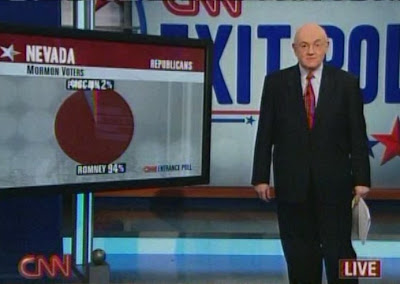
Today is primary day and 3.5 million Flori

Showing posts with label third party. Show all posts

Thursday, March 29, 2012

Third Party Longings, Independent Candidates, and Political Reform


Buddy Roemer Eyes Presidency - NPR interview on his main focus - campaign finance and the corrupting power of money in politics. Roemer is seeking the Americans Elect line.

The Atlantic: America has not seen a long-lasting national third-party movement in its history, and it won't be seeing one now. [Hey guys, what about the Republican Party?]

Rapid City MI: She said people she encountered on the campaign trail told her they were “sick of party politics,” leading her to switch to an independent run.

Assemblyman Nathan Fletcher announced today that he is dropping his Republican party preference and running as an independent for Mayor in San Diego.

The Proposition 14 experiment in political engineering is debuting this election season. The constitutional amendment, approved by voters in 2010, transforms June primaries, traditionally partisan affairs of the heart, into brainy contests that tap the top two contestants, regardless of party, to square off in November.


Friday, January 20, 2012

A Third Party in a Two-Party System? Better to Change the System

Polls are showing that the majority of Americans support a "third party" or a "third party candidate" and yet our current partisan political system will not tolerate a challenge from a so-called "third" party or candidate. At the same time, Americans are no dummies -- the fastest growing electoral constituency is nonpartisan independent voters. Hmmmm.......


THIRD PARTY?
  • Group circulating petitions to get reform party on the Utah ballot (By Nkoyo Iyamba, Deseret News) Despite Utahns voting primarily Republican, Dives said most Utah registered voters aren't registered with a political party. "If you go to the lieutenant governor's office and ask for the roll, you'll see that there are more unaffiliated registered voters than there are Republicans and Democrats combined," Dives said. She believes this group is ready for an alternative to the perceived two-party system in America.
  • Obama fares well against third-party challenge (By BYRON TAU, Politico) Via POLITICO's Alex Burns, a Democratic polling firm finds that President Barack Obama's support holds up well if an independent candidate like Michael Bloomberg or Ron Paul were to enter the race.
  • Dude, where's my candidate? (By: Kenneth P. Vogel and Abby Phillip, Politico) “We don’t want to let the process be taken over by the Gary Colemans and the Mary Careys or the Naked Cowboys,” said Bailey. “There are people out there who could get some support, but don’t have the qualifications, and that includes some people out there in the political process already.”
  • Young Voters Propel Ron Paul's Campaign - Young voters gravitating to oldest guy in the field (By Beth Fouhy, NBC Dallas Ft Worth Channel 5)

Thursday, January 12, 2012

American Elects, Ron Paul and the Third Party Option


AMERICANS ELECT
  • Has Ron Paul thought of this? (Clarence Page, Times Daily.com - Tennessee Valley) But I am skeptical that adding another candidate selection process will solve more headaches than it creates, although from a journalist’s standpoint, it could be fun to cover. That’s why I was not joking with my Paul-Clinton ticket question. A web-based alternative nominating process is almost tailor-made for Texas Rep. Ron Paul’s army of web-savvy supporters if he loses his Republican presidential bid, as widely expected. A groundswell of support for him already is beginning to appear among Americans Elect delegates.
  • Opinion: Now is the Best Time for a Third Party to Rise (By Solomon Kleinsmith) A centrist third party could prosper in today’s political environment and end the stalemate in Washington. There is a large body of moderate Republicans, disaffected Democrats and dissatisfied independents looking for the kind of political home that this party could provide. Unhappiness with the political options now available to Americans will sooner or later translate into a groundswell for alternatives.

Tuesday, December 27, 2011

The Unity of Independent Voters: Not a Partisan Pleasure

Randy Schultz, writing for the editorial page of the Palm Beach Post, doesn't see dissatisfaction with the major parties as a uniter of independent voters. He's got some interesting observations here about the need for organization -- the "volunteers who staff phone banks, stuff envelopes and drive voters to the polls," the stuff of electoral politics in America.

But unity? In my opinion, unity is not a declaration of belief in some abstract principle. Unity gets built person by person, partnership by partnership, challenge by challenge. That's how organization gets built and what organization is. That's the very (revolutionary) foundation of our country. Our founding fathers (and mothers, brothers, sisters, sons, daughters, cousins, and neighbors and their mothers, etc.) did not come together over a neat programmatic issued by an established authority on July 4, 1776.

But the naysayers never tire of saying that independents don't stand for anything and Mr. Schultz is dead wrong when he says "nothing really unites them."

What unites independents - now (at least) 40% of the electorate - is, well, their independence. But if that isn't enough for you, for starters there's also the visceral distaste for partisanship that has clear partisans, according to USA Today, leaving the parties to the tune of 2.5 million since 2008.

And what's organizing independents right now is the fight for a nonpartisan level playing field for anti-party voters to participate in our political system. That's a big cultural change for America, one that is badly needed if we are to continue to progress as a people and as a nation.

And it just might not mean a third party.

Jackie Salit and independentvoting.org have been organizing independents on the ground since the implosion of the Reform Party. And they are having success. They have affiliates in 40 states, a small but very committed staff that raises around a million dollars a year to train activists all over the country, conduct grassroots campaigns such as the current push to get Congress to hold hearings on the second class citizenship of independent voters who are denied ballots in primaries in 33 states, and generally seeks to "diminish the regressive influence of parties and partisanship by opening up the democratic process."

Ultimately Mr. Schultz's message is: stay in the party system.

If people vote with their feet, the message is: We beg to differ!

THIRD PARTY

Schultz: Forget third party. Demand major change from major parties (Opinion blog, By Randy Schultz, Editor of the Editorial Page, Palm Beach Post) One big problem is that all those No Party Affiliation voters became disaffected for different reasons. Some think that the Democrats are too liberal. Some think that the Republicans are too conservative. Some would register with the Cynics Party, if one existed, because they can't stand either major party. Some are younger voters who, because the parties' old identities have shifted, don't identify with Republicans or Democrats. In other words, nothing really unites them.

INDEPENDENT VOTERS

Voters leaving Republican, Democratic parties in droves (By Richard Wolf, USA TODAY) A USA TODAY analysis of state voter registration statistics shows registered Democrats declined in 25 of the 28 states that register voters by party. Republicans dipped in 21 states, while independents increased in 18 states. The trend is acute in states that are key to next year's presidential race. In the eight swing states that register voters by party, Democrats' registration is down by 800,000 and Republicans' by 350,000. Independents have gained 325,000.

Monday, November 21, 2011

Bill Schneider: False Promises and Third Party Efforts


INDEPENDENT VOTERS
The False Promise of a Third-Party Candidacy (Bill Schneider, Distinguished Senior Fellow and Resident Scholar at Third Way, Huffington Post) Most of the money for Americans Elect is believed to be coming from wealthy Wall Street hedge fund managers who want to get rid of President Obama but can't abide Tea Party Republicans. (The organization keeps its donors secret.) Those donors may find themselves pleasantly surprised if the Republicans repudiate the Tea Party and nominate Mitt Romney. Romney's one of them.

Friday, November 18, 2011

Obama, Paul, Third Party, Millionaire's Tax Up in Polls


2012
  • Obama Job Approval Edges Up, GOP Contest Remains Fluid (Pew Research) Obama continues to trail Romney by a wide margin among independent voters. Currently, 53% of independents favor Romney while just 41% support Obama. In matchups with other leading GOP candidates, Obama leads or runs about even.
  • Ron Paul takes 2nd in an Iowa poll for 2nd time in 4 days (The State Column) Texas Congressman Ron Paul, a candidate for the Republican presidential nomination, garnered 20.4 percent of the votes to secure 2nd place in a ISU/Gazette/KCRG poll of 1,256 registered Iowa Republican and independent voters.
  • The GOP’s third-party nightmare scenario - A poll shows Ron Paul doing shockingly well as an independent candidate. What would make him take the plunge? (By Steve Kornacki, Salon) In reality, of course, this probably won’t happen — because he’s been shunned by the GOP, Roemer would likely be just as anonymous as an independent candidate. But Roemer’s third-party flirtation is a reminder of another potential spurned candidate revenge scenario that the GOP should probably be much more worried about: What if Ron Paul decides to run as an independent?
  • Political Intelligence - Top Rank Beltway Pundit Will Offer 2012 Election Forecast at UCSB (By Jerry Roberts, Santa Barbara Independent) Independent Candidate: Gergen said that in Washington, there is “increasing talk about a third-party” challenge for president. While potential candidates like New York Mayor Michael Bloomberg or Starbucks CEO Howard Schultz may have the resources to mount an independent effort, the practical logistical requirements, coupled with the difficult challenge of Electoral College calculus, make such a bid unlikely.
MILLIONAIRE'S TAX
Poll: New Jerseyans support a Millionaire's Tax by a 2 to 1 margin - Poll finds they also strongly support Occupy Wall Street movement (BY TOM HESTER SR., NEWJERSEYNEWSROOM.COM) Voters support a tax hike on the rich by 64 to 28 percent, up from a high of 55 to 34 percent in a Feb. 10 poll, according to a Quinnipiac University poll made public Thursday. Current support is 82 to 13 percent among Democrats and 67 to 25 percent among independent voters, while Republicans are opposed 54 to 38 percent.


Tuesday, November 15, 2011

Nonparty Party for 2012: Use your browser to build a dream ticket for President


AMERICANS ELECT
Crashing the Party - Hate all the presidential candidates? Use your browser to build a dream ticket. (by Andrew Romano, Daily Beast) “A nonparty party isn’t how you gain power,” says Princeton historian Sean Wilentz. “It just hasn’t worked that way in American politics. You have to stand for something very clearly—not ‘we don’t like parties’ in the abstract.”

Saturday, November 12, 2011

Buddy Roemer Reaches out to Occupy Wall Street


OCCUPY WALL STREET
  • Rabble in Arms (By Keith Kreitman, Daily Journal - San Mateo CA) Meanwhile, as I have written before, the candidates for the Republican nomination for the presidency march along from debate to debate, not recognizing and addressing the growing middle class dissent in the land they wish to rule, ignoring the Occupy movement and clueless that, with their ever more extreme programs that gain them love and kisses from their slivers of extreme right admirers, they are alienating more and more of the moderate middle class and independent voters and the Occupy movement will eventually rule. 
  • Mulling Third Party Bid, Buddy Roemer Reaches Out to Occupy Wall Street (By: Kevin Derby, Sunshine State News) As their candidate’s path to the Republican nomination becomes increasingly difficult, this week the Roemer camp threw out signs that he is considering launching a third party or independent bid for the White House.

Friday, November 04, 2011

Americans Want Alternative to 2 Parties


INDEPENDENT VOTERS
  • Major Parties Struggle for Popularity; Broad Interest in an Alternative (ABC News/ Polls, by Gary Langer) Interest in an independent candidate peaks, naturally, among independents themselves; 73 percent like the idea, vs. 57 percent of Republicans and 53 percent of Democrats. And 37 percent of independents “strongly” favor the notion. Independents, as it happens, are in good supply these days: they’ve outnumbered Democrats and Republicans in ABC/Post polls steadily since 2009, by far the longest period in which they’ve done so in polling back to 1981.   
  • Gallup poll: Obama scores points with Iraq withdrawal pledge (By Michael Muskal, LA Times
    November 2, 2011, 11:32 a.m.) Independent voters approved of Obama’s actions by 77% to 17%.

Wednesday, October 05, 2011

Americans Elect Shuns Third Party Label


AMERICANS ELECT
St. Louisan part of effort seeking new way of nominating president (BY BILL LAMBRECHT, St. Louis Today) Americans Elect shuns the label of third party, describing itself as architects of a second way of nominating a presidential candidate, a method that avoids the time-honored system of primaries and party caucuses that the group says excludes many voters from meaningful participation.... Richard Winger, a Californian who writes an authoritative ballot access newsletter, likened the effort to the beginning of the Reform Party, founded by Ross Perot in 1995. Perot ended up the nominee in 1996, followed by Republican defector Pat Buchanan in 2000. The party grew increasingly irrelevant.

Thursday, August 25, 2011

Third Party Tremors, 2012 Political Earthquake


2012
  • Could Third-Party Tremors Result in a 2012 Political Earthquake? (Matthew Dowd, ABC News Analyst) Thus, 51 percent of the electorate is a mishmash of independents, and not ideological members of either political party.
  • Obama 39%, Paul 38% (Rasmussen Reports) Paul, whose long run afoul of the GOP establishment with his libertarian policy prescriptions, picks up 61% of the Republican vote, while 78% of Democrats fall in behind the president. Voters not affiliated with either of the major political parties prefer the longtime congressman by 10 points – 43% to 33%.
  • Poll: Ron Paul tied with Obama (D.K. Jamaal, Post-Partisan Examiner) The poll indicates that the biggest hurdle between Ron Paul and the Presidency he has long sought is neither Democrats nor independents, but the controversial Congressman’s own party.

Monday, August 08, 2011

Third Party Independent Presidential Run Unlikely?


2012
  • Third-party resurgence seems unlikely (By: RICHARD SINCERE, Richmond Times Dispatch) If the electorate's mood really favors a third-party surge, we would be seeing it in Virginia. There would be a demand for third-party and independent candidates for the General Assembly, and candidates would rise to meet that demand. Yet according to records available through the Virginia Public Access Project (VPAP), there are only seven independent candidates seeking election to the 100-member House of Delegates this year. There are four independent candidates for the 40-member state Senate.
  • The Untransformational President - Barack Obama hoped to elevate American politics. Instead, our politics may destroy his presidency. (by Michael Tomasky, The Daily Beast) But other reasons have to do with Obama himself. To begin with, says historian Eric Rauchway of the University of California, Davis, Obama misapprehends history.


Thursday, July 28, 2011

The Left's Hue and Cry Against Third Parties

2012
  • The ridiculous third party rallying cry - Bloomberg and Friedman pretend partisan fighting is ruining our country. The real problem is too much consensus (By David Sirota, Salon) As both Dartmouth professor Brendan Nyhan and the Columbia Journalism Review show, this act is so unerringly consistent that it has become cliche #233. And yet despite its maddening monotony, it remains a popular cottage industry. Indeed, from the pornstachioed Thomas Friedman to the Gordon Gekko-haired Jon Avlon to the monocle-and-top-hat-worthy Michael Bloomberg, the Third Party Fetishists provide a glorious career for its most slavishly devoted and dishonest cast members -- and, hey, as grifter jobs go, it's a damn good living.
  • Crashing the Party System - Why does Thomas Friedman want to help a Republican win the White House? (Ben Adler, The American Prospect) Of all the rites of American politics that attend the presidential election, none is more irritating than the inevitable third-party bubble. Around this time four years ago, a coalition of irrelevant old politicos—former Jimmy Carter and Gerald Ford officials and a former governor of Maine—formed a group called Unity ’08 to create a bipartisan presidential ticket. They had big dreams of holding online primaries and recruiting candidates like New York City’s independent mayor, Michael Bloomberg. The effort sputtered, then pooped out.
  • Morning Jay: The Fundamentals Do Not Currently Favor Obama's Reelection (By JAY COST, The Weekly Standard) It is worth pointing out that, in the last forty years, no president has ever been elected in a predominantly two-way race with less than 48 percent of the independent vote. (That was George W. Bush in 2004.) with CHARTS

Thursday, October 14, 2010

TODAY'S NEWS HEADLINES for INDEPENDENT VOTERS 10/14/10

Pollsters and election statisticians have turned an eye to registration numbers in an effort to keep their heads above water in the sea change that is taking place in American politics. More people are becoming independent, choosing candidates not parties. There's chatter about a third party... And as Jackie Salit pointed out in her recent Report from the President at IndependentVoting.org 
"Right now, it’s very hard for the American people to express themselves.  The media has molded politics into a blood sport.  And the political system channels everything into a left/center/right, Democratic/Republican paradigm that undermines progress and rewards division. Independents are trying to make a statement about all of that. But even so, we barely register as “real,” even though, paradoxically, we now decide many important elections." 
One of the ways independents have taken on this fight is by challenging partisan attempts by both Repubs and Dems (depending on which party is the "minority" party in the state legislature) to close primaries. Such is the case in Idaho where a federal judge will hear testimony in a trial that could have national implications. Idaho voters do not register by party. Californians voted in June for a Top Two open primary referendum that enfranchised 3.4 million decline to state independents.


The gov race in New York has just gained new life.  New Yorkers have two good choices in November -- Andrew Cuomo on Column C the Independence Party line, or Brooklyn City Councilmember Charles Barron -- who I personally believe deserves support in his challenge to the Democratic Party establishment. Councilman Barron, a former Harlem Black Panther Party activist in the sixties, has taken a very positive step forward in the attempt to create ballot status for the new Freedom Party. Freedom needs 50,000 votes on Column J. 


More below...

INDEPENDENT VOTERS

  • Wooing Hearts and Minds in Land of Independents (By DEVLIN BARRETT, Wall Street Journal)  Independent voters will be crucial to congressional races all over the country, and nowhere more than in Connecticut, where the biggest party is no party at all.
  • Registration Trends in ‘Purple’ America (By Rhodes Cook, Wall Street Journal) From the late 1980s to 2008, the share of Democratic voters decreased from a slight majority of all those registered (51%) to 43%. The number of Republicans remained virtually unchanged, slipping slightly from 33% to 32%. Meanwhile, the proportion of those that chose not to identify with either party spiked upward from 16% in 1987 to 25% in 2008.
  • Voters want a different change (By CHUCK RAASCH • Gannett National Writer, Oregon Statesman Journal) All across the country, independents — many of them struggling blue-collar workers — are making similar calculations. Many helped elect Obama in 2008 and solidified the Democrats' hold on Congress. They appear to be just as engaged in this new season of discontent, but on the opposite side.
  • Our Opinion: Can Anyone Really Tap Into Voter Frustration? (Press & Dakotan) Frankly, other than its condemnation of the failures of both political parties, the independents’ proclamation relies on dashes of familiar rhetoric and promissory populism as it tries to tap into a widespread anger, now mostly loudly presented by the Tea Party, without aligning itself with any particular political ideology.
  • Election Unlikely to Change Policy or Politics (John Zogby, Forbes/DATA PLACE) The strongest trend in our politics is contempt for both parties that is greatest among independents, but also includes voters affiliated with both parties. These people want solutions and cooperation; and if neither party offers that, I believe they would be very open to a third party that offers it.
  • Triage Time for Democrats - Who can be saved with money, and who needs operational help that can't be delivered in time? (by Charlie Cook, National Journal/Off to the Races) Since ideologues and partisans are pretty much diametrically opposite of independents, tackling both jobs -- stimulating the base while reaching out to independent voters in a tough environment -- is awfully hard.
  • MediaPlanIQTM: How to Influence Independent Voters - Still Time to Sway Votes for Midterm Elections (marketwise)
  • Partisan Voter Registration Totals (Michael P. McDonald, Huffington Post) Twenty-nine states plus DC offer persons the option of declaring a party affiliation when they register to vote. Party registration totals thus provide a snapshot of the overall partisan balance within a state. Comparisons of these statistics over time provide a broader picture of overall trends.
OPEN PRIMARIES
  • Trial begins in GOP closed primary lawsuit (By Ben Botkin - Magic Valley Times-News writer) “It would have national ramifications,” said Harry Kresky, an attorney for IndependentVoting.org, an intervening party in the case that represents 11 independent voters in Idaho.
  • Idaho GOP to make case for closing primary (KHQ Associated Press) Testimony Wednesday focused on a survey by a Republican pollster that found support for the idea that Democrat and Independent voters crossover into Republican primaries.
  • GOP argues for closed primary (Todd Dvorak Associated Press, The Spokesman Review - WA) The survey found that 41 percent of those voters identified themselves as non-GOP voters. Of those, 39 percent who identified as Democrats or likely to vote for Democrats said they usually take part in Republican primaries.
  • Dennis: Republican Vs. Republican (Spokesman Review - WA)
  • Republican Vs. Republican, Mad Magazine-style (DennisMansfield.com) It is a trial of huge proportions, because it is a trial the outcome of which will mold the future of the state - who will run for office, who will serve in office and what policies will be followed for education, for the sanctity of life, for spending and for so many other vital issues.
  • Closed primary trial kicks off in federal court (Spokesman Review/Eye on Boise)
  • A positive step away from partisanship (By Harvey Platt, The Oregonian) One positive step toward inclusion would be establishing an "open primary" in Oregon, much like both California and Washington have recently enacted. The systematic exclusion of up to a third of independent eligible primary voters in our state is regrettable.
BLOOMBERG
WFP
  • Still Working for Working People (Katrina vanden Heuvel, The Nation/Editor's Cut) As WFP executive director Dan Cantor told New York Magazine, “We’re looking to get a good vote on the Working Families line and use the power that accrues to that vote to influence outcomes.”
NY GOV DEBATE
  • Jeremy Morlock: The Circus is Coming to Town (East Aurora Advertiser) Charles Barron is a former Black Panther running on the newly formed Freedom Party line. The outspoken councilman from Brooklyn arranged for the dictator Robert Mugabe of Zimbabwe to be honored with a reception at New York's City Hall in 2002. Barron decided to run in a protest bid for governor after becoming upset that the Democratic Party's statewide slate included only white people. "The Freedom Party will not stand by & allow the Democratic Party or anyone else to continue to take the Black & Latino vote for granted," the party website states.

Friday, October 08, 2010

TODAY'S NEWS HEADLINES FOR INDEPENDENT VOTERS 10/8/10

MIDTERMS
  • David Plouffe: 2010 Election Won't be Like 1994 (Posted by Robert Hendin, CBS News/Political Hotsheet) As for the chances of keeping the House and Senate in November, Plouffe said that the Democrats are making progress but need to continue that trajectory. He doesn't see another surge by the GOP in the last few weeks, though he admits Republicans are in a better position with independent voters than they were in either of the last elections.
CALIFORNIA
  • California lieutenant governor candidates trade sharp barbs (By Phil Willon, Los Angeles Times) In a dramatic 60-minute debate in Silicon Valley, Republican Abel Maldonado, the incumbent, and Democrat Gavin Newsom trade accusations of pampering criminal illegal immigrants and slashing public school funds.
MASSACHUSETTS
  • Shaking it up - State needs diversity in its congressional delegation (By Ann Murphy, Boston Globe) The largest party affiliation in Massachusetts, as in many other states, is “unenrolled.’’ This group of independent voters without a party makes up 51.44 percent of all registered voters in the state and it’s growing.
UTAH
  • Utah media shuts out independent candidates (Examiner Salt Lake City Political Buzz, Alison Peek) Following an investigation by the Utah League of Independent Voters (ULIV), it seems some stations have specific policies about how well a candidate is doing in the race before they are invited to the debate. KUED only allows candidates with poll numbers of at least 5%.
BLOOMBERG 2012
  • Draft Michael Bloomberg Committee Press Conference (PRESS RELEASE PR Newswire) Thursday, October 14, 2010.Combine Independents, Independence and Green Parties to create critical mass to create America's Third Major Party
  • Bloomberg: A Liberal in Moderate’s Clothing (by Mark Impomeni, Human Events - Leading Conservative Media Since 1944) New York City Deputy Mayor Howard Wolfson, the former communications director for Hillary Clinton’s failed 2008 presidential campaign, summed up Bloomberg’s national appeal. “He's an independent who comes to his positions, not based on an ideology or a party identification,” Wolfson said. “We live in a political moment where people are tired of partisanship, and the mayor is a leading independent in this country. Candidates are very eager to have his endorsements, from both parties.”
  • Poll: Republicans remain revved up about Nov. 2 elections (Miami Herald, Steven Thomma) Marist: In a 3-way Obama-Palin-Bloomberg race, Bloomberg would take 11 percent of Democrats, 21 percent of Republicans and 23 percent of independents. His strongest base: independent men, 29 percent. His weakest: Democratic women, 11 percent.
NEW YORK
  • Fulani espouses the mantra of ‘two good choices’ (By STEPHON JOHNSON, Amsterdam News) As a founder of the Independence Party of New York, Fulani has promoted the political entity’s causes for two-plus decades. Looking for another option for politically minded Black folks, Fulani believes that the key to challenging the current two-party dominance is investing in independence. “It is a vehicle to challenge the partisan and corrupt self-interests of the state’s Democratic and Republican parties and bring reform to our judicial system, which is so desperately needed,” said Fulani.
  • New York City Independence Party Files Amicus in Support of Conservative/Working Families Lawsuit Over How to Count Certain Ballots (Ballot Access News)
  • Trail Mix (By JENNIFER FERMINO and DAVID SEIFMAN, NY Post) Democratic gubernatorial nominee Cuomo, GOP rival Paladino and all minor-party contenders are now scheduled to debate Oct. 18 at Hofstra University for the campaign's first televised slugfest. That Battle Royale, to be carried by News 12, NY1 and YNN, will include Howie Hawkins of the Green Party, the Anti-Prohibition Party's Kristin Davis, Jimmy McMillan of the Rent is Too Damn High Party, the Freedom Party's Charles Barron, and the Libertarian Party's Warren Redlich.
  • Q Poll: Cuomo Pulls Away (By David Freedlander, NY Observer) "After the dust settled from Paladino's big primary win, the big switch was in the independent vote - a small edge for Paladino two weeks ago turns into a small edge for Cuomo this time," said Quinnipiac Poll director Maurice Carroll.
LAST WORD(S)

Monday, November 23, 2009

TODAY'S NEWS HEADLINES for INDEPENDENT VOTERS - Independents have a lot to be thankful for!


Thanksgiving is this week. Time to clear out the leftover stalks from the harvest. All those dried leaves from the NJ and VA gov races and the NY-23 congressional race... And the pods from the NYC mayoral (by the way, the final count including paper ballots is 150,000 votes on the Independence Party line). Do we pile them up, burn the field, or mulch and wait? Some of the most interesting things in the field right now are the roots -- nonpartisan elections, open primaries and independent candidates in local races -- as independents prepare for the next season. We have a lot to be thankful for -- let's celebrate a bountiful harvest!

INDEPENDENT VOTERS

OPEN PRIMARIES/ NONPARTISAN ELECTIONS

2010 GOV RACES

2012

WORKING FAMILIES PARTY

LOCAL INDEPENDENT POLITICS

Tuesday, November 10, 2009

TODAY'S NEWS HEADLINES for INDEPENDENT VOTERS 11/10/09

Continued wrap-up commentary of November elections with the addition of some of those wonderful non-partisan independent voices from New Hampshire. Up-tick in self-financed campaigns. Rhode Island has a serious independent candidate and a new third party for 2010. New York's fusion election shows media ignoring NYC Independence Party's 142,817 votes (double the 2005 vote) -- in an election where Dem and Repub votes went down -- and going after Working Families Party. And d. eris at Poli-Tea has an interesting post. I hope he'll consider a brief study of what the NYC IP has been able to accomplish within a duopoly ideology!


NONPARTISAN POLITICS

  • Local voters are the core of the political process (Citizen.com - Laconia NH) Democrats have been on a roll since capturing control of Congress and it was reinforced a year ago by the election of President Barack Obama. Democratic leaders want to keep the machine well oiled and Republicans are struggling to make a comeback. But looking for partisan gains in nonpartisan elections is a poor exercise in terms of time and energy. It underestimates the intelligence of people who live in those communities. 
  • Idaho races get scrutiny (AP-Idaho Statesman) Steve Shaw, a political scientist at Northwest Nazarene University, noted that nonpartisan elections in Idaho tend to draw much lower turnouts than the higher-profile partisan races for state and national office. Shaw said a switch to partisan races for cities might attract more voter interest. [Waaaat?? Partisan logic has no bounds!]
  • Greg Moore: Tuesday's message from voters: Butt out, party bosses (Union Leader) These two races should be a warning to party leaders nationally. Both the Republican and Democrat brands are tarnished, and voters want ideas and principles from candidates, not a partisan seal of approval.


SHOW ME THE MONEY

  • Candidates pour more of own cash into races (By John Fritze, USA TODAY) Driven partly by a growing number of competitive primaries, self-funding in the first nine months of the year outpaced a 14% rise in all campaign receipts. The number of candidates who gave themselves $500,000 or more jumped to 15 from five in 2007, Federal Election Commission data show.
  • Politics & Poker: Self-Funders Could Influence Several ’10 Contests (By Josh Kurtz, Roll Call)


GOVERNORS RACES

  • Nontraditional candidates spice up 2010 governor's race in R.I. (Ben Schreckinger, Brown Daily Herald) “It has the potential to be a very unique general election,” said former U.S. Sen. Lincoln Chafee ’75, who is running as an independent. ....The high proportion of unaffiliated voters in the state benefits third parties, Hunsinger said, and the Moderate Party’s statewide organization is already comparable to Republicans’, she added.... 


BLOOMBERG 09

  • Bloomberg wins third term (By Brian Donohue, Irish Emigrant Online) Many New Yorkers were troubled with this turn of events [overturn of term limits], however the strong Bloomberg supporters including the Irish American community came out in full force and a last minute surge of votes from Bloomberg strongholds in Queens pulled him into a clear lead. [I was at a Sunnyside poll and I'd say not only did the Irish American community come out in force, they also voted on Column C, the Independence Party line!]


WORKING FAMILIES PARTY

  • Who'll dare to probe the WFP? (By JACOB GERSHMAN, NY Post) Spurred by an election lawsuit filed by Randy Mastro, a top aide in the Giuliani administration, Donovan's office has "begun a preliminary review" of Debi Rose's WFP-boosted campaign for City Council, say sources.


ON THE BLOGS

Monday, August 24, 2009

Measuring the independence of independents


Guest Post by d.eris

With the ranks of self-identified independents swelling across the country, and, hence, renewed media attention devoted to the group as a bloc, a number of recent studies and commentaries have questioned received notions of the independent voter, arguing that 'the independent voter' is little more than a myth. This position holds that, since a large percentage of independent voters "lean" toward one major party or the other, and vote in a manner consistent with that preference, independent voters are in effect no different from "weak" partisans of the duopoly parties. To put this in other words, when made to choose between the Republican and Democratic Parties independents tend to side with one over the other, whichever that one may be for a given individual. However, this does not necessarily imply partisanship on the part of the voter, but does suggest that independents are not an ideological monolith. To gauge the independence of independents, the crucial question is where their preference lies and how they vote, not when they are forced to choose between the lesser and greater of two relative evils, but rather when they are offered a choice between a Democrat, a Republican and someone else – a third party candidate or even another independent, imagine that. That this may not be immediately apparent is likely just one more effect of bi-partisan bias in academia, the media and polling organizations.

Certainly, though, one of the more perplexing paradoxes of two-party politics is the chasm between the number of people who describe themselves as independents and the number of people who vote for candidates other than those representing the Republican and Democratic Parties. There are numerous potential explanations of this contradiction. It is supposed that many voters are simply not as independently minded as they think they are; or that they practice a form of defensive politics by voting for the lesser of two evils, or against the greater of two evils. Yet many people say they would support or even consider voting for a "viable" third party or independent candidate for office, if there were one. This is the infamous viability hurdle.

There are at least two conditions to the perception of viability, both of which presuppose name recognition of the candidate in question: 1) others deem the candidate worthy of consideration, and 2) the individual agrees with this estimation. Bipartisan, duopolist bias then introduces the additional supposition that only representatives of the Democratic and Republican Parties are viable candidates for office. But there is some amount of resistance to this presumption. This year has witnessed a growing discontent with both Democratic and Republican leadership and a decline in identification with both of the major parties. The
rise in independent identification has been documented by numerous polling organizations over the course of 2009, and is already apparent in voter registration rolls. These developments have certainly figured into the political calculus of the many independents who have launched or are currently exploring promising campaigns for office at all levels of government. The elections of 2009 and 2010 will thus put independents to the test.

Take the Northeast, for instance. Though it is considered a Democratic bastion, the region has an independent streak. In the last thirty years, Maine has had two
independent governors and Connecticut has had one (kind of). Both Vermont and Connecticut have sitting independent Senators. In New York City, Mayor Michael Bloomberg withdrew from the Republican Party and registered as an independent. In New Jersey, independent candidate Chris Daggett has raised a significant amount of money and obtained a place in the state's gubernatorial debates. There is wide array of gubernatorial candidates lining up for Maine's 2010 contest, among them independents Alex Hammer and Sam Bailey. Legislators in New Hampshire are reportedly considering independent runs for office next year. Lincoln Chafee is running for governor of Rhode Island as an independent. There is speculation that state Treasurer Tim Cahill is planning an independent run for the same office in Massachusetts. And this trend is not confined to the Northeast. Jana Kemp has launched an independent campaign for governor in Idaho and Trevor Drown is exploring an independent run for Senate in Arkansas. If these candidates can capitalize on the public's discontent with the two-party system, and voters, in turn, resist falling prey to the steady diet of duopolist propaganda fed to us by the major parties and their enablers in the mainstream media, independents could dispel the myth of 'the myth of the independent voter' in 2009 and 2010.

Thanks to Nancy for inviting me to guest post here at The Hankster.


You can see more of Poli-Tea's independent political views at Poli-Tea. Poli-Tea is highly recommended by The Hankster. -NH

Wednesday, May 06, 2009

TODAY'S NEWS HEADLINES for INDEPENDENT VOTERS

  • A third party in Redding PA? D'Agostino starts petition process
  • Idaho's Huntsman Rising, Weaver Advising Rising, Weaver Advising 
  • Fulani on Bloomberg and Black Independent Alliance
  • Hello Dolly Llama on partisanship
  • Repubsneed to attract independents -- but will they?

Wednesday, October 29, 2008

Voting YES on Measure 65 is one step toward opening up the political process to all voters.

Oregon’s independents span the political spectrum from conservative to liberal but—more importantly—many refuse these labels. We don’t like parties—major or minor, which are more concerned with maintaining power and party establishments than representing people. While independents don't like parties, they want to participate in the process and vote for whom they believe is the best candidate.

The current primary election system in Oregon is a closed system. Only voters registered as Democrat or Republican can vote in the primaries, which excludes politically independent Oregonians, 20 percent of registered voters. These are Oregonians who believe that partisan battles have increasingly characterized both national and Oregon politics and have reduced the ability of the Oregon Legislature and Congress to effectively address the issues we face.

Measure 65 is designed to address the disenfranchisement of large numbers of Oregon voters and open up primaries to a greater variety of candidates. You would be able to vote for the candidate you think is best suited for the job regardless of their affiliation.

Given that the current primary system is crucial in selecting the candidates who will be on the general election ballot, independent voters are either disenfranchised or are forced to register with a major party to participate. Given that 400,000 Oregonians are prevented from participating in the primaries, why does the state of Oregon and local election offices spend millions of taxpayer dollars in sponsoring these elections?

The opposition to Measure 65 by the Democratic and Republican parties is to be expected. But it is ironic that some minor parties are opposing Measure 65, when they too can benefit from this reform. We need to make sure that the partisans don't drive a wedge between independent voters and third parties.

This isn’t about ideology! We are coming together as Americans who believe that the political process is so driven by partisanship and special interests that it needs to be reformed.

Voting YES on Measure 65 is one step toward opening up the political process to all voters.

Measure 65 will not address all the issues of Oregon politics but it opens up the political process to greater participation and better representation. Oregon voters have the opportunity now with this measure to begin the overhaul of our political system that will reduce the partisan battles in which we, independents, have been the biggest losers.

Oregon Committee for an Independent Voice
David Ellis
Nancy Cunningham
orciv@earthlink.net