Hankster friend Bill King has posited this take on independent candidacies -- increasingly important to the American political landscape...
MIDDLE AMERICA, THIRD PARTIES, INDEPENDENT CANDIDATES
King: Great middle of America has no place to call home (By BILL KING, Chron/Viewpoints, Outlook) Still, it is not easy to break the Democratic/Republican partisan oligarchy. The two dominant political parties have laced the elections statutes with provisions that stack the deck against third-party or independent candidates. For example, in Texas an independent candidate must collect about 50,000 signatures to get on the November ballot and the petitioners cannot have voted in the primary, a daunting task to say the least.
Thursday, March 31, 2011


South Carolina Judge Tosses Anti-Open Primary Lawsuit
A win for indies and new political alliances. IndependentVoting.org. joined with the state, Tea Party members and black lawmakers in fighting the lawsuit.
Indies v. RP – the score is tied.
- Judge keeps primary voting open (By JEFFREY COLLINS - The Associated Press, The State) “It’s a great day for independents. It’s a great day for all voters in South Carolina,” said lawyer Harry Kresky, who argued the case for IndependentVoting.org. “The primary confirms a great deal of legitimacy on a candidate.”
- Judge rejects closed primaries (Associated Press, Augusta Chronicle)
- Judge rebuffs GOP; rules SC primaries remain open (JEFFREY COLLINS, Associated Press, Greenwich Time)
- Judge rebuffs GOP; rules SC primaries remain open (JEFFREY COLLINS, Associated Press, CT Post - Bridgeport)
- U.S. District Court Tells South Carolina Republican Party that it Can’t Close its Primaries (Ballot Access News)
Independents Continue Fight to Preserve Idaho Open Primary
Idaho Voters Consider Themselves Independent
- Closed primary bill moves on to full Senate (Associated Press, Magic Valley Times News) Winmill's ruling is being appealed by the New York-based Committee for a United Independent Party. The group's lawyer Gary Allen warned the public record provision could infringe on constitutional privacy rights. Citing a recent Boise State University survey showing the majority of Idaho voters view themselves as independents, Allen cautioned lawmakers against setting rules that could keep independents home on primary election day.
- Closed Primaries Upset Independents (Posted by DFO, Spokesman Review/Huckleberries Online) Gary Allen, attorney for a group of independent voters, told the Senate State Affairs Committee, “I'm here on my 50th birthday, and I can't think of any better way to spend it than talking about democracy.”
- ‘Poke independent voters in the eye’ (Posted by Betsy, Spokesman Review/Eye On Boise) “In our view, this is an unnecessary intrusion on voters' privacy,” Allen said. “Frankly, our clients do not want to do this, and we've seen no evidence that other independents in Idaho want to do this either. At a time when Republican Party identification in Idaho is falling like a stone … I would not think that the Republican Party would want to poke independent voters in the eye.”
- Trillhaase: GOP Moderates Surrender (Posted by DFO, Spokesman Review) Already under siege from the ideological faction that gave you bills to nullify the U.S. Constitution and put a gun in every college student's hand, Idaho's moderate Republicans lost the war earlier this month. U.S. District Judge B. Lynn Winmill said the party apparatchiks could close the state's GOP primary to all but card-carrying Republican voters
- ‘Keep known political operatives from participating in another party’s primary’ (Posted by Betsy, Spokesman Review/Eye On Boise) Senate Minority Leader Edgar Malepeai, D-Pocatello, asked why party-affiliated people would have to switch their party affiliation by the end of the filing period in March or not at all for that year's primary, under the bill. “You may not even know what the roster is at that date,” said Sen. Michelle Stennett, D-Ketchum.
Illinois Limits Potential Independent Candidacies
ILLINOIS LIMITS POTENTIAL INDEPENDENT CANDIDACIES
Illinois Bill Advances, Would Limit Who can Be an Independent Candidate (Ballot Access News) If you run in a partisan primary, you could not run in the general as an independent
Illinois Bill Advances, Would Limit Who can Be an Independent Candidate (Ballot Access News) If you run in a partisan primary, you could not run in the general as an independent
Money Talks, Nobody Walks in New York
NEW YORK
- Council Progressives Say Tax Millionaires To Stave Off Cuomo Cuts (By David Freedlander, NY Observer) The Progressive Caucus of the City Council—a bloc of 12 members elected with the support of the Working Families Party—is out with a statement today reiterating their call for Mayor Mike Bloomberg to institute a tax on the city's wealthiest in light of Albany budget that will greatly reduce New York City's operating expenses.
- Former Bloomberg campaign adviser accused of stealing millions not keeping a low profile (NY Daily News/GATECRASHER) Haggerty has refused to cop a plea in the case, and our source says he and his legal team are preparing a "spirited" defense in which quite a few lawyers could take the stand to testify that he ran an effective Election Day operation for the Independence Party and had discretion to spend the mayor's money as he saw fit.
Wednesday, March 30, 2011
Neo-Independent Launches Online Publication
The Neo-Independent Vol. 6, No. 1 (Spring 2011)
EDITOR'S NOTE
 What we tend to see as historic are the dramatic, the explosive--as the world bears witness to events unfolding accross North Africa and the Middle East. Historical transformations, however, take (and have taken) other forms--less perceptible in their intensity, with equally uncertain outcomes.
What we tend to see as historic are the dramatic, the explosive--as the world bears witness to events unfolding accross North Africa and the Middle East. Historical transformations, however, take (and have taken) other forms--less perceptible in their intensity, with equally uncertain outcomes.On February 12, 2011, 460 independents from over thirty states gathered in New York City for a national conference entitled “Can Independents Reform America?” Jackie Salit, president of IndependentVoting.org and a national independent political organizer and strategist, gave the keynote address--a detailed analysis of the independent movement over the past twenty years. The presentation was aired several times on C-SPAN.
The current issue of the The Neo-Independent features an edited version of Salit's analysis--food for thought for anyone interested in better understanding the emerging national independent political movement. Salit's edited presentation is followed by an interview with CNN contributor and political analyst John P. Avlon, a participant at the national conference of independents and a longtime advocate for non-partisan reform.
The current issue of the The Neo-Independent features an edited version of Salit's analysis--food for thought for anyone interested in better understanding the emerging national independent political movement. Salit's edited presentation is followed by an interview with CNN contributor and political analyst John P. Avlon, a participant at the national conference of independents and a longtime advocate for non-partisan reform.
Enjoy the latest issue of The Neo! I look forward to hearing from you at ohali@uncg.edu.http://theneoindependent.blogspot.com/
Idaho Legislature Considers Bill to Require Party Identification
IDAHO INDEPENDENTS FIGHT TO MAINTAIN OPEN PRIMARIES
The Republican Party’s legal efforts to close its primary elections to those outside its ranks has met resistance both from the state attorney general of its own party and an unlikely coalition of independents who say they want voting influence in the state’s dominant political organization. Read more here
The Republican Party’s legal efforts to close its primary elections to those outside its ranks has met resistance both from the state attorney general of its own party and an unlikely coalition of independents who say they want voting influence in the state’s dominant political organization. Read more here
- Idaho Democrats blast lawmakers for $100,000 payment to GOP for closed primary attorney fees (THE ASSOCIATED PRESS, The Republic) Democratic Party leaders are unhappy with legislative budget writers' decision this week to pay the state Republican Party $100,000 for attorney fees after the state lost a GOP-led lawsuit in federal court over Idaho's open primary. NOTE: This AP article ran widely in local papers
- Idaho Bill for Party Registration (Ballot Access News) On March 28, the Idaho Senate State Affairs Committee introduced SB 1198. Currently, Idaho voter registration forms do not ask voters to choose a party. The bill provides that in the future, voter registration forms will include a place for voters to choose a party, or to choose “unaffiliated” status. The bill also says that sign-in sheets at the May 2012 primary will include a party membership checkbox. Starting in 2012, each qualified party would determine for itself whether or not to let independent voters vote in its primary.
- New closed primary and voter registration plan introduced (By Brad Iverson-Long, Idaho Reporter.com) The new plan was introduced Monday in the Senate State Affairs Committee. For next year’s primaries, it would instruct county clerks to add check off boxes to their poll book to ask all current registered voters to declare a party affiliation, which would include being unaffiliated. Party registration would also become part of new voter registration cards.
- Independents unwelcome? (Idaho Mountain Express) Idahoans of independent mind, who hate being labeled, pigeonholed or stereotyped, are likely to be shocked when they go to vote in upcoming primary elections.
- Thomas D. Elias: GOP extremists embark on path of self-destruction (By Thomas D. Elias, LA Daily News) The latest self-destructive move came at the party's late-winter state convention, where activist delegates voted to stage an end-run around the "top-two" open primary election system that now allows all voters to cast ballots for any candidates they like, regardless of party. That system gets its first large scale test in the statewide primary set for next spring.
Proposition 14 Dramatically Changed California Primary Process
PROPOSITION 14
Candidates fight for endorsements to replace Rep Harman (Jason Franklin, LA Political Buzz Examiner) When Proposition 14 passed in 2010, it dramatically changed the primary process, so that all the candidates running for the 36th district will be on one primary ballet. The top two candidates, regardless of political party, will be eligible to run during the special election, unless one candidate receives an absolute majority.
Candidates fight for endorsements to replace Rep Harman (Jason Franklin, LA Political Buzz Examiner) When Proposition 14 passed in 2010, it dramatically changed the primary process, so that all the candidates running for the 36th district will be on one primary ballet. The top two candidates, regardless of political party, will be eligible to run during the special election, unless one candidate receives an absolute majority.
National Women's History Museum "Women Who Ran for President" Exhibit Includes Independent Lenora Fulani
Women's museum seeks national space (By Monica Haynes, Pittsburgh Post-Gazette) National Women's History Museum -- Although 35 women have run for U.S. President, the online exhibit "First But Not the Last: Women Who Ran for President" highlights the campaigns of just 12 of them, including Shirley Chisholm, Lenora Fulani, Elizabeth Dole, Carol Mosley Braun and Hilary Clinton.
NOTE: Lenora Fulani is the only woman Presidential candidate to have been on the general election ballot (the others listed here ran in the Democratic Party primary.) Fulani was the first woman and first African American in US history to be on the ballot in all 50 states and qualify for federal matching funds. She collected over 1.5 million signatures in her run as an independent in 1988, laying the basis for Ross Perot's independent run in 1992 and paving the way for the current independent movement.
This from the National Women't History Museum:
NOTE: Lenora Fulani is the only woman Presidential candidate to have been on the general election ballot (the others listed here ran in the Democratic Party primary.) Fulani was the first woman and first African American in US history to be on the ballot in all 50 states and qualify for federal matching funds. She collected over 1.5 million signatures in her run as an independent in 1988, laying the basis for Ross Perot's independent run in 1992 and paving the way for the current independent movement.
This from the National Women't History Museum:
Lenora Branch Fulani has spent almost three decades fighting to end the two-party system and create a “viable, national, pro-socialist” party for those who feel ignored by the Democratic and Republican parties. Fulani ran for the presidency in 1988 and 1992.
She grew up in Chester, PA and watched her father die because, she said, no ambulance would come to her poor, African-American neighborhood. This, along with the firing of a gay choir director at her church, shaped her desire to address injustice... READ MORE HERE
Tuesday, March 29, 2011
TOP TWO, PROP 14, and DEMOCRACY
Recently, Examiner.com held a debate on the question as to how democratic Top Two election systems are, such as California’s Proposition 14. Here is the winning statement of the case that Top Two systems can be highly democratic, given the appropriate supporting conditions.
TOP TWO and DEMOCRACY
It’s a law of nature that every “top” has a “bottom.” So I’ll start my discussion at the top, and then drop down to the other part.
Political legitimacy
For a democratic system to work well, the government must have a substantial degree of legitimacy in the opinion of the general public. As our Declaration of Independence says, we instituted our government “deriving [its] just powers from the consent of the governed.” If the government itself becomes destructive of these rights, “it is the right of the people to alter or abolish it.”
So, legitimacy with the public is the very foundation which our government, even today, stands upon. If this legitimacy is lost, or even diminished significantly, then there will be political trouble, like we have seen recently in the Middle East.
While every society has its share of unhappy and anti-social individuals, these can be kept to a minimum by following the principle of “majority rule.” Of course, our Constitution requires the government to respect the rights of minorities. But generally speaking, legitimacy will be preserved if the majority of the people feel that their will is being honored by the government.
That is why I say there is considerable political wisdom inherent in an election process that puts the final vote in a top two system. When the final vote is for either “A” or “B,” the winner will always be by a majority. If the final vote had three or four or five different candidates, the risk would be that none of them would receive a majority of votes. Then problems with legitimacy would be invited. Suppose “A” got 34% of the vote, and “B” and “C” each got 33%. “A” would be the winner, but not by a majority. In fact, 66%, a super majority, of the voters expressly preferred someone other than “A.” They would all be disappointed with the election’s results. This is foolishly asking for trouble.
Top Two’s Bottom
Candidates don’t simply appear, as if by magic, into a top two final contest. They arrive there as the result of an earlier, or “primary” process.
There are all sorts of ways to pick the last two candidates for the final vote. In theory, they could be appointed by a dictator, king, governor, or a legislative decree. But these methods get us back to the legitimacy issue. In a democracy, the people should be involved in choosing the entire field of candidates, both for the primary vote and for the general election (in which one of the top two is finally chosen).
Party Domination at the Bottom
One way to involve at least some of the people in selecting candidates is to have political parties nominate who they want to run. Each party would put its own candidates on the primary ballot, and the voters would decide from among these which two will go to the general election.
A downside to this is that people who are independent of any of the political parties have a much more difficult time becoming a candidate. They might have to conduct a write-in campaign, and these are almost never successful. Also, the party method of choosing candidates often produces partisan extremists, who don’t represent the will of the majority of all the people. California had these very problems, so in June of 2010 the voters passed Proposition 14.
Prop 14 takes away the special privileges that the political parties used to have. One of those privileges was to allow the parties to pick their own candidates, and then limit voting for its candidates in the primary to only party members. This resulted in around 3.4 million independents being excluded from voting for candidates in the primary.
But under Prop 14, every individual who wants to be on the primary ballot has an equal opportunity to do so. Each person can “self-select.” And the primary vote is also open to all. Clearly, the Prop 14 system of Top Two has both a democratic top and a democratic bottom.
William J. Kelleher, Ph.D.
Internetvoting@gmail.com
TOP TWO and DEMOCRACY
It’s a law of nature that every “top” has a “bottom.” So I’ll start my discussion at the top, and then drop down to the other part.
Political legitimacy
For a democratic system to work well, the government must have a substantial degree of legitimacy in the opinion of the general public. As our Declaration of Independence says, we instituted our government “deriving [its] just powers from the consent of the governed.” If the government itself becomes destructive of these rights, “it is the right of the people to alter or abolish it.”
So, legitimacy with the public is the very foundation which our government, even today, stands upon. If this legitimacy is lost, or even diminished significantly, then there will be political trouble, like we have seen recently in the Middle East.
While every society has its share of unhappy and anti-social individuals, these can be kept to a minimum by following the principle of “majority rule.” Of course, our Constitution requires the government to respect the rights of minorities. But generally speaking, legitimacy will be preserved if the majority of the people feel that their will is being honored by the government.
That is why I say there is considerable political wisdom inherent in an election process that puts the final vote in a top two system. When the final vote is for either “A” or “B,” the winner will always be by a majority. If the final vote had three or four or five different candidates, the risk would be that none of them would receive a majority of votes. Then problems with legitimacy would be invited. Suppose “A” got 34% of the vote, and “B” and “C” each got 33%. “A” would be the winner, but not by a majority. In fact, 66%, a super majority, of the voters expressly preferred someone other than “A.” They would all be disappointed with the election’s results. This is foolishly asking for trouble.
Top Two’s Bottom
Candidates don’t simply appear, as if by magic, into a top two final contest. They arrive there as the result of an earlier, or “primary” process.
There are all sorts of ways to pick the last two candidates for the final vote. In theory, they could be appointed by a dictator, king, governor, or a legislative decree. But these methods get us back to the legitimacy issue. In a democracy, the people should be involved in choosing the entire field of candidates, both for the primary vote and for the general election (in which one of the top two is finally chosen).
Party Domination at the Bottom
One way to involve at least some of the people in selecting candidates is to have political parties nominate who they want to run. Each party would put its own candidates on the primary ballot, and the voters would decide from among these which two will go to the general election.
A downside to this is that people who are independent of any of the political parties have a much more difficult time becoming a candidate. They might have to conduct a write-in campaign, and these are almost never successful. Also, the party method of choosing candidates often produces partisan extremists, who don’t represent the will of the majority of all the people. California had these very problems, so in June of 2010 the voters passed Proposition 14.
Prop 14 takes away the special privileges that the political parties used to have. One of those privileges was to allow the parties to pick their own candidates, and then limit voting for its candidates in the primary to only party members. This resulted in around 3.4 million independents being excluded from voting for candidates in the primary.
But under Prop 14, every individual who wants to be on the primary ballot has an equal opportunity to do so. Each person can “self-select.” And the primary vote is also open to all. Clearly, the Prop 14 system of Top Two has both a democratic top and a democratic bottom.
William J. Kelleher, Ph.D.
Internetvoting@gmail.com
Independent Voters Decide Elections; Idaho Republicans Move to Close Primaries
INDEPENDENT VOTERS
IDAHO REPUBS GET BACKING FROM COURT TO CLOSE PRIMARY
Introduce measure in legislature
2012
CALIFORNIA PROP 14 ELECTION
EDUCATION REFORM
- Among Independents, Poll Favors Obama Over Congress (By MEGAN THEE-BRENAN, NY Times/The Caucus) Independent voters make up an influential voting bloc that frequently decides elections, but they are an unpredictable bunch. In 2008, just over half of independent voters threw their support behind Barack Obama and Congressional Democrats, yet by the election of 2010, they had swung back to supporting Republicans for Congress. Now, just a few months into the new Congress’s term, more than twice as many independents approve of the job the president is doing than they do of the job Congress is doing, according to the latest CBS News poll.
- Moderates vs. Independents Part I (Introduction, 2010 chart) (by: DGM, Swing State Project) Savvy political analysists have long understood that the number of truly Independent voters is a lot smaller than the self-identification numbers suggest, but that doesn't stop even the most savvy of political analysists from assuming that Independent = Moderate.
IDAHO REPUBS GET BACKING FROM COURT TO CLOSE PRIMARY
Introduce measure in legislature
- Elias: State GOP shoots self in foot once again (Thomas D. Elias, Ventura County Star) The latest self-destructive move came at the party's late-winter state convention, where activist delegates voted to stage an end-run around the "top-two" open primary election system that now allows all voters to cast ballots for any candidates they like, regardless of party. That system gets its first large scale test in the statewide primary set for next spring.
- Idaho starts down road to closing GOP primary, state to pay legal fees to Republican party (Associated Press, Magic Valley Times News) Under Monday's measure, Republicans would vote in GOP primary races, while Democrats would vote in Democratic primaries.
2012
- The Donald, debunked (By Chris Cillizza, Washington Post/The Fix) And, don’t forget that in 1999 Trump formally registered with New York’s Independence Party as he weighed a run for president on the Reform Party line. He might have a hard time explaining that move to GOP caucus and primary voters.
CALIFORNIA PROP 14 ELECTION
- Steve Collett Announces Candidacy for Congress - Candidate Claims "Marijuana Will Be Legal in 2012" Steve Collett for Congress (PRESS RELEASE Bradenton.com) Running as a Libertarian, Steve Collett is on the ballot in what is likely to be an 18-way race. The official list will be certified on March 30th, but the list includes Mr. Collett, five democrats, six Republicans, one Peace and Freedom candidate and five others who will be listed on the ballot as "No Party Preference." Heavyweights Janice Hahn and "Kit" Bobko are likely to make a large splash in a race already in controversy. The Secretary of State, Debra Bowen, is also in the race, making for a very complicated transition to the new election rules passed by voters with Proposition 14 last year.
EDUCATION REFORM
- Poverty the biggest challenge of all in education reform (Central Jersey.com/Courier News Editorials) A good education is perhaps the most important factor in breaking the cycle of poverty. Education not only teaches skills, but it also broadens a student's horizons and introduces them to opportunities that otherwise they would never know. An education gives them a chance to succeed and break the bounds of poverty.
Monday, March 28, 2011
The Hankster Welcomes The Neo-Independent to the Independent Online Community
 |
| Editor Omar Ali and Publisher Jackie Salit |
| Congrats to Jackie Salit and Omar Ali, my comrades-in-arms in the independent movement, on the launch of the online version of The Neo-Independent magazine! Hankster readers look forward to following the insight of the leading political insider outsiders in the nation. | ||
"What we tend to see as historic are the dramatic, the explosive--as the world bears witness to events unfolding accross North Africa and the Middle East. Historical transformations, however, take (and have taken) other forms--less perceptible in their intensity, with equally uncertain outcomes."
—Dr. Omar Ali
The Neo-Independent, Vol. 6, No. 1 (Spring 2011) is now available.
Debate on Top Two Open Primary Continues
Ken Beingenheimer has been running a series on Top Two. The debate continues here:
H. Sol: [Opposes Top Two because it] “puts more power into the hands of party insiders.”
Bill: Actually, the exact opposite is true. As I wrote in The Hankster, the California GOP is in a panic precisely because they have just realized that Prop 14 takes away some of the special privileges it once had as a so-called “qualified” party. Party elites and insiders can’t control who gets on the ballot or who uses the label “Republican.” Anybody who registered to vote as a “Republican” can use that label on the ballot.
This reduces the significance of the Party’s precious label. So now, they are no more than one private organization among many. They realize that if they are to have any chance of their official “Republican” candidate standing out among all the other “Republicans,” they have to agree in the primary stage on one candidate per office and back him or her to the hilt.
This is their response to their loss of power, and it does not make up that loss. The Republican Party is a wounded lion in California, and desperately struggling to survive. Prop 14 is working extremely well!
Independent Voters Lead National Election Reform Campaign
National Conference Call for Independents. Every six weeks, CUIP president Jacqueline Salit hosts America's largest ongoing national call for independents. She provides updates about what independents are doing around the country and how the movement is growing. Get connected, hear updates.
Next call: Monday, March 28 - TODAY
Title: They Want Our Votes. But Do They Want to Listen to Us? A Campaign for Congressional Hearings into the Second Class Status of Independent Voters
Sign up here.
PROP 14
State GOP tries to craft its own mail-in primary before Prop 14. takes effect (By Seema Mehta, Los Angeles Times) After a contentious battle, Republicans settle on a strategy to blunt the effect of new open-primary law. They'll survey all GOP voters by mail and the top vote-getter will be the party's official candidate.
SHOULD VOTERS PAY FOR INTERNAL PARTY ELECTIONS?
Tighter ballot can bring big savings (Erica Felci, The Desert Sun) In 2008, 53 percent of the candidates on Riverside County's June ballot were central committee candidates. They comprised 40 percent of the county's primary ballot last year, according to an analysis published last week in the San Diego Union-Tribune. Now an effort is starting, led by the San Diego registrar, to take such candidates off the regular ballot and instead create a separate selection process.
IDAHO CLOSED PRIMARY RULING
Judge rules Idaho Republicans have right to close primary (By Jeff Mapes, The Oregonian) But closing the primary in Idaho is more complicated than it is in Oregon, where voters register by party (or declare themselves non-affiliated). In Idaho, as in Washington, voters don't register by party and voters have long been accustomed to simply choosing whether to cast a Republican or Democratic primary ballot.
NOTE: Independents will appeal the ruling in Idaho
Next call: Monday, March 28 - TODAY
Title: They Want Our Votes. But Do They Want to Listen to Us? A Campaign for Congressional Hearings into the Second Class Status of Independent Voters
Sign up here.
PROP 14
State GOP tries to craft its own mail-in primary before Prop 14. takes effect (By Seema Mehta, Los Angeles Times) After a contentious battle, Republicans settle on a strategy to blunt the effect of new open-primary law. They'll survey all GOP voters by mail and the top vote-getter will be the party's official candidate.
SHOULD VOTERS PAY FOR INTERNAL PARTY ELECTIONS?
Tighter ballot can bring big savings (Erica Felci, The Desert Sun) In 2008, 53 percent of the candidates on Riverside County's June ballot were central committee candidates. They comprised 40 percent of the county's primary ballot last year, according to an analysis published last week in the San Diego Union-Tribune. Now an effort is starting, led by the San Diego registrar, to take such candidates off the regular ballot and instead create a separate selection process.
IDAHO CLOSED PRIMARY RULING
Judge rules Idaho Republicans have right to close primary (By Jeff Mapes, The Oregonian) But closing the primary in Idaho is more complicated than it is in Oregon, where voters register by party (or declare themselves non-affiliated). In Idaho, as in Washington, voters don't register by party and voters have long been accustomed to simply choosing whether to cast a Republican or Democratic primary ballot.
NOTE: Independents will appeal the ruling in Idaho
Sunday, March 27, 2011


Jon Huntsman Could Attract Independents in 2012 Presidential Run
2012
Huntsman campaign assembled, candidate needed (Philip Elliott - The Associated Press, Daily Herald - Provo UT) Huntsman could attract independents and centrists while the other candidates fight over -- and split the vote of -- conservatives who dominate GOP primaries. His support of civil unions for gay couples and belief in humans' role in climate change, not to mention his time in the Obama administration, could enrage the party's powerful right wing or alienate tea party voters.
NOTE: This article was widely published nationally including Washington Post and Forbes
Huntsman campaign assembled, candidate needed (Philip Elliott - The Associated Press, Daily Herald - Provo UT) Huntsman could attract independents and centrists while the other candidates fight over -- and split the vote of -- conservatives who dominate GOP primaries. His support of civil unions for gay couples and belief in humans' role in climate change, not to mention his time in the Obama administration, could enrage the party's powerful right wing or alienate tea party voters.
NOTE: This article was widely published nationally including Washington Post and Forbes
Redistricting Will Work Best If Citizens Are Involved
INDEPENDENT REDISTRICTING
- It's Time to "Change" Congress (Independent Voice) With an historic victory for the Open Primary in June 2010, it's time to move on to our next fight - Redistricting Reform. IndependentVoice.Org is one of the Steering Committee Members of Yes on 20, No on 27. Proposition 20 takes the Redistricting Reform we passed in 2008 and applies it to Congressional Districts. Proposition 27 is a measure put on the ballot by politicians that would return all power over the redistricting process to them. So say it with us . . . YES ON 20, NO ON 27!!
- Promises made, promises changed (By CHRIS FITZSIMON, Winston Salem Journal) Republicans also seem to be running away from their previous support for an independent redistricting commission. They announced after the November election that there wasn't time to set up a commission to draw the districts this year, though they could have passed legislation to create one the first week of the session and it could already be hard at work drawing the lines.
- Meetings share info about redistricting -Residents urged to learn about redrawn voting boundaries. (By Sarah Janssen, Fort Wayne News-Sentinel) Despite Vaughn's and others' efforts, no changes have been made to the law that gives this power to representatives. Gerrymandering is less of a concern for congressional voting district boundaries because of more federal laws, but House and Senate voting district boundary restrictions are much more lax.
- Jeffries Warns of Redistricting “Shenanigans” Ahead (By ZACHARY KUSSIN, CUNY J-School) With the first 2010 population counts for New York released yesterday by the United States Census Bureau, there may be a battle ahead over redistricting, said local Assemblyman Hakeem Jeffries, a vocal advocate for changes to the way that the state draws its district lines.
- Take the politics out of New York redistricting (A guest essay by Assemblyman Joe Morelle, MPNnow.com) Last month, Gov. Andrew Cuomo honored one of the most important promises made during last year’s campaign when he proposed independent redrawing of state legislative districts. I am proud to be a co-sponsor of this important reform legislation. Nonpartisan redistricting was at the heart of former New York Mayor Ed Koch’s 2010 reform movement New York Uprising, and there is a good reason. Without it there is little chance of changing Albany’s self-serving political culture. I fully support the redistricting initiative and hope the Legislature will respond to the will of the people on this issue.
- Involve public in redistricting (Albany Times Union) The League of Women Voters of New York State believes this can come about only if legislators support an independent commission for redrawing legislative and congressional districts in time for the 2012 election. To achieve that end, the League has joined ReShape NY, a broad coalition of different advocacy, business, union and civic groups calling on Gov. Andrew Cuomo and the state Legislature to create an independent redistricting commission that will draw fair lines while involving the public in the process.
- Politicians ready for challenge as redistricting begins (Written by Jill Terreri, Rochester Democrat and Chronicle) Koch's group, New York Uprising, will be in districts of senators and Assembly members who signed the pledge but have not followed through, calling attention to their broken promises.
- Vorderbrueggen: (By Lisa Vorderbrueggen, Contra Costa Times) it is ironic that the new Citizens Redistricting Commission, which California voters approved in 2008 and 2010 to remedy the heavy-handed partisan gerrymandering of the past, is taking partisan fire before it draws a single line.
- Census puts congressional districts in flux (Robert Harding, Auburn Pub.com) The New York Public Interest Research Group made the argument Thursday that data shows downstate will lose two seats because of population growth in the region, mainly in the Hudson Valley.
Independent Voter Roundup: Arizona, North Carolina, California, Virginia, New York and Then Some
TOP TWO OPEN PRIMARIES WOULD ENGAGE ARIZONA'S INDEPENDENT VOTERS
- Report backs idea of revamping primaries (by Channing Turner, Arizona Central) Arguments for reform persuaded Rep. Tom Chabin, D-Flagstaff, to author a resolution this legislative session that would haveallowed voters to decide whether Arizona should also adopt a single-ballot primary system, but the bill was never assigned to committee.
- NC not responding well to new majority (Public Policy Polling) The key finding there is that independent voters, who gave GOP legislative candidates a 20 point advantage at the polls last year, now rate the new majority negatively by a 37/26 spread.
- Dan Walters: Redistricting panel shows true colors of ideology (By Dan Walters, Sac Bee) The underlying stakes of redistricting were starkly evident in last week's maneuvering over the selection of advisers. The finalists for both contracts were seen by political insiders – and apparently by commissioners themselves – as having at least some political taint… Thus the overall tenor of the commission is definitely left-of-center -- no small irony given the right-of-center support for the ballot measures that created it.
- Race and redistricting (EDITORIAL The Virginian-Pilot) Speakers at a public hearing this week in Norfolk raised a more provocative question: Can minority representation be increased by creating a second majority-minority congressional district or at least a new district with a black population of 40 percent or more?
- Thousands Rally And March From City Hall To Wall Street (By James Lane, Hot Indie News [a lefty Green Party type online publication]) Oliver Gray, Associate Director of AFSCME District Council 37, whose members made up the largest part of the rally, said public sector workers will not allow the Governor to blame them for the so-called deficit. “How are we to blame,” he asked, “when the Governor wants to cut the taxes of the richest people in New York, and gives back to Wall Street investors $15 billion a year in stock transfer taxes?”… New York City Council member Charles Barron, who was the 2010 Freedom Party candidate for Governor of New York, contradicted Governor Cuomo and Mayor Bloomberg, who claim cuts are necessary because the state and city are “broke.” If the state is “broke,” he asked, why are taxes being cut for the richest 1 percent of the population, whose share of the state’s income has shot up to more than 35% from 10% since 1995. Their share of the city’s income is even higher, at 44%, he said.
- 7 Essentials for Education Reform (Suzanne Tacheny KubachExecutive Director, Policy Innovators in Education (PIE) Network, Huffington Post) Over the past five years, education reform has gained enormous traction. A new generation of reform-minded policy makers has taken up the cause of transforming state school systems to prepare students for a dramatically changing economy, urged on by state-level advocacy groups who are playing a crucial role in advancing reform state by state. But while urgency has increased and many fresh faces have taken up the cause, the core ideas guiding education reform have remained remarkably stable, defying the ideological or partisan claims that can often stifle political change.
- Fulani and Newman on America’s Education Crisis (Lois Holzman) “Here is an idea for solving the education crisis in America. What if all the kids currently failing in school pretended to be good learners? What if all the adults – teachers, principals, administrators, parents – played along and pretended that the kids were school achievers, heading for college? What if this national “ensemble” pretended this was the case day after day, classroom after classroom, school district after school district?” ----- So begins “Let’s Pretend,” a special report on “Solving the Education Crisis is America” written by Lenora Fulani and Fred Newman, co-founders of the All Stars Project (which released the report) and long-time friends, colleagues and mentors of mine. The three of us have written thousands of words (and spoken millions more) on play, performance, pretence, creative imitation and their critical role in learning and development for people of all ages, but especially for those whom schools have failed/who failed school. All of our words grow out of the complicated interplay of carrying out on-the-ground performance-based development work and dialoguing with scholars, practitioners and policy makers. In “Let’s Pretend,” Fulani and Newman say it as they see it in a mere six pages. In the time it takes to make a cup of coffee you can read it and see if you see it their way or if they’ve helped you see in a new way.
Pennsylvania's DePasquale: Open Primaries Gives Voters a Choice
OPEN PRIMARIES FOR PENNSYLVANIA
- State lawmaker pursues big voting reform ideas (Jennifer Rizzi, WHTM - abc27 News Harrisburg) "If Independent voters would like to vote in the Democratic primary one year and the Republican primary the next, or vice versa, my legislation would give them that choice," DePasquale said. He also wants to make it easier for Independents to run for political office by equalizing their rights and options with other parties.
- Independent Pennsylvanians is an association of independent and independent-minded voters. We support issues and campaigns at the local, state and national level designed to increase the visibility and power of independent voters in Pennsylvania—now the fastest growing political force in America.
- Field of 18 Competing for Vacant Congressional Seat (By Paul Chavez, Hermosa Beach Patch)
- California's Party of No Takes Center Stage, or Does It? (William Bradley - California-based Political Analyst NewWestNotes.com, Huffington Post) The Republicans hate California's new open primary even more than the Democrats. After first trying create a new rule allowing small groups of right-wing activists to name party nominees, they came up with a compromise: The Republican Party will hold a primary election before the primary election. So that Republicans will know who to vote for in the real primary election. How will this new primary be organized and, more to the point, paid for? Who knows?
- It's Time to "Change" Congress (Independent Voice) With an historic victory for the Open Primary in June 2010, it's time to move on to our next fight - Redistricting Reform. IndependentVoice.Org is one of the Steering Committee Members of Yes on 20, No on 27. Proposition 20 takes the Redistricting Reform we passed in 2008 and applies it to Congressional Districts. Proposition 27 is a measure put on the ballot by politicians that would return all power over the redistricting process to them. So say it with us . . . YES ON 20, NO ON 27!!
Friday, March 25, 2011

Independents Decide to Appeal Court Ruling to Close Idaho Primaries
IDAHO OPEN PRIMARY RULING
Independent Voters Appeal U.S. District Court Decision Ruling Idaho’s Open Primary System Unconstitutional (POSTED BY NANCY HANKS, The Moderate Voice)
Independents have taken an appeal from the decision of U.S. District Judge B. Lynn Winmill ruling Idaho’s open primary system unconstitutional.
Independent Voters Appeal U.S. District Court Decision Ruling Idaho’s Open Primary System Unconstitutional (POSTED BY NANCY HANKS, The Moderate Voice)
Independents have taken an appeal from the decision of U.S. District Judge B. Lynn Winmill ruling Idaho’s open primary system unconstitutional.
In August of 2008, a group of 11 independent Idaho voters and two organizations representing independents—the American Independent Movement of Idaho founded by Mitch Campbell of Twin Falls and the New York-based CUIP (d/b/a IndependentVoting.org)—a national association of independents—were granted the right to participate in the case as intervenors-defendants. As such, the independents have standing to appeal.
read more here
Is the Coffee Party Nonpartisan, Progressive, or a Commodity?
Who owns the COFFEE PARTY?
- Schism brews in Coffee Party (Ben Smith, Politico) "I feel the name Coffee Party attracted so many people because they assumed it was a reaction to the Tea Party and a progressive counter. I get comments, emails, and etc. On this point all the time. I think this is how the Coffee Party got the numbers but why now so many are inactive," Bouldin wrote in an exchange with one of the Coffee Party state coordinators explaining why he wanted to remain active with the group a few moths later.
Rudy Appeal to New Hampshire Independents??
2012
- Rudy Will Fail (By David Weigel, Slate) Giuliani’s path, according to Semprini, would be less fundraising-driven than last time, offering a center-right alternative and that would appeal to [New Hampshire's] roughly 40 percent swath of independent voters, most of whom voted in the Democratic primary last time.
Cuomo's Independent Redistricting Plan Has Support of GooGoos
NEW YORK
- Court refuses to dismiss Haggerty $1.1M theft case (By Howard Koplowitz, Queens Your Nabe.com) “Clearly the crime was serious,” Zweibel wrote, according to the Post. “Defendant is not Robin Hood, stealing from the rich and giving to the poor.
- Our view: Don’t delay commission on redistricting (EDITORIAL Observer-Dispatch) Cuomo’s plan is best, and has the support of good government groups, including the New York Public Interest Research Group, the Citizens Union, Common Cause New York and the League of Women Voters of New York State.
Education Reform: What Works and What Doesn't Work
EDUCATION REFORM
The Record: Can't cut it (THE RECORD North Jersey.com) IN GOVERNOR Christie's first State of the State address, he named education reform as one of New Jersey's most pressing priorities. And as part of that reform, he pledged to "end the myth that more money equals better achievement."
Who has a a solution to the failure of our schools? See Fred Newman and Lenora Fulani's special report Solving the Education Crisis in America
The Record: Can't cut it (THE RECORD North Jersey.com) IN GOVERNOR Christie's first State of the State address, he named education reform as one of New Jersey's most pressing priorities. And as part of that reform, he pledged to "end the myth that more money equals better achievement."
Who has a a solution to the failure of our schools? See Fred Newman and Lenora Fulani's special report Solving the Education Crisis in America
Thursday, March 24, 2011


Independents Appeal Court Ruling to Close Idaho Primaries
IDAHO PRIMARY
- Closed primary moves closer - Legislation could be introduced by Friday (By Associated Press and Coeur d'Alene Press) On Wednesday, the New York-based Committee for a United Independent Party appealed the decision. The group says closing the primary cuts out Independent voters, roughly how a third of Idaho's population identifies itself. Seventeen other states use open primaries.
- Idaho GOP leaders near closed primary deal (JOHN MILLER Associated Press, Idaho Press) The New York-based Committee for a United Independent Party announced on Wednesday it was lodging an appeal of U.S. District Judge B. Lynn Winmill's decision.
- Appeal Filed in Closed Primary Ruling (POSTED BY GEORGE PRENTICE, Boise Weekly/City Desk) "A third of Idaho voters have lost their right to vote in the state's primaries as a result of this decision," said Harry Kresky, co-counsel for a group calling itself the American Independent Movement of Idaho.
- Idaho GOP leaders near closed primary deal (Moscow Pullman Daily News) The New York-based Committee for a United Independent Party announced on Wednesday it was lodging an appeal of the decision made by U.S. District Judge B. Lynn Winmill.
- Idaho GOP leaders near closed primary deal (By: JOHN MILLER, Associated Press, Washington Examiner) The New York-based Committee for a United Independent Party announced on Wednesday it was lodging an appeal of Winmill's decision. Gary Allen, the group's lawyer in Boise, said Idaho's Republican primary is often the only election that counts, so independents should be able to participate.
California Republicans Seek Footing in New Post-Proposition 14 Landscape
CALIFORNIA PROPOSITION 14 FALLOUT
- Republican Convention Scorecard: Grass Roots 2, Establishment 1 (By Buck Weckman, Appeal Democrat) The California Republican Party had been struggling with how to react to Proposition 14, the falsely named "'Open Primary Initiative." Various committees had met for long hours in an attempt to draft amended by-laws that would provide for appropriate voter guidance from the Republican Party. The two opposing factions were those who favored candidate endorsement closer to the voters through county Republican committees and those who favored protecting the incumbent.
California Independent Redistricting Commission Chooses Vendor
CALIFORNIA INDEPENDENT REDISTRICTING
- Corrupting the Redistricting Commission (By Tony Quinn, Fox & Hounds Daily) The independent pool, contributing four commission members, includes three people who are registered decline to state because the Democratic Party is not left-wing enough for them. The Democratic pool includes one Democrat who seems interested in doing a good job and four who clearly came to the commission with an ideological agenda from the left.
Wednesday, March 23, 2011
Independent Voters File Appeal in Idaho Closed Primary Ruling
Picture this: For 38 years nobody asked you if you had a party preference when you went to vote in the state of Idaho. Enter a faction of the Idaho Republican Party, which won a court case presided over by Judge B. Lynn Winmill who decided that political parties can dictate who votes in the determining first round of public elections. Desperate move by historically failing institutions? You betcha. And it hits at the core of democracy and citizen involvement. As political parties and a deadly Party-Uber-Alles mentality grips our nation, independents are fighting back for the good of the country.
Appeal Filed in Closed Primary Ruling
BOISE — As Republicans near a legislative deal to close their primary elections, an independent voter group is appealing a federal court ruling from earlier this month that threw out the 38-year-old open primary law in Idaho.
The New York-based Committee for a United Independent Party announced on Wednesday it was lodging an appeal of the decision made by U.S. District Judge B. Lynn Winmill.
Gary Allen, the lawyer in Boise for the group, said the Republican primary in Idaho is often the only election that counts, so independents should be able to participate.
Idaho GOP conservatives aim to limit who can vote in their primary because they suspect crossover voting has produced GOP candidates who fail to hew closely enough to the party line.
House Speaker Lawerence Denney expects a bill to close the primary to be introduced by Friday.
Appeal Filed in Closed Primary Ruling
POSTED BY GEORGE PRENTICE ON WED, MAR 23, 2011 AT 2:07 PM
Boise Weekly/City Desk
A group of independent Idaho voters have filed an appeal, challenging a federal judge's decision to throw out Idaho's open primary system.
"A third of Idaho voters have lost their right to vote in the state's primaries as a result of this decision," said Harry Kresky, co-counsel for a group calling itself the American Independent Movement of Idaho. "As a result of our invention in the litigation, independents are able to take the necessary legal steps to protect their interests, regardless of what the State of Idaho decides to do in the courts or in the legislature in response to the decision."
On March 2, U.S. District Judge Lynn Winmill ruled against the open primary system, saying past primaries were influenced by crossover voting by Democrats and Independents.
Meanwhile, Republican Idaho legislators are working behind closed doors this week, crafting new procedures that would limit GOP primaries to only registered Republicans. House Speaker Lawerence Denney said he expected a bill to surface by Friday. One sticking point will be to determine how long a voter must prove party registration before being eligible to participate in a primary. One proposal suggests two months. Another suggests 180 days.
Idaho GOP leaders near closed primary deal
March 23, 2011, 12:29 pm
Moscow Pullman Daily NewsBOISE — As Republicans near a legislative deal to close their primary elections, an independent voter group is appealing a federal court ruling from earlier this month that threw out the 38-year-old open primary law in Idaho.
The New York-based Committee for a United Independent Party announced on Wednesday it was lodging an appeal of the decision made by U.S. District Judge B. Lynn Winmill.
Gary Allen, the lawyer in Boise for the group, said the Republican primary in Idaho is often the only election that counts, so independents should be able to participate.
Idaho GOP conservatives aim to limit who can vote in their primary because they suspect crossover voting has produced GOP candidates who fail to hew closely enough to the party line.
House Speaker Lawerence Denney expects a bill to close the primary to be introduced by Friday.
Independent Voters Appeal U.S. District Court Decision Ruling Idaho’s Open Primary System Unconstitutional
Independents take independent steps to defend Idaho open primaries
New York, NY—Independents have taken an appeal from the decision of U.S. District Judge B. Lynn Winmill ruling Idaho’s open primary system unconstitutional.
In August of 2008, a group of 11 independent Idaho voters and two organizations representing independents—theAmerican Independent Movement of Idaho founded by Mitch Campbell of Twin Falls and the New York-based CUIP (d/b/a IndependentVoting.org)—a national association of independents—were granted the right to participate in the case as intervenors-defendants. As such, the independents have standing to appeal.
“A third of Idaho voters have lost their right to vote in the state’s primaries as a result of this decision,” said Harry Kresky, general counsel for CUIP and co-counsel for the intervenors. “As a result of our intervention in the litigation, independents are able to take the necessary legal steps to protect their interests, regardless of what the State of Idaho decides to do in the courts or in the legislature in response to the decision.”
The notice of appeal was filed by attorney Gary Allen of Boise, who stated: "I look forward to representing independent voters' interests on the appeal. It is important for independents to have a voice in this matter. In Idaho, the Republican primary is often the only election that counts, and independents who wish to affiliate with the Republican Party for purposes of that primary should be able to do so. Partisan interests should not take precedence when it comes to participation in the democratic process.”
Independent Voters Appeal U.S. District Court Decision Ruling Idaho’s Open Primary System Unconstitutional
Independents take independent steps to defend Idaho open primaries
New York, NY—Independents have taken an appeal from the decision of U.S. District Judge B. Lynn Winmill ruling Idaho’s open primary system unconstitutional.
In August of 2008, a group of 11 independent Idaho voters and two organizations representing independents—the American Independent Movement of Idaho founded by Mitch Campbell of Twin Falls and the New York-based CUIP (d/b/a IndependentVoting.org)—a national association of independents—were granted the right to participate in the case as intervenors-defendants. As such, the independents have standing to appeal.
“A third of Idaho voters have lost their right to vote in the state’s primaries as a result of this decision,” said Harry Kresky, general counsel for CUIP and co-counsel for the intervenors. “As a result of our intervention in the litigation, independents are able to take the necessary legal steps to protect their interests, regardless of what the State of Idaho decides to do in the courts or in the legislature in response to the decision.”
The notice of appeal was filed by attorney Gary Allen of Boise, who stated: "I look forward to representing independent voters' interests on the appeal. It is important for independents to have a voice in this matter. In Idaho, the Republican primary is often the only election that counts, and independents who wish to affiliate with the Republican Party for purposes of that primary should be able to do so. Partisan interests should not take precedence when it comes to participation in the democratic process.”
CONTACT:
Nancy Ross (800) 288-3201
Director of National Organizing
IndependentVoting.org
800-288-3201/212-609-2800

California Prop 14 Open Primaries: Repubs Squirm
CONTINUING FIGHT OVER PROP 14
- The GOP strikes back - Proposition 14 eliminated some party primaries. But Republicans are taking steps to retain their clout. (EDITORIAL LA Times)
- CALIFORNIA GOP READIES ITSELF FOR NEW TOP TWO OPEN PRIMARY (by W. E. Messamore, CAIVN) Typically, only party stalwarts turn out for primary elections, and internal partisan politics has a major role to play in how these elections turn out.
- Federal Judge Considers Coffee Party Candidate's Request to Suspend New Election Rules - A federal judge in Los Angeles will determine if the May 17 election to fill a vacant seat in Congress can be held under the state's new "top two" election rules. (By Paul Chavez, Marina del Rey Patch)
California: Internal Party Elections "taxpayer subsidy of private organization"
MORE PARTY ELECTION REFORM
Move afoot to boot internal party elections from ballot (BY CHRISTOPHER CADELAGO, San Diego Union Tribune) “It’s a complete taxpayer subsidy of a private organization,” Seiler said. “These are not public offices and they don’t do work for the people. It’s as if we were supporting an election of the Kiwanis Club.”
Move afoot to boot internal party elections from ballot (BY CHRISTOPHER CADELAGO, San Diego Union Tribune) “It’s a complete taxpayer subsidy of a private organization,” Seiler said. “These are not public offices and they don’t do work for the people. It’s as if we were supporting an election of the Kiwanis Club.”
Increasingly Toxic Level of Hyper Partisanship in Richmond
INDEPENDENT REDISTRICTING
Voters crowd redistricting meeting - Competition top concern on new political boundaries (By Kimball Payne, Hampton Daily Press) John Stone, who spoke on behalf of the civic group The Future of Hampton Roads, warned that the lack of balance in districts leaves lawmakers less inclined to compromise because there is little fear of partisan blowback. He said redistricting fuels "the increasingly toxic level of hyper partisanship in Richmond" and keeps lawmakers at odds over how to fund roads and how to spend state money.
Voters crowd redistricting meeting - Competition top concern on new political boundaries (By Kimball Payne, Hampton Daily Press) John Stone, who spoke on behalf of the civic group The Future of Hampton Roads, warned that the lack of balance in districts leaves lawmakers less inclined to compromise because there is little fear of partisan blowback. He said redistricting fuels "the increasingly toxic level of hyper partisanship in Richmond" and keeps lawmakers at odds over how to fund roads and how to spend state money.
Partisan Politics Is Over
Take back our country? Yes, but not that way.
by Walter Ian Kaye
I believe it is time to begin architecting a New America, despite the massive inertia of status quo. Theoretically there are two possible paths toward reboot: from within the belly of the beast, or from an independent, external structure. Obama in the White House is the illustration of the old mindbender question "What happens when an irresistible force meets an immovable object?" so we now see that the first path will not work. It was a great experiment, and we have a new trail to blaze!
The first step is Open Primaries, which needs to be the law for every state. Along with that reform should be Ranked- Choice Voting, which further levels the playing field.
The second step is permanent abolishment of corporate personhood. The Supreme Court was horribly misguided in its Citizens United decision, and that needs to be overturned ASAP. A business entity is only such for bookkeeping and contractual purposes; it does not have emotions, it does not have consciousness or a conscience, it does not live and breathe — it is not a person! Only living people should be allowed in the political process, and that must be made clear in both state and federal law. If business managers believe some political thing is good for their company, let them evangelize to their employees and trade associations, not to congress via PACs or the public via advertising.
The third step is the abolishment of political parties. Step 1 will do much to facilitate this, as do the lameness and obstinacy of the big two parties already.
Partisan politics is over. It had uses before the Internet Age, but there are better and healthier ways to run our country. When I look at John Boehner, I see a man held prisoner by the GOP, not allowed to be his true self. Of course he does not realize this; no brainwashed person is aware of being so, else they wouldn't be brainwashed. It is very insidious and subliminal. And because no one can serve two masters, no member of a political party can truly serve the people due to being beholden to their party. George Washington knew how bad the party system is; why do we still suffer with this monster?
We must do what Obama (a party member) could not: architect and build a new system from scratch, where the government truly is of, by and for the People, where life, liberty, health, compassion, cooperation and the pursuit of happiness can be manifest for all citizens.
by Walter Ian Kaye
I believe it is time to begin architecting a New America, despite the massive inertia of status quo. Theoretically there are two possible paths toward reboot: from within the belly of the beast, or from an independent, external structure. Obama in the White House is the illustration of the old mindbender question "What happens when an irresistible force meets an immovable object?" so we now see that the first path will not work. It was a great experiment, and we have a new trail to blaze!
The first step is Open Primaries, which needs to be the law for every state. Along with that reform should be Ranked- Choice Voting, which further levels the playing field.
The second step is permanent abolishment of corporate personhood. The Supreme Court was horribly misguided in its Citizens United decision, and that needs to be overturned ASAP. A business entity is only such for bookkeeping and contractual purposes; it does not have emotions, it does not have consciousness or a conscience, it does not live and breathe — it is not a person! Only living people should be allowed in the political process, and that must be made clear in both state and federal law. If business managers believe some political thing is good for their company, let them evangelize to their employees and trade associations, not to congress via PACs or the public via advertising.
The third step is the abolishment of political parties. Step 1 will do much to facilitate this, as do the lameness and obstinacy of the big two parties already.
Partisan politics is over. It had uses before the Internet Age, but there are better and healthier ways to run our country. When I look at John Boehner, I see a man held prisoner by the GOP, not allowed to be his true self. Of course he does not realize this; no brainwashed person is aware of being so, else they wouldn't be brainwashed. It is very insidious and subliminal. And because no one can serve two masters, no member of a political party can truly serve the people due to being beholden to their party. George Washington knew how bad the party system is; why do we still suffer with this monster?
We must do what Obama (a party member) could not: architect and build a new system from scratch, where the government truly is of, by and for the People, where life, liberty, health, compassion, cooperation and the pursuit of happiness can be manifest for all citizens.
Tuesday, March 22, 2011
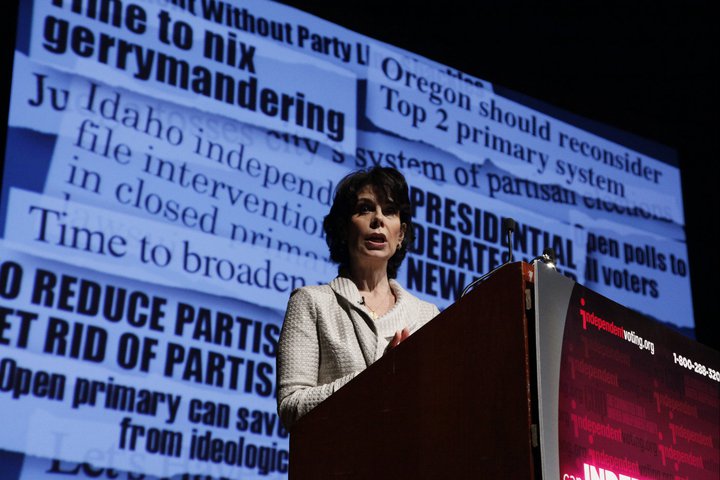
Independent Voters: Politicians Want Our Votes, But Do They Want to Listen to Us?
A National Conference Call for Independents
Monday, March 28th
THEY WANT OUR VOTES.
BUT DO THEY WANT TO LISTEN TO US?
A Campaign For Congressional Hearings into the Second Class Status of Independent Voters
|
California Prop 14 Open Primaries: What about the will of the people? Proposition 14
And while we're talking about the new California voting system, let's remember that it won 54% in a primary election.
- EDITORIAL: Open primaries: What about will of the people? (The Bakersfield Californian) Hey, what about the will of the people? What about all of those voters who unambiguously declared their support for a top-two runoff?
- Calif. GOP rejects divisive open primary plan (By JULIET WILLIAMS, Associated Press, Bakersfield Now.com) California Republicans on Sunday approved a compromise that leaves in place the current nominating system for GOP candidates in 2012 and will let party members use mail-in balloting to endorse candidates for office starting in 2014.
- California GOP struggles with internal strife (Joe Garofoli,Carla Marinucci, San Francisco Chronicle) Republicans, believing that the system could "disenfranchise" them in a state where they are vastly outnumbered, looked for a way for the party to influence the process.
- Most Republican presidential hopefuls skip California GOP convention (By Jack Chang, The Sacramento Bee) Most of the convention action focused on how to deal with voter-approved Proposition 14, the open-primary measure, which all but cut out parties from the nominating process. The proposition didn't affect presidential primaries.
- Republicans vote to nominate candidates by mail to sidestep 'top-two primary' system - California Republicans vote to enact a sweeping end-run around the spirit of the "top-two primary" system adopted by voters as Proposition 14. The party decides to conduct a mail-in nominating process with all registered GOP voters before the primary election. (By Seema Mehta and Maeve Reston, Los Angeles Times)
- The GOP searches for relevance post-Proposition 14 (Opinion L.A. - OPED by Jon Healey, LA Times) You might argue that the pre-primary is, as Mehta and Reston put it, "a sweeping end-run around the spirit" of the new primary system. (I'm still trying to figure out how one would run around a spirit, but I digress.) But what are the parties supposed to do in a new system that essentially amounts to a general election and a runoff?
- State Republican Party leaders seek to hold onto clout despite open primary - At the party's convention this weekend, bosses will attempt to curb the effect of the 'top-two' voting system passed by voters last year and maintain their influence over candidates. (By Michael J. Mishak, Los Angeles Times)
- U.S. District Court Holds Hearing in California Case on Party Label Discrimination (Ballot Access News) The judge seemed uncomfortable with this case, and suggested that party labels on the ballot are not important, because candidates can describe themselves in the Voters Pamphlet.
- California GOP rejects divisive open primary plan (By JULIET WILLIAMS Associated Press, Mercury News) The party was beset by infighting during its weekend spring convention in Sacramento over how to respond to Proposition 14, the voter-approved ballot measure that was intended to produce more moderate candidates for office from both political parties. Under that system, the top two candidates advance to the general election, regardless of party affiliation. The GOP delegates on Sunday passed a plan that calls on the party to let members vote by mail to nominate candidates, starting in 2014. It was unclear how the vote-by-mail process will occur, how much it will cost or whether it will have any real effect on campaigns by discouraging other Republicans from aggressively contesting primary seats.
- Marin Voice: Open primaries are coming (By Richard Rubin, Guest op-ed column, Marin Independent Journal) The landscape is strewn with the carcasses of political parties, beginning with the Federalists in 1789 led by Alexander Hamilton, which pretty much vanished by the War of 1812. Between its founding and now, no less than 116 parties have hoisted their standards. Not all fielded candidates. Many lasted only a few years. About 50 survive today, but few of any note.
- Calif. Republicans debate future amid budget drama (AP -- San Francisco Chronicle) Another proposal, introduced by Nehring, would let party leaders officially endorse Republican candidates ahead of primaries. It is an attempt to blunt the impact of Proposition 14, the voter-approved measure that allows the top two vote-getters to advance to the general election, regardless of party affiliation. Opponents of Nehring's plan, including nearly all Republicans in the state's congressional delegation and Legislature, say it would disenfranchise Republican voters and cut off funding for candidates who survive the primary but did not win the party's official endorsement.
- Republicans should listen to Kevin McCarthy (By Judy Lloyd, Co-owner of Altamont Solutions, Fox & Hounds Daily) California’s highest ranking Congressional Republican Kevin McCarthy has become active in this debate. He is co-sponsoring a measure with State Senate Leader Bob Dutton and Assembly Leader Connie Conway. The plan focuses on the principle that Republican voters should decide who their nominees are – not party insiders.
- Contra Costa Times Readers' Forum: GOP voters should pick party nominees (By Judy Lloyd, Inside Bay Area - Oakland Tribune) California's highest-ranking congressional Republican, Kevin McCarthy, has become active in this debate. He is co-sponsoring a measure with state Senate Leader Bob Dutton and Assembly Leader Connie Conway. The plan focuses on the principle that Republican voters should decide who their nominees are -- not party insiders.
- The rigged redistricting process (By Thomas E. Mann and and Norman J. Ornstein, EDITORIAL Washington Post) Voters are supposed to choose their representatives, but the flawed redistricting process in our nation too often allows representatives to choose their voters. This rigged game is in full flower in Virginia, which has an accelerated redistricting process this year because elections for its House of Delegates and Senate take place in November. State Senate Majority Leader Richard Saslaw (D) was stunningly candid in a recent radio interview in describing the process politicians would follow to redraw the lines.
Subscribe to:
Posts (Atom)